The best baby car seats fit your child, fit your vehicle and can be used correctly on every trip. There is no universal winner based on price or a feature count. Start by deciding whether you need a removable infant seat or a convertible seat that stays in the car, then check the specific installation. This is a comparison of published information, not crash testing or hands-on testing.
Gear3 products, compared
Best baby car seats: compare seats by fit and daily use
Compare infant and convertible car-seat candidates, understand what safety ratings do and do not mean, and choose around your child, vehicle and routine.
Jump to a section
The quick answer
The best baby car seats fit your child, fit your vehicle and can be used correctly on every trip. There is no universal winner based on price or a feature count. Start by deciding whether you need a removable infant seat or a convertible seat that stays in the car, then check the specific installation. This is an editorial comparison, not crash testing or hands-on testing.
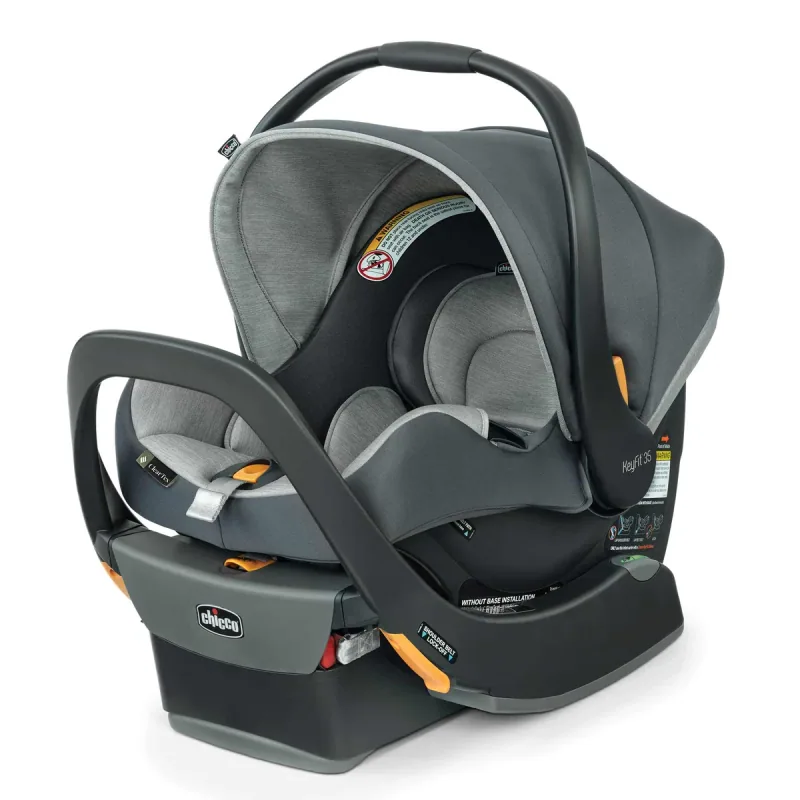
- Chicco KeyFit 35 ClearTex: an infant seat with an included base.
- Nuna PIPA rx with RELX base: an infant carrier with base or belt installation.
- Nuna RAVA convertible car seat: a seat that stays installed as the child grows.
- Details come from manufacturer documentation; Emily has not claimed hands-on testing.
At a glance
The details that make a difference when you’re deciding.
| Product | Useful for | Detail to know | Before buying |
|---|---|---|---|
| Chicco KeyFit 35 ClearTex | An infant seat with an included base | Rear-facing use: 4–35 lb and up to 32 inches | Infant-only seat will be outgrown |
| Nuna PIPA rx with RELX base | An infant carrier with base or belt installation | Rear-facing use: 4–30 lb and 16–30 inches | Compare weights with included parts accounted for |
| Nuna RAVA convertible car seat | A seat that stays installed as the child grows | Current rear-facing range: 5–50 lb and 18–49 inches | No detachable infant carrier |
A closer look
The products, in detail
Actual product photos, manufacturer information, and direct links. Comparisons are based on published specifications; these are not hands-on test results.
01
An infant seat with an included base
ChiccoChicco KeyFit 35 ClearTex
KeyFit 35 ClearTex is a rear-facing infant seat that can move between a compatible stroller and its vehicle base. Chicco lists a ten-pound carrier, which is useful to distinguish from the combined seat-and-base weight. The 35-pound limit is not the only stopping rule: height, head clearance and harness fit matter too. Its carrier-only belt routing can be useful for occasional travel, provided you learn the exact installation method. Try the base in your actual car before deciding how easily this seat fits your routine.
- Rear-facing use: 4–35 lb and up to 32 inches
- Carrier weight listed at 10 lb
- Five-position headrest with no-rethread harness
- Compatible Chicco strollers and specified KeyFit bases
Where it fits
- Removable carrier for vehicle-to-stroller transitions
- Carrier-only belt installation option
What to weigh up
- Infant-only seat will be outgrown
- Compatibility depends on exact stroller and base
02
An infant carrier with base or belt installation
Nuna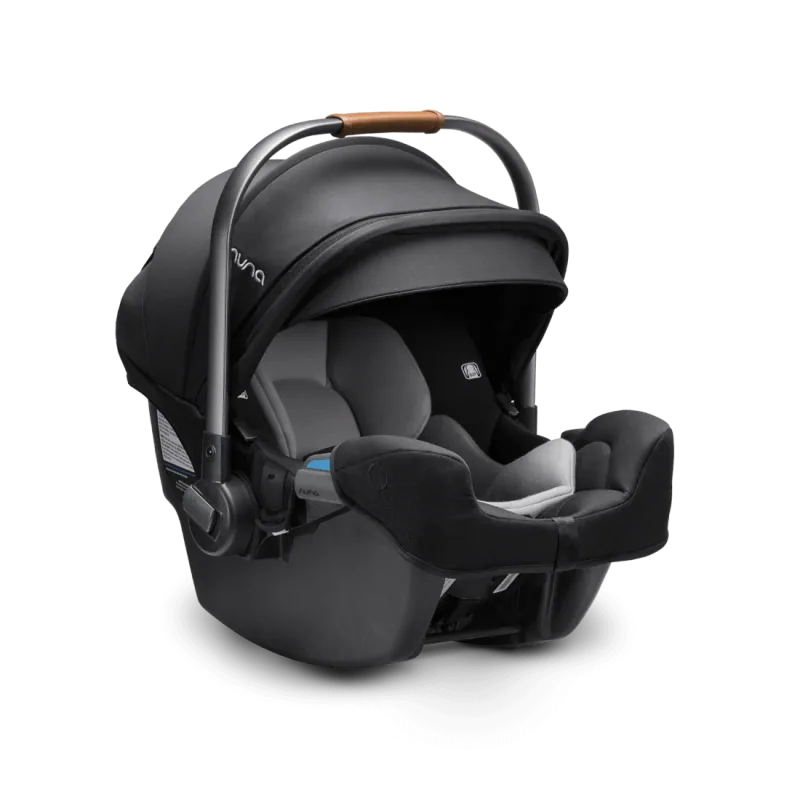
Nuna PIPA rx with RELX base
PIPA rx is an infant seat package with Nuna’s RELX base. Its published light carrier weight excludes the canopy and inserts, an important detail when comparing it with another manufacturer’s fully assembled weight. The seat can also be installed using the vehicle belt without its base, which may matter for taxis or family travel. Check the linked model specifically: PIPA aire, PIPA urbn and other versions have different installation and weight details. A compatible stroller or accessory does not make unrelated PIPA models interchangeable.
- Rear-facing use: 4–30 lb and 16–30 inches
- Listed carrier weight 7.6 lb excluding canopy and inserts
- RELX base included
- Approved vehicle-belt installation without base
Where it fits
- Base and baseless installation options
- Removable carrier
What to weigh up
- Compare weights with included parts accounted for
- Different PIPA models have different instructions
03
A seat that stays installed as the child grows
Nuna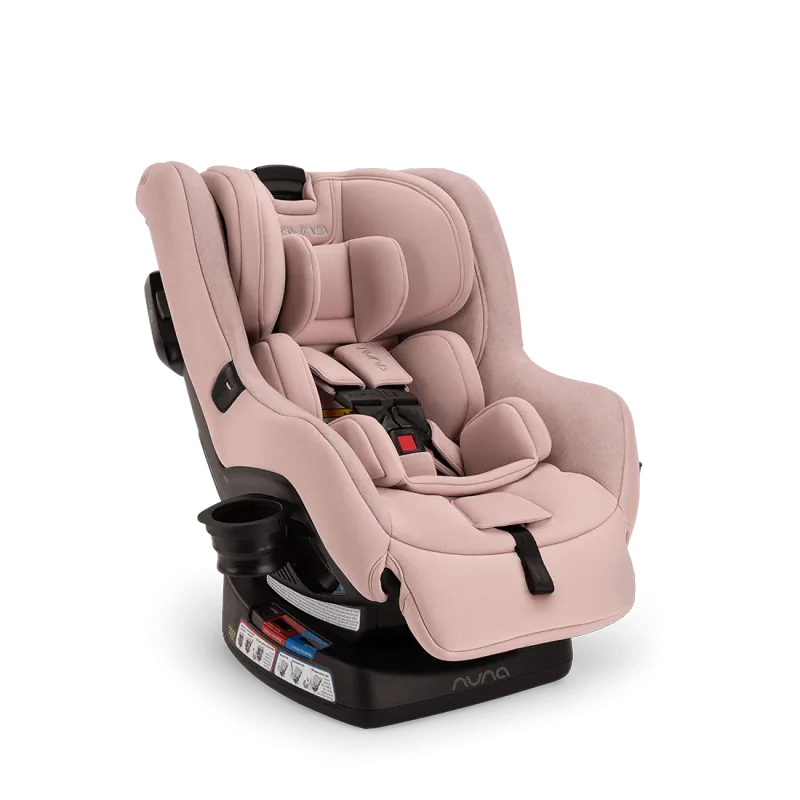
Nuna RAVA convertible car seat
RAVA illustrates the convertible-seat route: the child is buckled in the vehicle rather than carried out in a detachable shell. That can avoid buying an infant carrier first if your newborn fits correctly, but it changes every transfer from car to stroller. The current listing separates rear-facing and forward-facing requirements, and provides different manuals for older and newer production. Check the model date, recall status and exact label if considering a used seat. The published width is only a starting point for a three-across fit check.
- Current rear-facing range: 5–50 lb and 18–49 inches
- Current forward-facing range: 30–65 lb and 34–49 inches; at least 2 years
- No-rethread harness and adjustable recline
- Published weight: 27.9 lb
Where it fits
- Higher rear-facing limit than infant-only seats
- Stays installed between trips
What to weigh up
- No detachable infant carrier
- Older versions have different manuals and recall checks
Compare infant carriers with a convertible seat
The Chicco KeyFit 35 ClearTex and Nuna PIPA rx are rear-facing infant seats with removable carriers. The Nuna RAVA is a convertible seat that normally stays installed. That category distinction changes how you leave the house: an infant carrier can click into an approved stroller, while a convertible-seat routine involves taking the baby out of the harness and moving them separately.
The KeyFit 35 ClearTex listing gives a 4–35-pound range and a maximum height of 32 inches. PIPA rx lists 4–30 pounds and 16–30 inches. The current RAVA listing permits rear-facing use from 5–50 pounds within its stated height range. These figures do not replace head-clearance, harness, developmental or other manual requirements. A child can outgrow a seat by height or fit before reaching its weight limit.
Read weight comparisons carefully
Chicco lists the KeyFit 35 carrier at ten pounds, separately from its base. Nuna’s quoted 7.6-pound PIPA rx carrier weight excludes canopy and inserts. Comparing those headlines without reading the footnotes would exaggerate the difference in what you actually carry. Add your baby’s weight and try the real assembled handle position when possible.
RAVA’s weight matters differently: you are unlikely to carry it into a store with a child inside, but moving it between vehicles can be a substantial task. If you change cars several times a week, compare the time and accuracy of reinstalling a convertible with buying the correctly matched extra base for an infant seat. Neither approach is automatically more economical once the whole household routine is counted.
Check the car before choosing the brand
Take the exact vehicle model and seating position to a fit check. Consider front-seat legroom, permitted lower-anchor use, seat-belt locking and any restrictions involving a load leg or vehicle floor storage compartment. A three-across claim does not prove that three particular seats install correctly beside each other in your car.
An installation needs to work with both manuals. If a product cannot achieve the required fit in your available seating position, a higher price or positive review cannot solve that mismatch. NHTSA’s car-seat inspection resources can help you find a certified technician to check the arrangement.
Buy the exact version you researched
KeyFit, PIPA and RAVA names span different versions and production dates. Read the label on the actual item, especially for clearance or secondhand stock. Nuna provides separate RAVA manuals for older and newer production, so do not transfer today’s page specifications to an older seat. Check recall status using the identifying information and confirm that any required remedy has been completed before use.
Choose the seat you can install and harness correctly every time. These examples are a feature and workflow comparison, not an independent crash-performance ranking. The baby car seat setup guide explains how to organize the installation, records and everyday checks after choosing a model.
Choose the seat category first
A rear-facing infant seat is often convenient when you want a removable carrier and an approved stroller connection. A convertible seat can serve through later stages but is generally intended to remain installed. Neither format eliminates the need to check fit and follow the manual.
NHTSA's car-seat guide recommends choosing for the child's size and the vehicle and keeping children rear-facing until they reach the seat manufacturer's rear-facing height or weight limit. Moving out of an infant seat does not automatically mean turning forward.
Budget for the second car and occasional travel
If two vehicles are used regularly, compare the cost of a matching second infant-seat base with the time needed to reinstall a seat correctly. KeyFit and PIPA bases must be the versions approved for the exact carrier. Do not assume a base from a similarly named model fits because the shell appears to click into place.
For a taxi or relative’s car, a seat with an approved carrier-only belt installation can remove the need to carry its base. Learn the specific routing before the trip; an unfamiliar back seat is a poor place to read the manual for the first time. Confirm that the vehicle’s belt and seating position permit the installation.
If flying with a child restraint, verify the exact seat’s aircraft approval and the airline’s current rules. Vehicle bases, load legs and other parts can have different instructions in an aircraft. Account for the weight of carrying the seat through the terminal and how it will be transported afterward. An occasional travel requirement can change the practical choice even when the everyday car installation is straightforward.
Test the fit in the vehicle
Arrange a fit check before committing when possible. Consider the available rear-seat position, the front passenger's needed space and other children's seats. A narrow-looking seat does not guarantee that three seats will install correctly together.
Check whether the base, load leg or other hardware is permitted with your vehicle's floor and seating position. Read both manuals, because a feature that works well in one car can have restrictions in another. Ask a certified child passenger safety technician when an instruction is unclear.
Evaluate the repeated tasks
Try adjusting the harness, loosening it and buckling with ordinary baby clothing in mind. Compare how clearly you can see the level indicator and installation path. For a removable seat, consider carrying the combined seat-and-baby weight rather than the empty shell alone.
Check washing instructions before assuming the cover or harness can tolerate your usual cleaning method. Also consider a second vehicle: purchasing another base or reinstalling a convertible seat changes the real convenience and cost.
Register and recheck
Register the exact model with its manufacturer and check recall notices using the identifying label. A used seat needs a reliably known history, complete parts and an unexpired service life; an attractive price is not enough.
Once installed, seek an inspection through the resources linked by NHTSA. A practical choice is the seat you can install and use correctly without struggling through the same unclear step each day. Reassess fit as your child grows, rather than waiting for a birthday to decide the next stage.
A few more details
Your questions, answered
Is the most expensive baby car seat the safest?
Price alone does not determine suitability. Correct child fit, vehicle fit, installation and use matter; this guide does not rank crash protection.
Should I buy an infant or convertible seat?
Choose based on your baby's fit and your routine. Infant seats provide a removable carrier; convertible seats generally stay installed and support later stages within their limits.
Are the KeyFit 35 and PIPA rx weight figures directly comparable?
Read the footnotes. Chicco lists a ten-pound KeyFit 35 carrier; Nuna’s 7.6-pound PIPA rx figure excludes canopy and inserts. Compare the fully assembled items you will actually carry.
Does outgrowing an infant seat mean turning forward-facing?
No. A larger convertible or all-in-one seat can continue rear-facing use within its limits. Follow NHTSA guidance and the specific seat’s height, weight and fit rules.
Sources & product information
Follow the original sources for current product details, instructions, and guidance.