A baby swing is optional equipment for awake, supervised soothing. It can offer a different rhythm when your arms need a break, but it is not a sleep space or an essential purchase. Before choosing one, check the exact model's limits, footprint and cleaning instructions, and make sure you have a separate approved place for sleep.
Gear3 products, compared
Baby swing basics: choosing one for awake, supervised use
Learn what a baby swing is for, which features matter at home, how it differs from a bouncer and why it should never become your baby's sleep space.
Jump to a section
The quick answer
A baby swing is optional equipment for awake, supervised soothing. It can offer a different rhythm when your arms need a break, but it is not a sleep space or an essential purchase. Before choosing one, check the exact model's limits, footprint and cleaning instructions, and make sure you have a separate approved place for sleep.
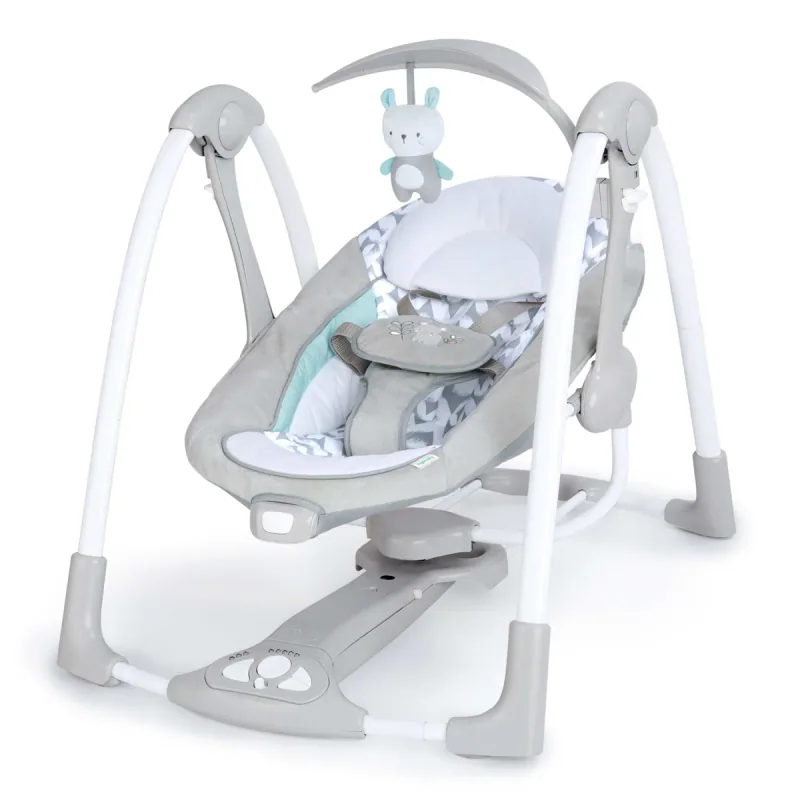
- Ingenuity ConvertMe Swing-2-Seat, Raylan: a folding swing that also locks into a stationary seat.
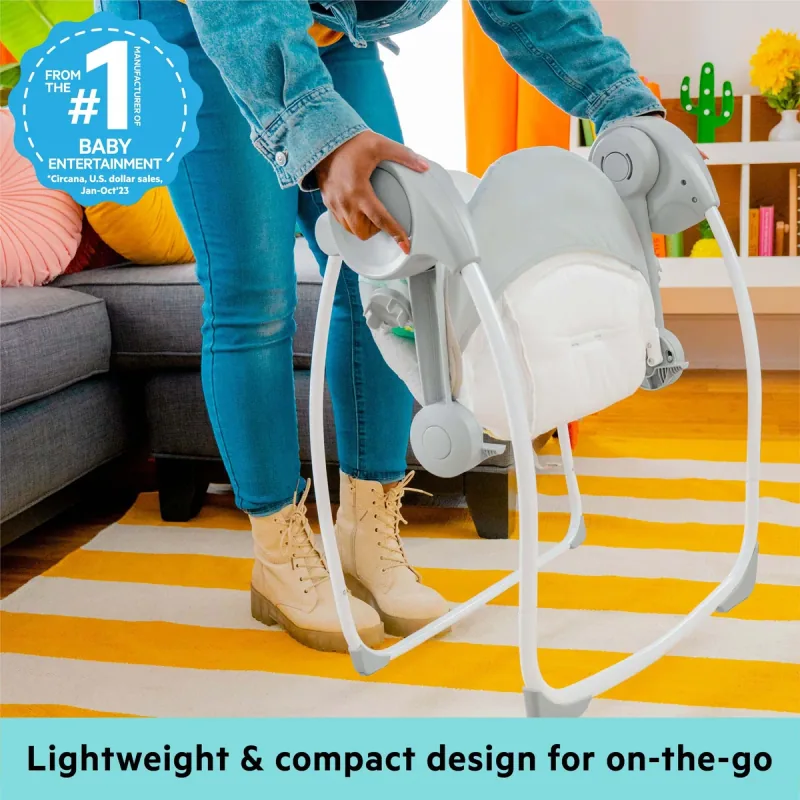
- Bright Starts Whimsical Wild Portable Swing: a folding swing for occasional supervised use.
- BabyBjörn Bouncer Bliss: a naturally moving bouncer that folds flat.
- Details come from manufacturer documentation; Emily has not claimed hands-on testing.
At a glance
The details that make a difference when you’re deciding.
| Product | Useful for | Detail to know | Before buying |
|---|---|---|---|
| Ingenuity ConvertMe Swing-2-Seat, Raylan | A folding swing that also locks into a stationary seat | Five swing settings | Not a sleep space in either mode |
| Bright Starts Whimsical Wild Portable Swing | A folding swing for occasional supervised use | Portable folding frame | Baby may not enjoy swinging |
| BabyBjörn Bouncer Bliss | A naturally moving bouncer that folds flat | Natural rocking without a motor | Infant and chair modes have different limits |
A closer look
Products mentioned in this guide
Actual product photos, manufacturer information, and direct links. Comparisons are based on published specifications; these are not hands-on test results.
01Ingenuity ConvertMe Swing-2-Seat, Raylan02Bright Starts Whimsical Wild Portable Swing03BabyBjörn Bouncer Bliss
01
A folding swing that also locks into a stationary seat
Ingenuity / Kids2Ingenuity ConvertMe Swing-2-Seat, Raylan
ConvertMe Raylan is a concrete example of a swing with two awake-use modes. Locking the mechanism changes it to a stationary seat; it does not create a bassinet or another approved sleep surface. The current product page lists USB power for swinging and sounds plus a separate C battery for vibration, so do not assume every function works from the same power source. The washable fabric is useful after everyday spills. Measure the open frame, since a product that folds for storage still needs clearance while it is operating.
- Five swing settings
- Locks into stationary seat mode
- Five-point harness
- Current listing: USB for swing/sounds; C battery for vibration
- Maximum listed child weight: 20 lb
Where it fits
- Folds for storage
- Removable washable seat fabric
What to weigh up
- Not a sleep space in either mode
- Separate power requirement for vibration
02
A folding swing for occasional supervised use
Bright Starts / Kids2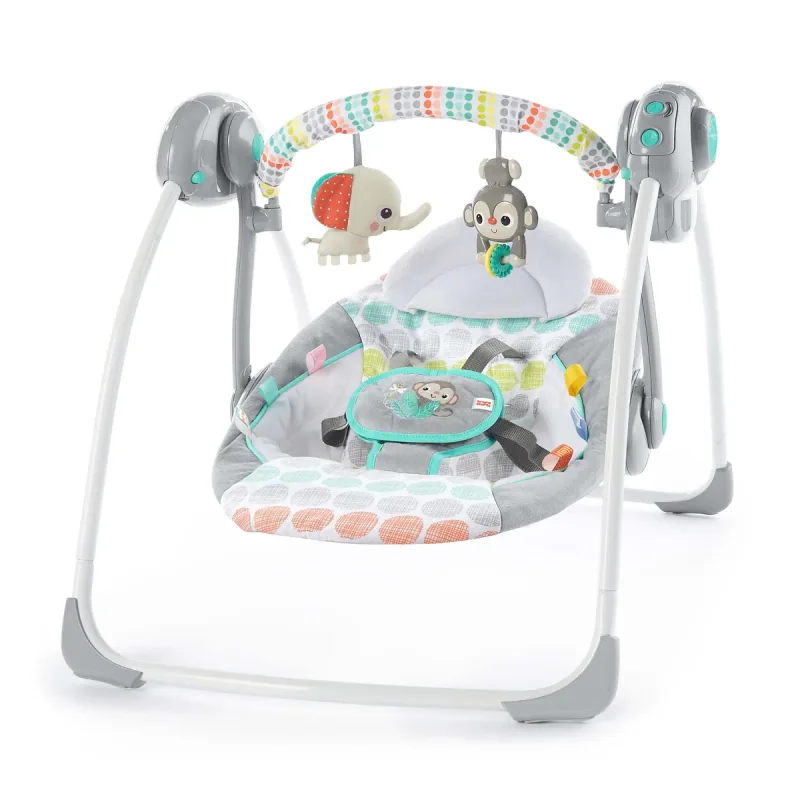
Bright Starts Whimsical Wild Portable Swing
Whimsical Wild offers a portable swing format without requiring a large permanent station in the room. Its open frame, toy bar and infant restraint are worth comparing with the space available beside your normal sitting area. The actual benefit depends on whether your baby enjoys the motion, which a product page cannot predict. Keep the box through the return period and check the cleaning instructions before the first wash. Use the age, weight and developmental limits in the exact manual, and move a sleeping baby to a suitable flat sleep space.
- Portable folding frame
- Adjustable swing speeds
- Toy bar and infant harness
- Removable seat fabric; follow care label
Where it fits
- Can be stored between sessions
- Simple awake-play setup
What to weigh up
- Baby may not enjoy swinging
- Requires suitable floor space and supervision
03
A naturally moving bouncer that folds flat
BabyBjörn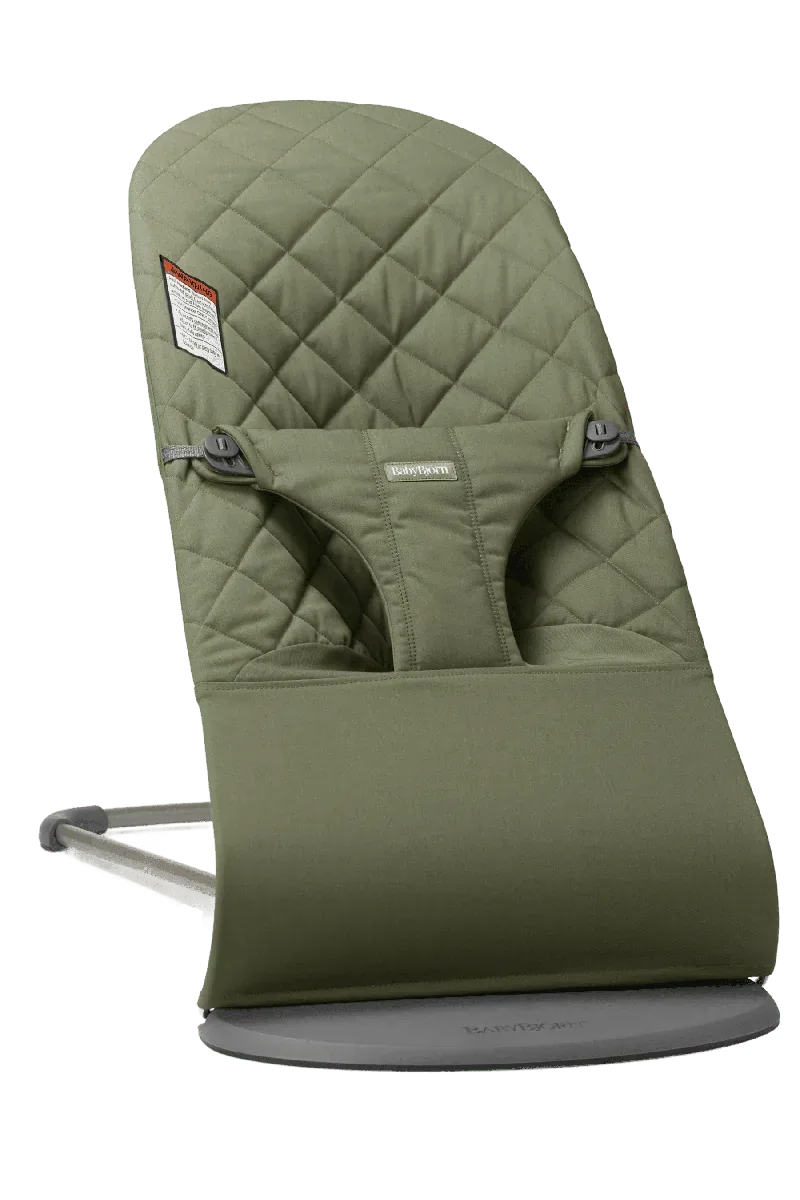
BabyBjörn Bouncer Bliss
Bouncer Bliss moves with an adult’s gentle input or the baby’s movement instead of an electric swing motor. It folds for storage and has removable fabric, so it suits a comparison focused on moving a seat between rooms and cleaning it. The headline upper weight describes the later chair mode, not permission to use the infant restraint until that weight. BabyBjörn’s infant-bouncer instructions stop that mode when the child reaches its limit or starts trying to sit up. Keep the seat on the floor and use it only for supervised awake time.
- Natural rocking without a motor
- Folds flat; three height positions
- Infant bouncer: up to 20 lb or attempts to sit up
- Later chair mode has separate readiness rules and 29 lb limit
Where it fits
- No motor or charging routine
- Removable washable seat
What to weigh up
- Infant and chair modes have different limits
- Toy accessories sold separately
Compare two actual swings and a non-motorized alternative
The Ingenuity ConvertMe Swing-2-Seat in Raylan folds for storage and can lock into a stationary seat. The current manufacturer listing specifies USB power for swinging and sounds, plus a separate C battery for vibration. That distinction matters when budgeting for batteries or choosing where to put it. Its listed 20-pound maximum is only one of the stopping rules; follow the exact manual’s developmental requirements too.
The Bright Starts Whimsical Wild Portable Swing is another folding option with a toy bar and adjustable motion. Compare the open footprint, access to the restraint and fabric cleaning process, not only the folded shape. If you want gentle movement without an electric motor, BabyBjörn Bouncer Bliss is a different category to consider. A swing, a bouncer and a stationary seat all have separate instructions; converting a product between awake-use modes does not make it a bed.
Work out the room before you order
Tape the manufacturer’s open dimensions on the floor where you expect to use the swing. Leave space for the moving seat, a caregiver’s feet and safe access to the baby. A product can be compact when folded and still make a narrow living room awkward. Check that the route from the sofa to the doorway remains clear and that pets or older children cannot easily bump the equipment.
Identify the power source and the full cable route. Do not plan to balance a power adapter on nearby furniture or run a loose cable through the frame. If the swing needs batteries, check whether they power all functions or only a vibration unit. The Raylan example shows why the answer can be more complicated than “battery or plug-in.”
Make the first trial useful
Try a brief session while your baby is awake, calm and already attended to. Fasten the restraint as directed and begin with a permitted setting rather than assuming stronger motion is better. Watch the baby’s posture and response. Stop if the baby becomes uncomfortable, slumps, or no longer meets the product’s use requirements. A swing is optional; a baby who dislikes it does not need to be trained to accept it.
Keep the packaging until you understand the return terms and have tried the tasks that matter: getting the baby in and out, changing the setting, removing the fabric and storing the empty frame. Follow the cleaning label separately for the pad, headrest, straps and frame. One machine-washable component does not mean the whole assembly can be soaked.
Keep a simple alternative ready
A clear floor-play area lets you change activity without searching for another piece of equipment. A firm, flat approved infant sleep space should be ready if the baby becomes sleepy. The AAP explains why swings and bouncers are for awake use, not sleep. For a more detailed comparison of the naturally moving option, read the baby bouncer guide.
Understand what a swing can do
Swings provide repeated motion while a baby sits in a supported, usually inclined seat. Depending on the product, motion may be powered by batteries or a wall outlet, and the seat may offer different settings. A baby may enjoy one pattern and dislike another; a long feature list cannot predict that preference.
Consider whether you already have a supervised place for awake time, such as a clear floor-play area. Buying a swing makes most sense when it serves a practical purpose in your household, rather than because every registry checklist includes one.
Keep soothing separate from sleeping
If your baby falls asleep in a swing, move them as soon as possible to a firm, flat, approved sleep surface. CPSC specifically warns against using swings, bouncers and similar products for sleep. See CPSC's infant sleep guidance.
Position your sleep space so the transfer is practical. A swing should not be a workaround for reflux, a difficult evening or reluctance to wake a sleepy baby. If you need advice about feeding discomfort or persistent settling difficulties, discuss the pattern with your pediatrician instead of changing the swing's angle or adding padding.
Compare the features you will notice daily
Measure the full operating footprint, including the moving seat's clearance. A compact-looking product photograph may not show how much room the swing needs while running. Check that it will not block a walkway and that the power cord can remain out of reach.
Prioritize a removable, washable cover, straightforward restraints and controls you can use without leaning awkwardly over the baby. Listen to a demonstration if possible. A motor sound that seems quiet in a shop may be more noticeable in a small room, although only a home trial can settle that question.
Check the exact product before use
Read the instructions for starting and stopping use. Weight is not the only limit; developmental milestones and the baby's ability to move in the seat also matter. Use only the included or specifically approved parts.
For secondhand equipment, obtain the model number, manufacturing information and complete manual. Search the CPSC recall database and the manufacturer's notices. Do not substitute a generic strap, improvise missing hardware or assume that a seller's “barely used” description establishes safety.
Decide between a swing, bouncer or neither
A swing usually supplies a repeating motion; a bouncer generally responds to movement or a gentle push. Compare how often you expect to move the product, where it will live and whether storage matters. Either option needs supervision and use within the instructions.
You can also wait. If your baby is content being held and spending supervised awake time on the floor, a swing may add little. If you buy one, keep the packaging until you know it suits your space and routine, and treat a dislike of the swing as a preference rather than a problem to solve.
A few more details
Your questions, answered
Can my baby sleep in a swing while I watch?
A swing is not a safe infant sleep surface. If your baby falls asleep, move them as soon as possible to a firm, flat, approved sleep space.
Is a baby swing essential?
No. It is optional soothing equipment for awake, supervised use, and some babies do not enjoy it.
Does ConvertMe’s stationary mode make it safe for sleep?
No. Converting the Ingenuity swing into its stationary-seat mode does not create an approved infant sleep surface. Use it only as directed for supervised awake time.
Does the Raylan swing run entirely from USB?
The current maker listing specifies USB power for swing motion and sounds and a separate C battery for vibration. Check the label and manual for the exact version you receive.
Sources & product information
Follow the original sources for current product details, instructions, and guidance.
- Ingenuity ConvertMe Swing-2-Seat, Raylan — official product details and photographs
- Bright Starts Whimsical Wild Portable Swing — official product details and photographs
- BabyBjörn Bouncer Bliss — official product details and photographs
- CPSC safe sleep guidance
- CPSC recall database
- swings and bouncers are for awake use, not sleep