Liam, Noah, Oliver, Theodore, and Henry lead the Social Security Administration’s U.S. boys’ list for births in 2025, released in May 2026. Use that verified ranking as one starting point, then explore sound, family connections, spelling, and the full-name combination.
NamesA practical guide
Baby boy names: the 2025 top ten and practical shortlists
Explore baby boy names by style, check official popularity data, and build a shortlist that works with your surname, family traditions, and preferences.
Jump to a section
The quick answer
Liam, Noah, Oliver, Theodore, and Henry lead the Social Security Administration’s U.S. boys’ list for births in 2025, released in May 2026. Use that verified ranking as one starting point, then explore sound, family connections, spelling, and the full-name combination.
- The latest completed U.S. birth-year ranking is 2025.
- SSA ranks spellings separately and reports registrations, not name meanings.
- A national rank cannot predict a particular classroom.
- Try the first and last name together before choosing a middle name.
The current top ten boys’ names, with the year clearly stated
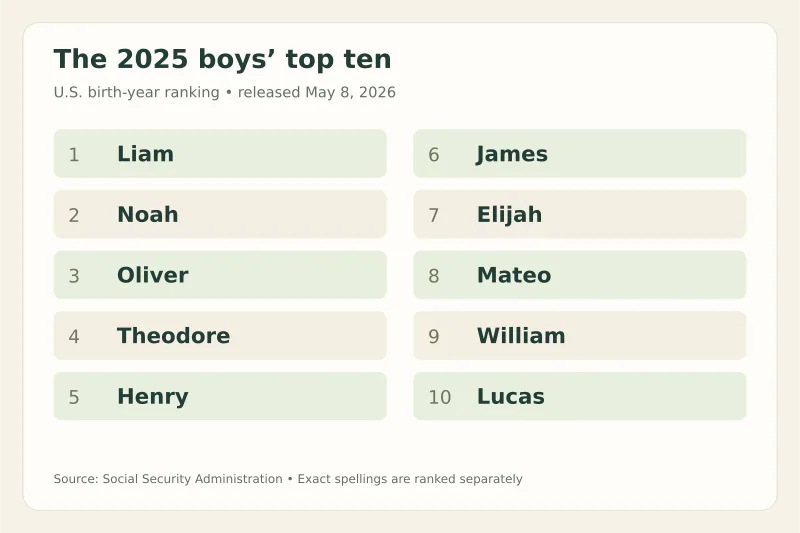
The Social Security Administration’s 2025 release, published May 8, 2026, lists these boys’ names in order: Liam, Noah, Oliver, Theodore, Henry, James, Elijah, Mateo, William, and Lucas. The chart on this page uses that exact order. It is a ranking of U.S. births in 2025, not a prediction for babies born in 2026.
If you like familiar names, begin with James, Henry, or William. If you prefer a shorter written form, compare Liam and Noah. If a formal name with several everyday options appeals to you, discuss Theodore or William and the nicknames you actually like. These are editorial ways to organize the names, not claims about a child’s personality or a name’s cultural origin.
Twenty more ideas organized by the decision you are making
For a short first name with a longer surname, try Max, Finn, Jude, Leo, or Dean. Say the first and last name together without pausing unnaturally between them. A short name does not automatically sound clear beside every surname; repeated endings or merged consonants can matter.
For a longer formal name, compare Alexander, Benjamin, Gabriel, Nathaniel, and Sebastian. Write the likely nicknames beside each one. If you dislike the common shortened version, decide whether you would still enjoy the full name when friends or relatives inevitably experiment with it.
For a nature-associated sound, consider River, Rowan, Reed, Forrest, and Ash. Treat these as style ideas and research any origin or meaning you intend to tell your child. A familiar English word and an established given name can have overlapping but different histories.
For a familiar name outside this top-ten shortlist, try Thomas, Samuel, Daniel, Joseph, or Isaac. “Outside this shortlist” does not mean rare. Search the SSA database for the exact spelling and year before calling a name unusual.
Compare sound before you compare popularity
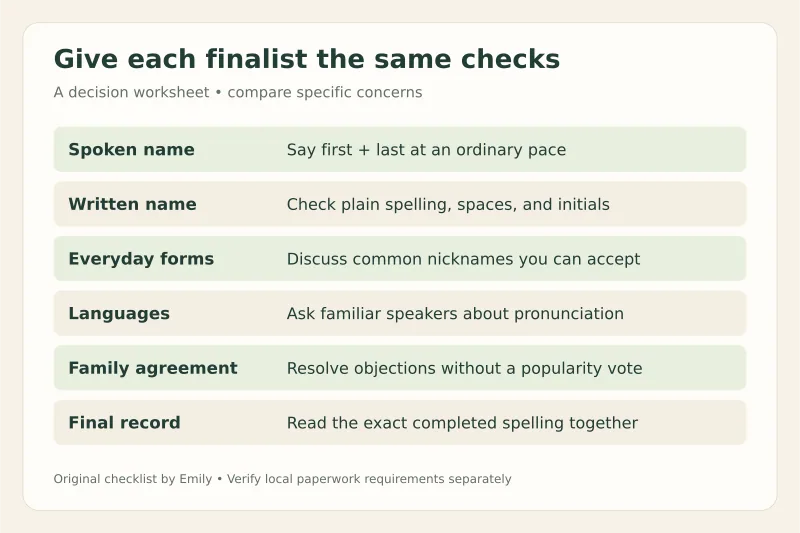
Say two finalists in the same ordinary sentences: introducing yourself as the parent, calling across a room, and making an appointment. Then have another trusted adult read the written name without coaching. The exercise reveals pronunciation questions more effectively than looking at decorative lettering on a screen.
Check the initials, the first-and-last combination, and the most likely nickname. A middle name can carry a family tribute without needing to solve every sound issue in everyday first-and-last use. If you use more than one language at home, include the people who will regularly say the name in the discussion.
Use popularity as context, not a scoring system
SSA’s data comes from Social Security card applications. Spellings are treated separately, so a spoken name can feel more common than one spelling’s rank suggests. The national list also combines communities with very different naming patterns. State-level data offers another useful view, but even that cannot guarantee how many children with the same name will attend one school.
Keep a shortlist of three to five names you would be happy to use. Put an uncertain meaning or pronunciation beside the name as a research task rather than filling the gap with a confident guess. The goal is a name you like and can explain honestly, not a perfect score in every category.
Check popularity without letting it decide everything
The Social Security Administration’s baby name database is the official place to explore U.S. name popularity by year. It also provides tools for checking changes over time and state-level patterns.
Look at more than one year if avoiding a sudden trend matters to you. A national ranking does not predict the exact names in a future classroom. Different spellings may also feel like the same name when spoken. Think about how much distinctiveness matters to you in practice, rather than treating an uncommon spelling as a guarantee.
Say each name in its full form
Speak the first, middle, and last names together at a normal pace. Then try first and last without the middle name, which may be the more common everyday version. Notice repeated sounds, awkward joins, or an unintended phrase.
Write the initials and any nickname you expect to use. A long formal name can work beautifully with a short nickname, but it is useful to like the formal version too. If you share more than one household language, invite trusted speakers to say the name and explain any pronunciation concerns.
Discuss family connections carefully
A family name can honor someone without requiring an exact copy. You might use a middle name, an initial, or a related form that you actually enjoy saying. Talk through what the tribute means and whether both parents feel comfortable with it.
Avoid relying on unsourced lists for cultural meaning or pronunciation. If a name comes from a language or tradition unfamiliar to you, consult a reliable language resource or a knowledgeable person from that community. The story you tell about your child’s name should be accurate.
Reduce the list in two rounds
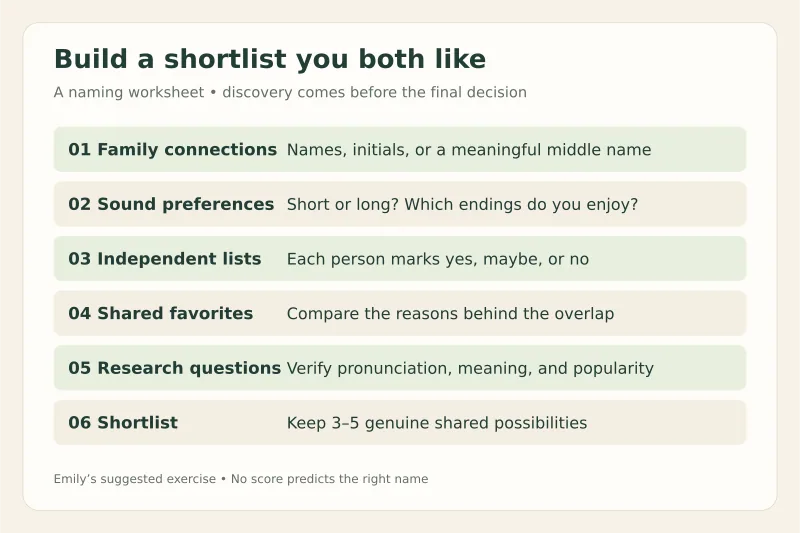
First, each decision-maker chooses a handful of favorites independently. Compare the overlap and discuss any strong objections respectfully. Second, try the remaining names in ordinary sentences over a few days.
A shared yes matters more than winning a vote among friends. Keep a reserve option if you want to meet the baby before deciding. Our guide to picking a baby name helps generate ideas, while choosing from a shortlist focuses on making the final decision.
A few more details
Your questions, answered
Should I avoid a popular baby boy name?
Only if popularity conflicts with your preferences. Official rankings provide context, but they cannot predict how many children with that name your child will meet.
Do I need to use a family name?
No. A family name is an option, not an obligation. A middle name or another meaningful connection can work if the full name feels right to you.
Are these the most popular boys’ names born in 2026?
No. They are SSA’s rankings for U.S. births in 2025, released in May 2026. A complete 2026 birth-year ranking is not yet available.
Does SSA verify a name’s origin or meaning?
No. The popularity data records names from Social Security applications. Use appropriate language and historical sources for meanings.
Sources & product information
Follow the original sources for current product details, instructions, and guidance.