If you swaddle a baby, use a light wrap, leave the hips free to bend, and place the baby only on their back for sleep. Stop swaddling as soon as they show signs of trying to roll. Ask your maternity nurse or pediatrician to demonstrate the technique with your baby before relying on written instructions.
Sleep2 products, compared
How to swaddle a baby—and when to stop
Learn the basics of a light, hip-friendly swaddle, the fit checks to make every time, and why signs of rolling mean it is time to stop swaddling.
Jump to a section
The quick answer
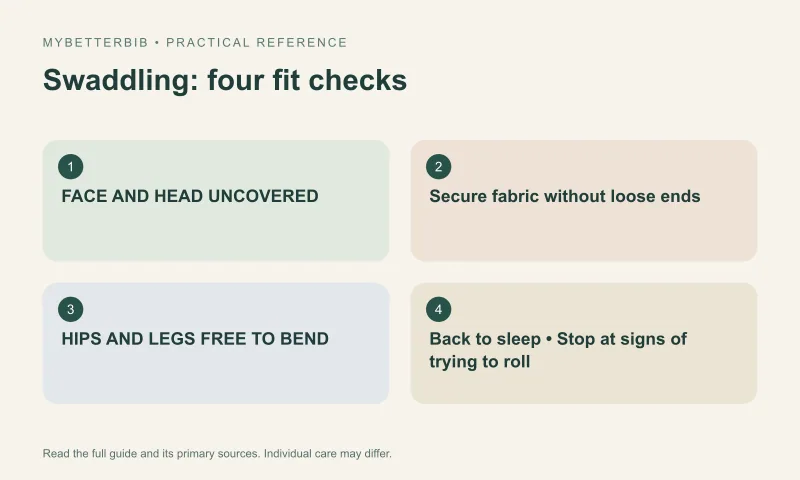
Swaddle only according to a demonstrated safe technique: baby on their back, face clear, hips and legs able to move, and no loose fabric. Stop as soon as the baby shows signs of trying to roll. Never use weighted swaddles.
- A blanket swaddle is a technique, not just a fabric purchase.
- Leave room for hips and legs to bend and move.
- Stop at the first signs of attempting to roll.
- Back sleeping and a firm, flat, clear sleep surface remain essential.
A closer look
Products mentioned in this guide
Actual product photos, manufacturer information, and direct links. Comparisons are based on published specifications; these are not hands-on test results.
01Organic Cotton Muslin Swaddle Blanket02Eric Carle The Very Hungry Caterpillar 100% Cotton Wearable Blanket TOG 0.5
01
A muslin cloth for supervised use or appropriate swaddling
Mushie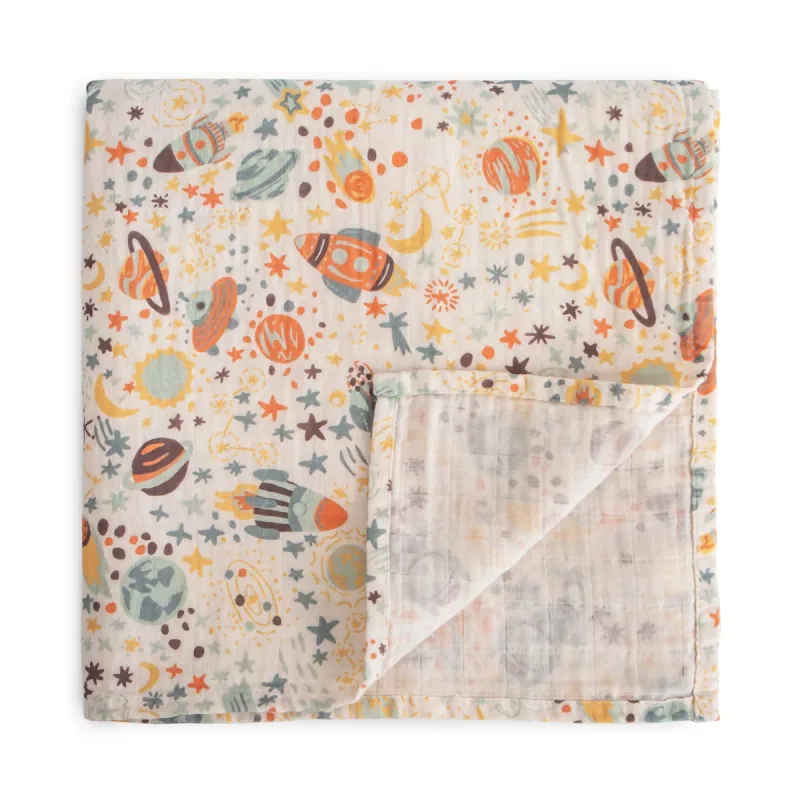
Organic Cotton Muslin Swaddle Blanket
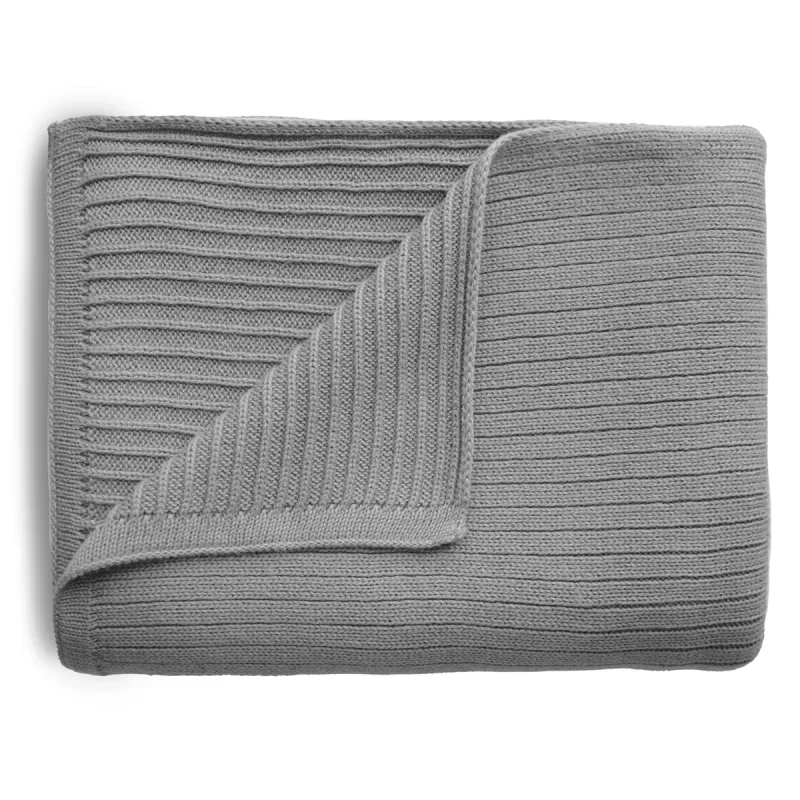
Mushie’s Organic Cotton Muslin Swaddle Blanket is a flat, pre-washed fabric square with several possible awake-time uses. If used for swaddling, the adult must learn a secure, hip-friendly technique and stop at the first signs of attempting to roll. A loose swaddle blanket should not remain in an infant sleep space. Compare it with a wearable blanket when the goal is warmth after the swaddling stage rather than a versatile piece of fabric.
- 100% organic cotton
- Muslin fabric
- Pre-washed
- Flat blanket rather than a zip-up sack
Where it fits
- Versatile during supervised awake time
- Folds for travel
What to weigh up
- Technique matters when swaddling
- Loose blankets do not belong in an infant’s sleep space
02
An arms-free cotton sleep sack
HALO / aden + anais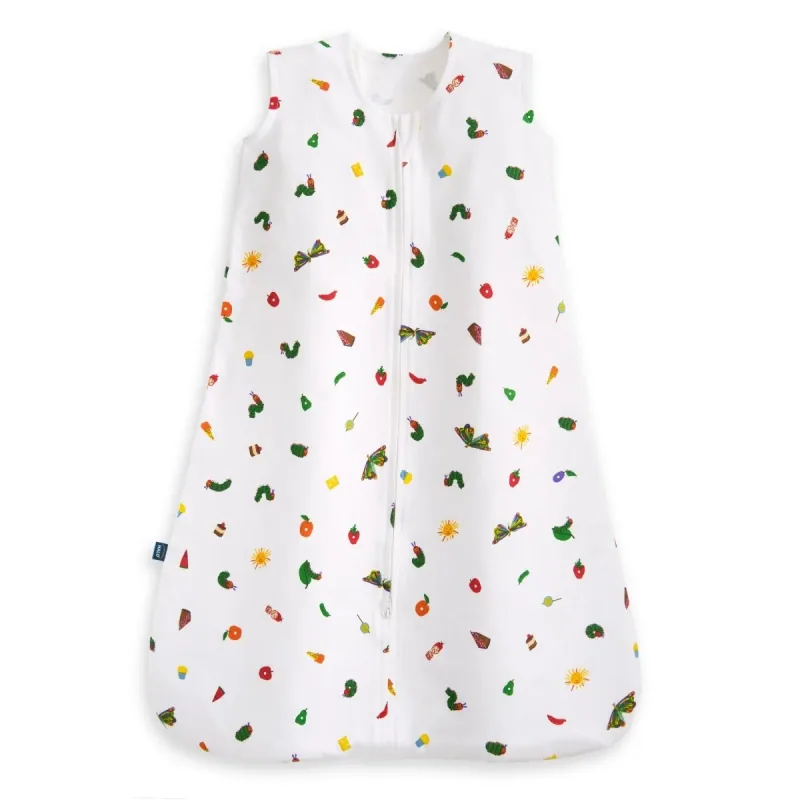
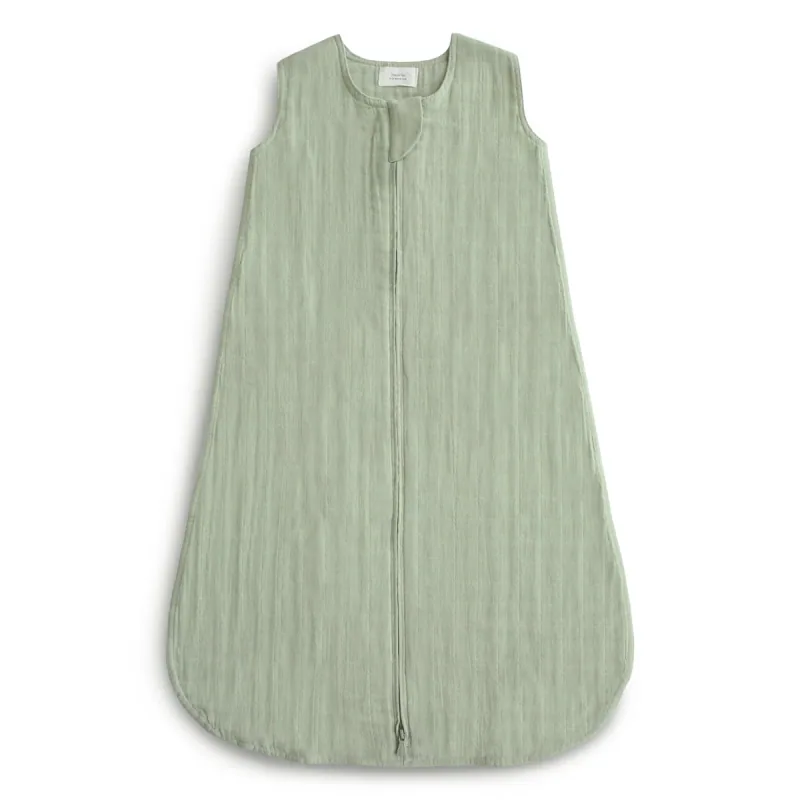
Eric Carle The Very Hungry Caterpillar 100% Cotton Wearable Blanket TOG 0.5
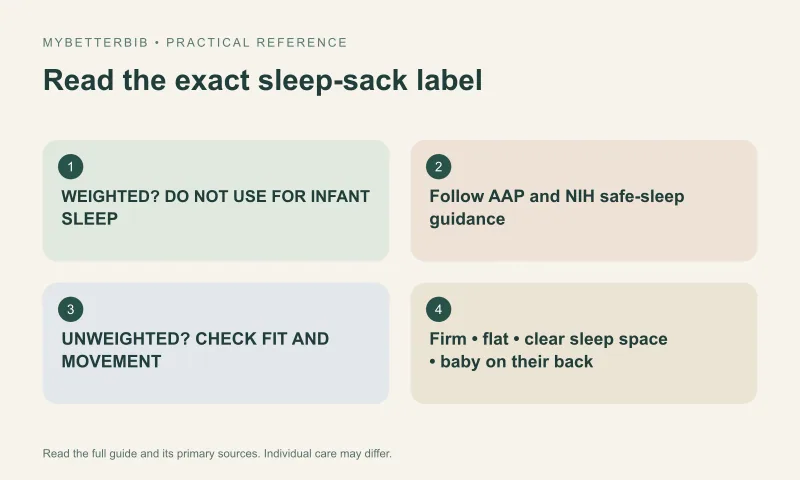
HALO’s Very Hungry Caterpillar SleepSack Wearable Blanket is an unweighted cotton option with a bottom-opening zipper. The listed 0.5 TOG is a thermal rating to interpret alongside room conditions and the clothes underneath. Its roomy leg section should not be confused with permission to buy an oversized neck opening. This model is a wearable blanket after appropriate fit checks; it is different from a swaddle that restrains the arms.
- 100% cotton
- 0.5 TOG model
- Sleeveless wearable blanket
- Zipper opens from the bottom
Where it fits
- Unweighted construction
- Practical diaper access
What to weigh up
- Choose by the manufacturer’s size chart
- Does not replace a clear, firm, flat sleep surface
Check whether swaddling is still appropriate
A swaddle restricts movement in a way an ordinary roomy sleep sack does not. A baby who is beginning to attempt rolling needs to stop being swaddled, even if the usual bedtime routine has worked well. Do not wait for a complete roll.
Use an unweighted product and follow its size and use instructions. Swaddling does not prevent sudden infant death syndrome. The AAP swaddling guidance explains the movement, overheating, and loose-fabric concerns.
If you are unsure whether your baby's movements count as an attempt to roll, ask the pediatrician and use appropriate non-swaddling sleep clothing while clarifying.
Learn a light blanket wrap
For a baby who is not showing rolling signs, the basic approach is:
- Lay a thin blanket flat and fold down one corner.
- Place the baby face-up with the head above the folded edge.
- Bring one side across the body and tuck it securely on the opposite side.
- Bring the other side across and secure it beneath the baby.
- Tuck the lower fabric loosely, leaving room for the legs to bend and move.
Keep fabric away from the face and neck. The chest should not be compressed; the AAP describes space for two or three fingers between chest and wrap. Have a professional check your technique if fabric repeatedly works loose.
Check the whole sleep space
Place the baby on their back on a firm, flat, approved infant sleep surface with its fitted sheet. Leave out pillows, toys, loose blankets, bibs, and positioners. A swaddle does not make an adult bed, sofa, swing, or inclined surface suitable for sleep.
Before settling your baby, check the wrap again rather than assuming it stayed in place during a feed. If it has become loose, address it before putting the baby down.
Consider the room and the other clothing layers when dressing your baby. More fabric is not automatically more comfortable.
Choose a routine you can repeat safely
Swaddling is optional. A quiet feed, a song, and ordinary sleep clothing may be enough for your routine. If your baby dislikes wrapping, you do not need to force it.
Ask about persistent sleep or settling concerns at a visit. Read our baby sleep sack guide for a comparison of wearable blankets and swaddles, and keep safe sleep conditions consistent regardless of which clothing you choose.
Practice while you have help and good light
Ask a maternity nurse, pediatric clinician, or other qualified professional to demonstrate swaddling, then watch you repeat it. A real demonstration can reveal a neckline that is too high, loose fabric that could shift, or legs held too straight. Practice does not mean making a baby tolerate a wrap they resist; swaddling is optional.
If you choose a wearable swaddle, read that exact model’s instructions. Hook-and-loop wings, zip-up pouches, and flat muslin blankets do not fasten in the same way. The weight and size ranges printed on the package matter, but you should also inspect the actual fit after fastening. Do not add ties, clips, or an extra blanket to keep a loose wrap in place.
Compare a flat blanket with a wearable design
Mushie’s Organic Cotton Muslin Swaddle Blanket is a flat cloth. Its flexibility also means the adult creates and maintains the wrap. A purpose-made wearable swaddle may reduce folding steps, but its instructions still determine whether it fits and how the arms, chest, and hips should be positioned.
A conventional arms-free sleep sack serves another job after swaddling. For example, HALO’s cotton wearable blanket is designed as a sleeveless sack rather than an arm-restraining wrap. Compare the actual construction, not a retailer’s broad “swaddle blanket” category heading.
Plan the transition before rolling attempts start
Keep an appropriately sized, unweighted arms-free sleep option available so the change does not become an emergency shopping task. Watch the baby’s movement during awake time and tell every caregiver that the stopping point is the first signs of trying to roll, not a fixed date on a calendar.
The AAP swaddling guidance explains both back sleeping and stopping when rolling attempts begin. A product name containing “transition” does not override that advice if the design still compresses or restrains the baby in a way the guidance says to stop. Ask the pediatrician if you are uncertain about a specific garment.
Check warmth without adding layers automatically
Consider the room, the clothes underneath, and the wrap together. A breathable fabric label is not proof that a heavily layered baby cannot overheat. Keep the head uncovered and watch for signs of overheating such as sweating or a hot chest. Ask the care team about dressing for your environment rather than treating a general temperature chart as a personalized prescription.
Remove bibs and feeding cloths before sleep. Place the baby on their back on a firm, flat, appropriate sleep surface with only a fitted sheet. Swaddling cannot make a sofa, adult bed, swing, or inclined seat an appropriate infant sleep space. If a wrap repeatedly loosens or the fit is uncertain, choose another suitable sleep-clothing option and seek hands-on guidance.
A few more details
Your questions, answered
When should I stop swaddling my baby?
Stop as soon as your baby shows any signs of trying to roll. Do not wait for a particular birthday or a fully completed roll.
Can I use a weighted swaddle?
No. AAP guidance advises against weighted swaddles and weighted blankets for babies.
Can I add a pin or clip to hold a swaddle closed?
Do not add improvised fasteners. If the wrap loosens or does not fit securely, choose an appropriate alternative and ask for a hands-on demonstration.
Does an arms-free sleep sack count as a swaddle?
Not necessarily. Read the exact design and instructions. A conventional unweighted wearable blanket that permits free movement differs from a wrap that restrains the arms or compresses the body.
Sources & product information
Follow the original sources for current product details, instructions, and guidance.