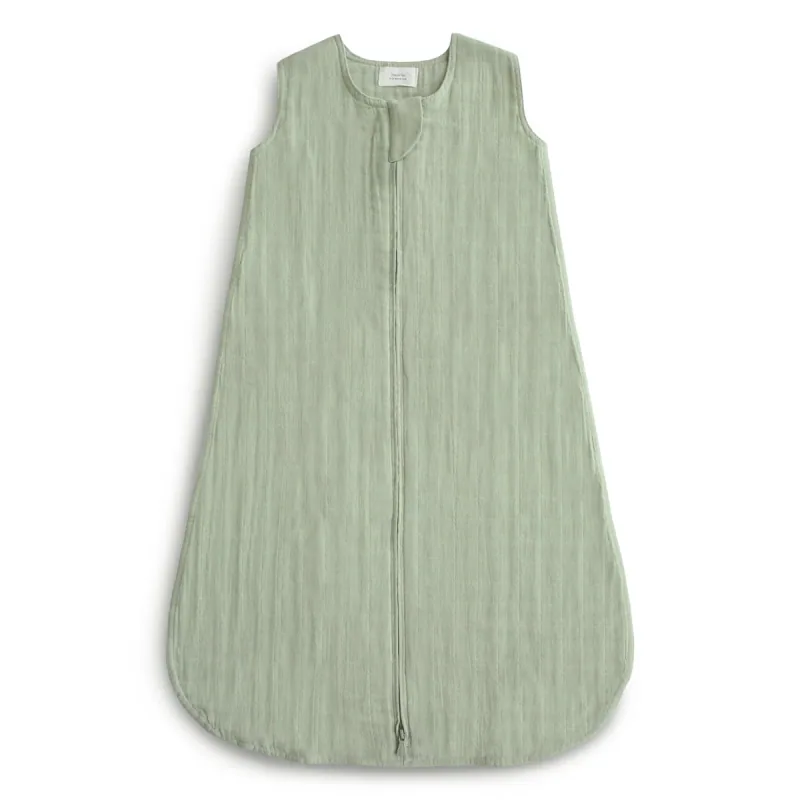
Before buying or using a Dreamland Baby sleep sack, identify whether the exact product is weighted. The American Academy of Pediatrics and federal Safe to Sleep guidance advise against weighted sleep products for infants. A brand name, review score, or promise of longer sleep does not change that recommendation.
SleepA practical guide
Dreamland Baby sleep sack: read the exact model before buying
Considering a Dreamland Baby sleep sack? Check whether the exact model is weighted, understand current infant sleep guidance, and compare fit and care.
Jump to a section
The quick answer
Identify the exact Dreamland Baby model before using it. AAP and NIH guidance advises against weighted infant sleep products. Choose an appropriately fitted unweighted option and keep the sleep space firm, flat, and clear.
- Check whether the exact garment is weighted; the brand name alone is insufficient.
- Reviews and sleep-duration claims cannot establish infant sleep safety.
- Do not remove filling or modify a weighted garment.
- Assess any unweighted model by fit, movement, warmth, and instructions.
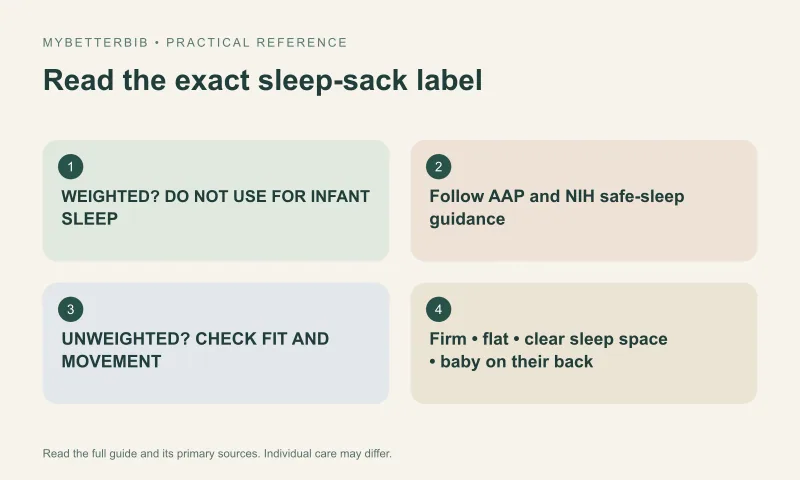
Start with the label and exact model
Look at the sewn-in label, original packaging, and current manufacturer description. Search the complete product name rather than relying on a listing photograph or a resale caption.
If you cannot determine whether a secondhand or gifted product is weighted, do not use it while you investigate. Contact the manufacturer with identifying information and ask for the appropriate instructions. Do not remove filling or alter the garment in an attempt to make it suitable.
For any unweighted model, evaluate the same fit, movement, and care details you would consider for another brand. Do not infer that all products with a shared logo have the same design.
Separate marketing claims from sleep guidance
Dreamland's product pages describe its designs and intended benefits; these are manufacturer statements. Customer surveys and testimonials cannot establish infant sleep safety.
The NIH Safe to Sleep FAQ explains why weighted sleep products are not recommended for babies and why limited or closely monitored observations do not establish safety for routine home sleep. The AAP safe sleep guidance also advises avoiding weighted blankets, sleepers, and swaddles.
This guide is an independent reading and selection aid. It is not a hands-on product test, a medical endorsement, or a claim that a particular sleep garment prevents sleep-related death.
Keep the sleep setup consistent
Use a firm, flat, appropriate infant sleep surface, place the baby on their back, and keep the space free of loose objects. No sleep sack makes an adult bed, sofa, or inclined seat an appropriate routine sleep space.
When sleep becomes difficult, ask your pediatrician about your baby's age, feeding, and health rather than treating added weight as the next step. A manageable bedtime routine can be built around an ordinary, correctly fitted unweighted garment.
Read a listing in the order that affects the decision
Start with construction: does the product add weight, restrain the arms, or compress the chest and body? Then read the size range, fit instructions, fabric, and cleaning directions. Finally consider convenience features and patterns. This order prevents a color choice or discount from becoming the reason to overlook a more important design question.
The NIH’s safe sleep environment guidance advises against weighted products for infants. The concern is the product category, so a “lightly weighted” description is not a reason to assume the recommendation no longer applies. If a listing is ambiguous, request the exact model information from the manufacturer before use.
Distinguish a safety recommendation from a recall claim
A product can be discouraged by professional guidance without the article establishing that a specific model has been recalled. Recall status is a separate question requiring the exact model, production information, and a current official notice. Search the CPSC recall database for that information rather than assuming a social-media post applies to every item sold under a brand.
Conversely, absence from a recall search is not proof that a product follows all safe-sleep recommendations. Do not make the purchase decision depend only on whether a recall appears. Keep the AAP and NIH guidance in view when assessing the underlying design.
Handle a used garment with incomplete information
Photograph the sewn-in label and ask the previous owner for the original instructions and purchase details. Compare the garment with the current product description, including whether there are weighted panels or inserts. If you cannot confidently identify it, set it aside rather than experimenting with its fit on the baby.
Do not cut open seams, remove filling, or add your own fastenings. An altered garment no longer matches the construction or care information you are trying to evaluate. For a return or refund inquiry, use the seller’s current policy and explain the actual item and condition. Do not pass an unsuitable garment to another family as a sleep solution.
Compare alternatives without promising better sleep
An ordinary unweighted wearable blanket can be assessed on measurable, practical details: the baby’s current height and weight, neck and arm openings, zipper access, laundering, and warmth with the planned clothing. A lower price may be helpful if it allows two correctly sized sacks in rotation instead of one oversized premium item.
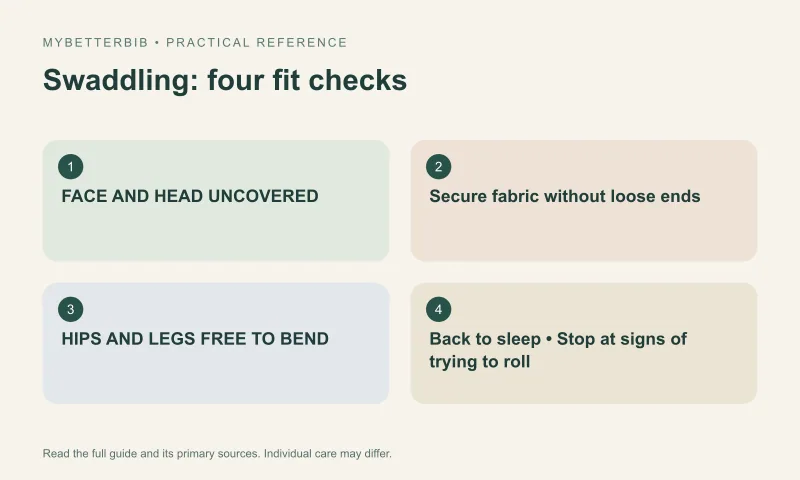
Sleep changes have many possible explanations, including development, feeding, routine, and illness. Track concerns and ask the pediatrician about the baby’s actual pattern. A shopping comparison should not promise that added pressure, a particular textile, or a premium brand will make an infant sleep through the night. Our sleep-sack guide shows unweighted design examples and a fit checklist.
A few more details
Your questions, answered
Are weighted sleep sacks recommended for babies?
No. The AAP and NIH Safe to Sleep guidance advise against weighted sleep products for infants.
How do I check a gifted Dreamland Baby sleep sack?
Find the exact model and label, confirm whether it is weighted, and obtain the current instructions from the manufacturer. Do not use an unidentified product while investigating.
Is the absence of a recall proof that a weighted sleep sack is appropriate?
No. Recall status and independent safe-sleep recommendations answer different questions. AAP and NIH guidance advises against weighted infant sleep products.
Can I remove the weighted filling myself?
Do not modify the garment. Set it aside and choose an appropriate unweighted product with intact instructions and correct fit.
Sources & product information
Follow the original sources for current product details, instructions, and guidance.