A burp cloth is an absorbent cloth placed on the adult or another appropriate surface during supervised feeding and burping. Position it before lifting the baby so it covers the likely path of spit-up. It helps with cleanup; it does not make a baby burp or treat reflux.
Feeding3 products, compared
How to use a burp cloth without constantly repositioning it
Place a burp cloth where spit-up is likely to land, keep the baby's face clear, and plan clean replacements for shoulder and seated burping routines.

Jump to a section
The quick answer
A useful burp cloth covers where spit-up lands on the adult, absorbs enough for the task, and fits a practical wash-and-dry routine. Compare the actual dimensions, outline, layers, and whether the cloth stays where you place it.
- A shoulder cloth and a baby-worn bib protect different locations.
- More layers can mean different drying needs, not a guaranteed capacity.
- Measure coverage across the shoulder and down front and back.
- Replace the cloth when wet and keep it out of the sleep space.
At a glance
The details that make a difference when you’re deciding.
| Product | Documented construction | What to assess at home |
|---|---|---|
| Mushie Muslin Burp Cloth | Organic cotton, curved outline, two-pack | Shoulder coverage and drying time |
| Copper Pearl Genevieve | 21 × 10 in; cotton outside, fleece middle | Width, layered feel, laundering |
| aden + anais Burpy Bib | Organic muslin; bib/cloth design | Draped coverage versus fastened coverage |
A closer look
Products mentioned in this guide
Actual product photos, manufacturer information, and direct links. Comparisons are based on published specifications; these are not hands-on test results.
01Organic Cotton Muslin Burp Cloth 2-Pack023 Pack Premium Burp Cloths - Genevieve03organic cotton muslin burpy bibs 2 pack
01
An absorbent cloth for a parent’s shoulder
Mushie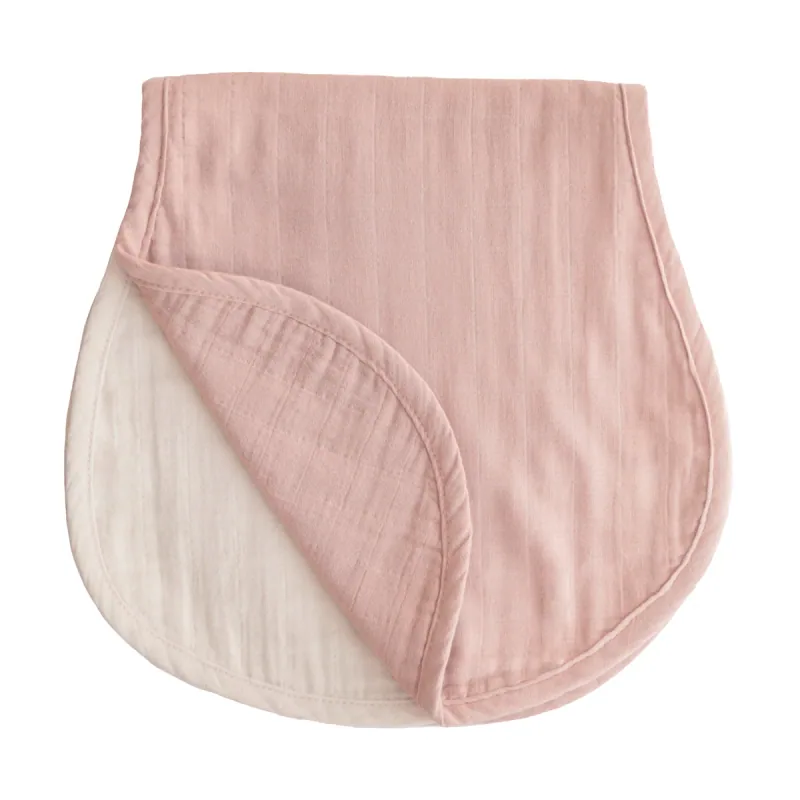
Organic Cotton Muslin Burp Cloth 2-Pack
Mushie’s curved muslin cloth is a straightforward option for milk cleanup when you want a washable fabric surface across your shoulder. The two-pack makes it possible to keep one in use and another in the wash. Its value is the coverage and absorbent construction, rather than a molded pocket. Compare the actual outline with where spit-up lands when you hold your baby; the cloth still needs positioning and replacement when wet.
- 100% organic cotton
- Pre-washed muslin
- Pack includes two cloths
- Rounded, extended shoulder shape
Where it fits
- Washable fabric for repeated feeds
- Two cloths support a small rotation
What to weigh up
- No wearable fastening for the parent
- Absorbency is finite; replace when damp
02
Long shoulder coverage with a layered cloth
Copper Pearl
3 Pack Premium Burp Cloths - Genevieve
Copper Pearl’s Genevieve burp cloths pair cotton outer surfaces with a fleece middle layer. The 21-by-10-inch size gives a concrete measurement to compare with your shoulder, forearm, or lap. The three-pack may suit a small rotation, though the right quantity depends on your actual changes and drying time. This is a fabric cloth that needs positioning; the manufacturer’s absorbency language should not be read as a guarantee that every spill will stay off clothing.
- Three cloths in this set
- 21 × 10 inches
- Cotton front and back
- Fleece middle layer
Where it fits
- Documented dimensions
- Layered absorbent construction
What to weigh up
- Can shift while the baby moves
- Check care guidance for the layered fabric
03
Comparing a bib-and-burp-cloth hybrid
HALO / aden + anais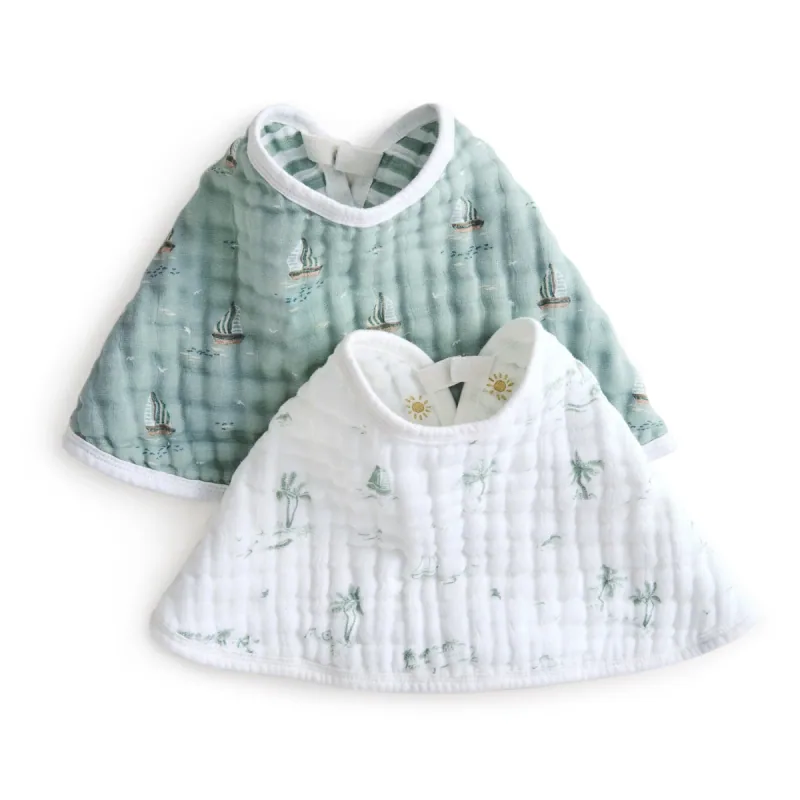
organic cotton muslin burpy bibs 2 pack
The aden + anais Organic Cotton Muslin Burpy Bib is a useful real-world example of a product that performs two cleanup jobs. It can be draped over an adult’s shoulder as a cloth or fastened as a bib on the baby. Its shaped textile design is different from a liquid-holding silicone pocket. Compare how the fastening changes the covered area and how often the cloth needs replacing; neither mode prevents spit-up itself.
- 100% organic cotton muslin
- Two-in-one bib and burp-cloth design
- Shaped coverage
- Sailing Seas print shown
Where it fits
- Two uses in one textile
- Wider outline than some bandana bibs
What to weigh up
- Needs repositioning when draped on an adult
- No molded absorbent shelf
Compare three real cloth constructions
Mushie’s Organic Cotton Muslin Burp Cloths use a curved muslin outline and come as a two-pack. Copper Pearl’s Genevieve Burp Cloths measure 21 by 10 inches, with cotton front and back surfaces and a fleece middle layer. Those facts provide a useful starting comparison of shape and construction without inventing an absorbency score.
The aden + anais Organic Cotton Muslin Burpy Bib adds a fastening so the shaped cloth can also be used as a baby bib. In shoulder use it is still a draped textile, so how it lies on your body matters. Compare both configurations before assuming a two-in-one item automatically performs every job better.
Set the cloth before picking the baby up
Place the cloth on yourself first and check whether it slides on the fabric you are wearing. Spread it enough to create useful coverage, keeping loose corners away from the baby.
A shaped cloth may fit around the curve of your shoulder, while a rectangle lets you adjust coverage in several directions. Try the placement with empty hands before the feed so you are not learning while holding a fussy baby.
Do not secure a loose cloth to the baby with improvised clips or ties. If you need a wearable product, choose one designed for that use and follow its instructions.
Keep the face and airway visible
When holding the baby against your shoulder, remain attentive to head position and keep the face clear of fabric and your clothing. A large cloth should not fold over the nose or mouth.
Adjust your hold safely rather than pulling a cloth sharply beneath the baby. If repositioning becomes awkward, put the baby in a safe, supported place or ask another adult to help.
Cloths belong to awake, supervised care. Keep them out of an infant's sleep space, and remove any bib before sleep as advised in Canadian Paediatric Society guidance.

Know when cleanup is not the main question
Spitting up is different from forceful vomiting, and the amount left on a cloth is hard to judge. The AAP's explanation of spit-up can help you discuss what you are seeing with a clinician.
Seek medical advice for feeding refusal, poor weight gain, repeated forceful vomiting, blood or green vomit, or a baby who seems unwell. Do not keep changing bibs and cloths instead of addressing those signs.
For an ordinary messy feed, the useful goal is a prepared setup: a supported baby, coverage where you need it, and a clean replacement ready. Fine-tune the cloth placement to the hold rather than expecting one fold to work for everyone.
Check coverage on your own shoulder
Lay a clean cloth in the position you normally use while supporting the baby. Look at how far it extends in front and behind, and whether its width covers the likely spill route. A long narrow cloth may protect farther down a shirt while leaving part of the shoulder exposed. A broader outline may cover the shoulder well but feel bulky beneath the baby’s cheek.
Repeat the check with the clothing you commonly wear. A smooth shirt can let a cloth move differently from a textured sweater. Do not secure a loose cloth with pins, cords, or an improvised neck attachment. If it repeatedly slips, try a different shape or adjust the routine while continuing to support the baby securely.
Understand absorption and leakage as separate issues
Liquid can soak through a saturated cloth, travel across the surface before absorption, or miss the edge entirely. A product that performs well for one route can still leave clothing wet through another. This is why a thicker center layer does not establish a universal guarantee of dry clothing.
During the trial period, notice what actually happened. “The cloth shifted” suggests a positioning issue; “the middle was soaked” suggests changing it sooner or choosing a different construction; “the spill missed the side” suggests coverage. Avoid buying more of the same shape until you understand which of those problems you are trying to solve.
Put the clean spare within reach
Keep a replacement beside the feeding chair or another predictable place. Fold used cloths so the wet area stays contained while you move them to laundry, and keep clean and used textiles separate. A damp cloth should not return to the clean stack simply because the stain is hard to see.
If more than one adult feeds the baby, show where the clean cloths live and how used ones are collected. Include the actual drying time when deciding how many to own. A small effective rotation can be easier to maintain than an overflowing basket where every cloth has uncertain cleanliness.
Choose the next purchase from the first week’s observations
Buy a small pack, wash it according to the label, and assess both its fit and how it feels after drying. Check for shrinking, warped edges, rough seams, and lingering dampness. If the shape works, expand the rotation deliberately. If it does not, compare a different outline rather than relying only on the material name.
For a numerical starting point, see how many burp cloths you need. For a product comparison focused on dribbles and spit-up, continue with best bibs for spit-up. Neither a cloth nor a bib treats reflux or changes how much a baby spits up.
A few more details
Your questions, answered
Should a burp cloth go only on the front of my shoulder?
Place it to cover the likely spill path, which may include the top, front, and back of your shoulder. Keep loose fabric away from the baby's face.
Does a burp cloth help treat reflux?
No. A burp cloth is for cleanup. Persistent feeding concerns or concerning vomiting need advice from your baby's clinician.
Why does spit-up sometimes reach my shirt through a thick cloth?
The cloth may be saturated, the liquid may travel around an edge, or the cloth may have shifted. Identify the route before deciding that more layers will solve the problem.
Can I fasten a normal burp cloth around my neck?
Do not improvise pins, ties, or neck attachments. Use a product only as designed and keep supporting the baby securely.
Sources & product information
Follow the original sources for current product details, instructions, and guidance.