For spit-up, start with an absorbent bib that fits well and covers the area where milk tends to land. A wipe-clean food pocket serves a different job. The five options below compare soft front bibs, layered shoulder cloths, and a convertible muslin design using their documented construction and actual product photographs.
Feeding5 products, compared
Best bibs for spit-up: useful options and what to compare
Compare absorbent bib options for spit-up, including terry bibs and convertible muslin designs. Check coverage, age guidance, fit, and realistic expectations.
Jump to a section
The quick answer
For spit-up, start with absorbent coverage rather than a hard food-catching pocket. Compare the actual spill route, baby fit, parent-shoulder coverage, and wash routine. The best choice may be a cloth bib plus a burp cloth, rather than one item for every position.
- Use documented construction and fit, not untested absorbency rankings.
- Shoulder coverage matters when the adult’s shirt gets wet.
- A silicone food pocket does not absorb liquid.
- Persistent feeding symptoms belong with a pediatrician.
At a glance
The details that make a difference when you’re deciding.
| Need | Options to compare | Main tradeoff |
|---|---|---|
| Front dribbles | Mushie Muslin; Copper Pearl Bandana; aden + anais Snap Bib | Outline, neckline, backing, laundering |
| Adult shoulder protection | Copper Pearl Burp Cloth | Positioning and 21 × 10 in coverage |
| Two textile arrangements | aden + anais Burpy Bib | Clean surface and fit in each mode |
| Food pieces at meals | A separate silicone pocket bib | Holds liquid rather than absorbing it |
A closer look
The products, in detail
Actual product photos, manufacturer information, and direct links. Comparisons are based on published specifications; these are not hands-on test results.
01Muslin Bib024 Pack Baby Bandana Bibs - Genevieve03organic cotton snap bibs 3 pack043 Pack Premium Burp Cloths - Genevieve05organic cotton muslin burpy bibs 2 pack
01
Soft dribble coverage during awake time
Mushie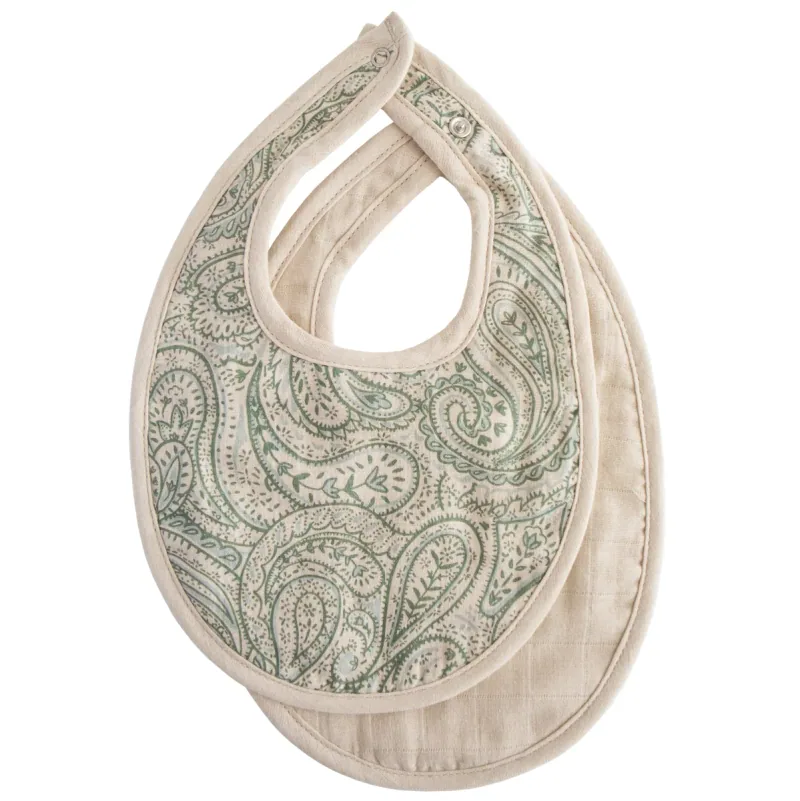
Muslin Bib
This Mushie bib uses layers of muslin and two snap positions, so its main role is catching moisture on the baby’s front. It belongs in a different comparison from a silicone food bib: the fabric absorbs liquid while a molded pocket holds it. The small pack is useful for trying the fit before committing to a large drawer of matching bibs. Always remove it before sleep and check the neckline on the individual baby.
- Organic cotton muslin
- Two snap positions
- Two bibs per set
- Multi-layer fabric
Where it fits
- Adjustable closure
- Soft absorbent construction
What to weigh up
- Protects the baby’s front rather than the parent’s shoulder
- Needs laundering after wet use
02
A multipack of bandana-style dribble bibs
Copper Pearl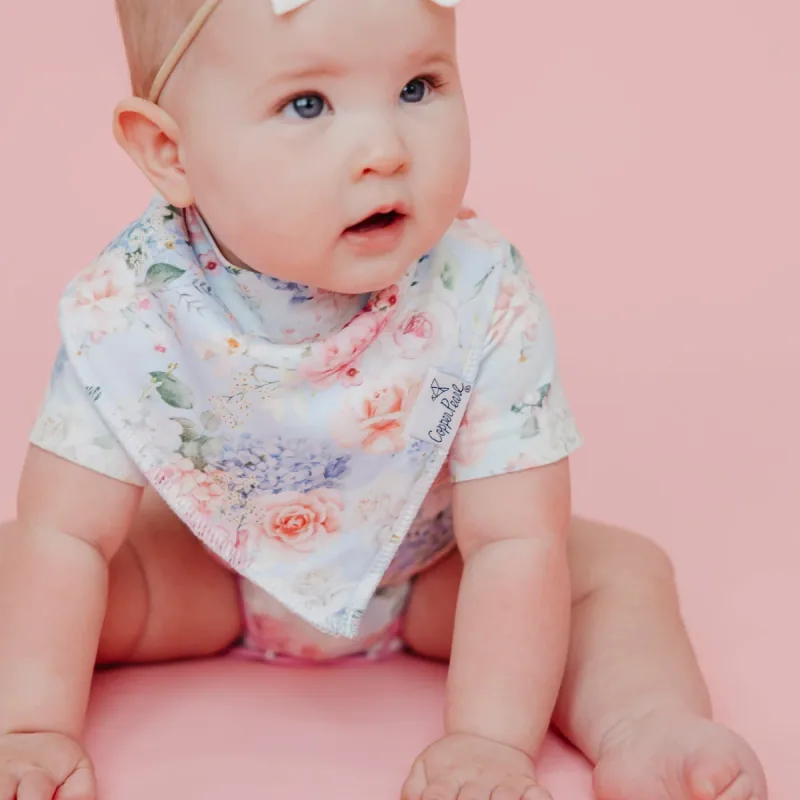
4 Pack Baby Bandana Bibs - Genevieve
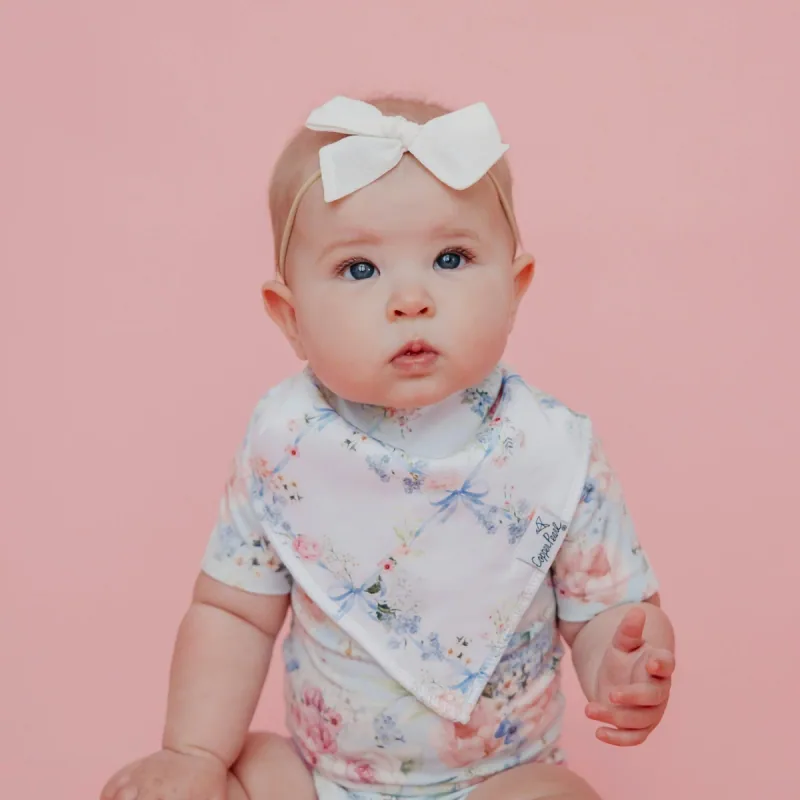
Copper Pearl’s Genevieve set contains four bandana bibs with a cotton front and polyester fleece backing. Two nickel-free snaps provide adjustment. The triangular outline makes this a useful comparison with a rounded muslin bib: look at coverage near the shoulders and how fabric gathers under the chin. The listed age range is a shopping guide, not proof that a specific fastening is comfortable on your baby. Change damp bibs and remove them before sleep.
- Four-pack
- Cotton front with polyester fleece backing
- Two nickel-free snaps
- Manufacturer lists ages 0–36 months
Where it fits
- Coordinated small rotation
- Adjustable fastening
What to weigh up
- Bandana shape covers differently from a broad bib
- Contains polyester as well as cotton
03
Broad cloth bib coverage in a small set
HALO / aden + anais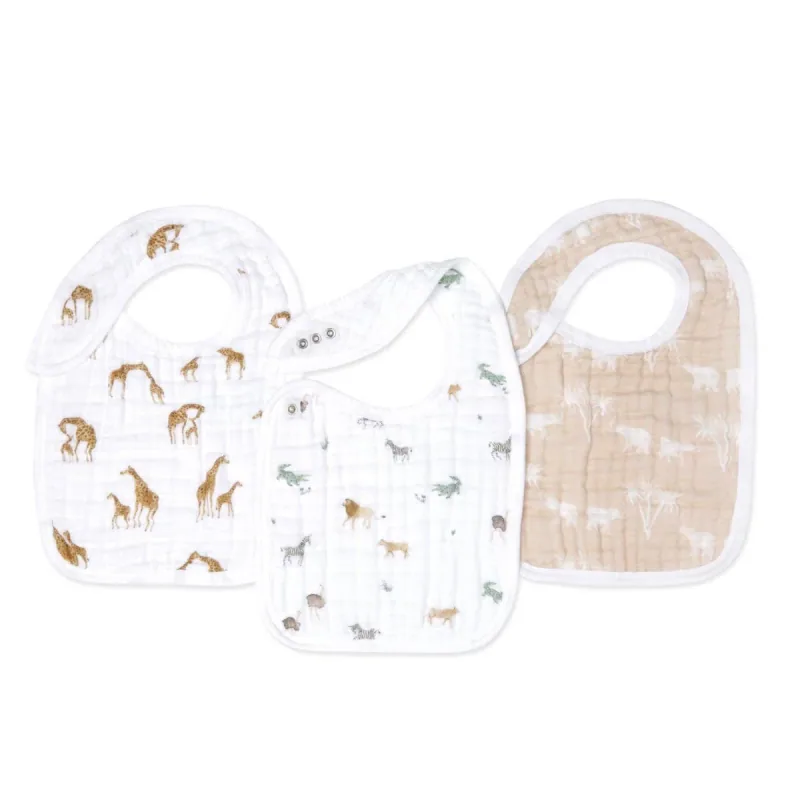
organic cotton snap bibs 3 pack
The aden + anais Organic Cotton Snap Bibs shown here use three layers of muslin and an adjustable fastening. The Safari Dreams three-pack provides another fabric construction to compare with fleece-backed bandanas and smaller two-layer options. Look at the neckline and actual washed dimensions before choosing by pack count. Layer count describes construction, but it is not an independently measured capacity rating or a promise that a bib will stay dry through every feed.
- Three-pack
- Three layers of organic cotton muslin
- Adjustable snap fit
- Safari Dreams print shown
Where it fits
- Several bibs for rotation
- Absorbent textile layers
What to weigh up
- Needs laundering and drying
- Fit still depends on the individual baby
04
Long shoulder coverage with a layered cloth
Copper Pearl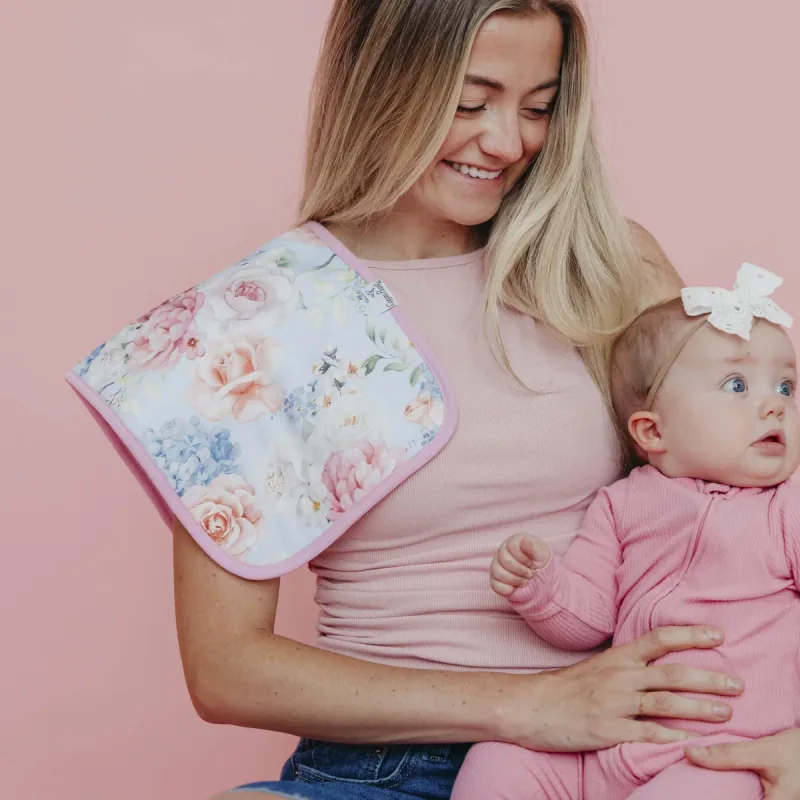
3 Pack Premium Burp Cloths - Genevieve
Copper Pearl’s Genevieve burp cloths pair cotton outer surfaces with a fleece middle layer. The 21-by-10-inch size gives a concrete measurement to compare with your shoulder, forearm, or lap. The three-pack may suit a small rotation, though the right quantity depends on your actual changes and drying time. This is a fabric cloth that needs positioning; the manufacturer’s absorbency language should not be read as a guarantee that every spill will stay off clothing.
- Three cloths in this set
- 21 × 10 inches
- Cotton front and back
- Fleece middle layer
Where it fits
- Documented dimensions
- Layered absorbent construction
What to weigh up
- Can shift while the baby moves
- Check care guidance for the layered fabric
05
Comparing a bib-and-burp-cloth hybrid
HALO / aden + anais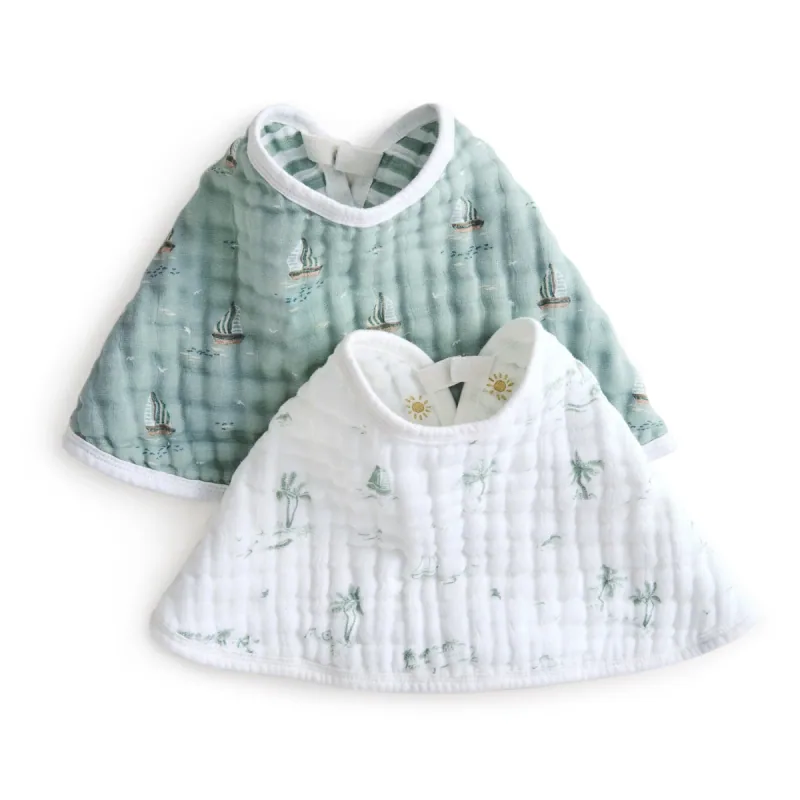
organic cotton muslin burpy bibs 2 pack
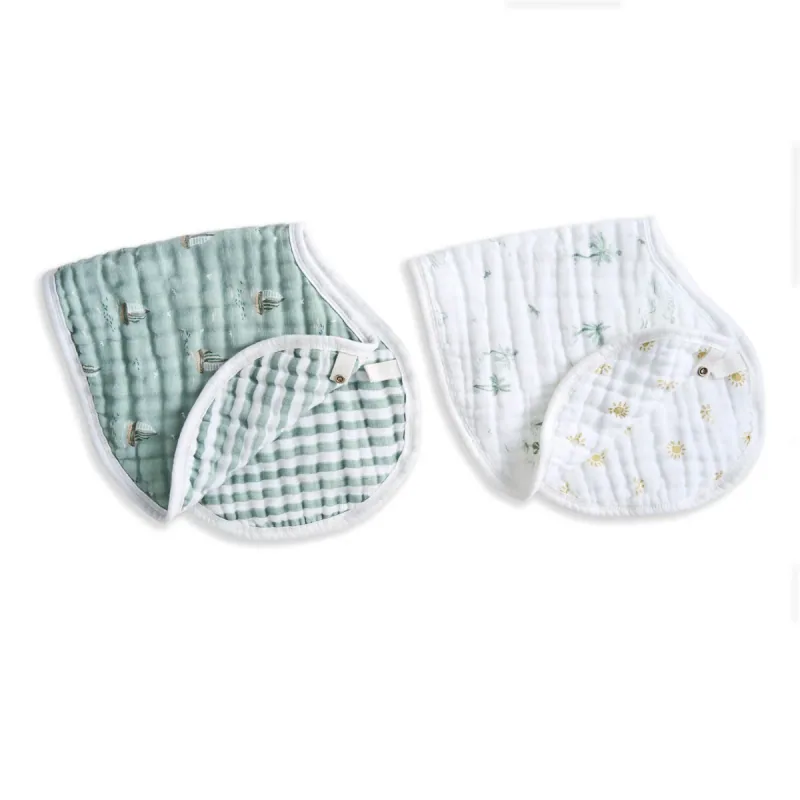
The aden + anais Organic Cotton Muslin Burpy Bib is a useful real-world example of a product that performs two cleanup jobs. It can be draped over an adult’s shoulder as a cloth or fastened as a bib on the baby. Its shaped textile design is different from a liquid-holding silicone pocket. Compare how the fastening changes the covered area and how often the cloth needs replacing; neither mode prevents spit-up itself.
- 100% organic cotton muslin
- Two-in-one bib and burp-cloth design
- Shaped coverage
- Sailing Seas print shown
Where it fits
- Two uses in one textile
- Wider outline than some bandana bibs
What to weigh up
- Needs repositioning when draped on an adult
- No molded absorbent shelf
Five real options, grouped by the problem they solve
For an absorbent bib worn on the baby, compare Mushie’s Muslin Bib, Copper Pearl’s Genevieve Bandana Bibs, and aden + anais Organic Cotton Snap Bibs. Mushie offers layered muslin with two snap positions; Copper Pearl combines a cotton front with polyester fleece; aden + anais uses three layers of muslin. Shape and care differ even though all three manage moisture on the baby’s front.
For parent-shoulder cleanup, Copper Pearl’s Genevieve Burp Cloths offer a documented 21-by-10-inch textile with a fleece middle layer. The aden + anais Organic Burpy Bib is a bib-and-burp-cloth hybrid. It is useful to compare when you want one shaped textile with two arrangements.
These are use-case selections based on manufacturer specifications, not a ranked laboratory test. We have not measured identical liquid volumes, wash durability, or real-world leakage for these products, so there is no invented “most absorbent” winner.
Check three things before choosing
First, look at where spit-up goes. If clothing gets wet toward the shoulder or back, a narrow front bib may not address the problem. If most mess happens on the adult during burping, compare shoulder coverage too.
Second, check the actual size and fitting instructions. An age range is useful guidance, but an individual baby's fit still needs attention. Do not buy an oversized bib simply to extend its use.
Third, read the laundry label. A bib that needs a drying method you cannot maintain may spend too much time out of circulation.
Understand why a food bib is a separate purchase
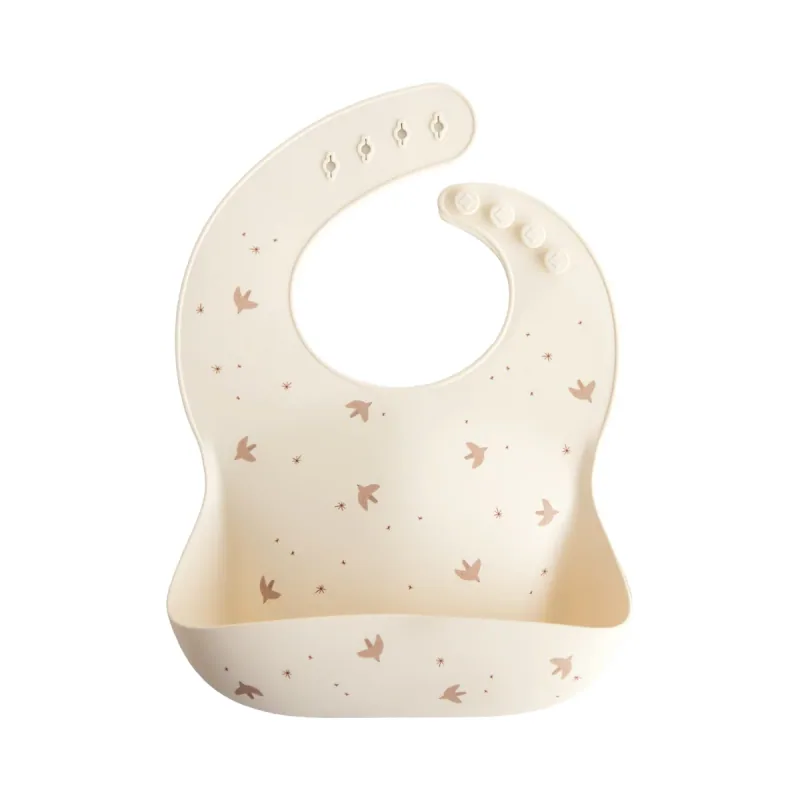
The Mushie Silicone Baby Bib is an example of a wipe-clean bib with a food-catching pocket. That makes it a useful comparison for meal cleanup, but silicone does not take in liquid like an absorbent textile.
A pocket may hold a spill while the bib remains upright, and its contents still need managing when removing it. If your priority is soaking up small milk spills during cuddles, evaluate an absorbent option first.
This distinction is about the task, not a universal ranking of materials. A household may reasonably use cloth for milk feeds and a washable silicone design for meals.
Run a small practical trial
Buy a modest quantity and follow the first-wash instructions. During ordinary use, observe whether the bib stays appropriately positioned, whether fabric becomes wet through, and how easily the closure works.
After laundering, check the neckline, seams, backing, and fastener again. Note drying time under your actual conditions. These observations are more useful than buying several packs based only on a soft-looking photograph.
For a broader side-by-side explanation, see burp cloth versus bib.
Keep the limits clear
Remove bibs before sleep, as advised by the Canadian Paediatric Society. No bib prevents spit-up, treats reflux, or replaces medical assessment for concerning vomiting or feeding problems.
mybetterbib is still a concept in development, so it belongs on a launch-update list rather than a list of currently tested purchases. Its intended wraparound absorbent shelf is described in our FAQ; final performance and materials have not been established.
Choose the product that meets today's need, with realistic expectations about coverage and a washing routine your family can sustain.
Choose the best starting option for your spill pattern
If the recurring mess is a small dribble toward the chest, start with the cloth bib whose neckline and upper coverage fit best. If the adult’s shoulder and back are frequently wet after burping, spend the first comparison effort on a broad shoulder cloth. If you alternate both arrangements, a hybrid can be worth examining, but it still needs a clean, dry surface in each mode.
Do not judge the problem only by the amount of fabric in the drawer. A saturated center, an uncovered shoulder edge, and a cloth that slides down the shirt are separate failures with different possible solutions. Observe which route occurs before buying another set.
Evaluate the neck and cheek contact points
Look for bunching under the chin, a fastening that pulls, stiff trim, and rough seams after washing. A soft product description does not tell you how the finished edge feels on your baby. Follow the manufacturer’s sizing instructions and choose another size or shape when the fit is wrong; do not modify the closure.
Change a damp bib promptly and keep irritated skin clean and dry using the baby’s usual care plan. A thicker bib worn wet for longer is not automatically kinder to skin than a lighter bib changed regularly. For persistent redness or discomfort, ask the clinician rather than attributing every rash to the bib material alone.
Test the washing routine before increasing the budget
Wash the trial pieces according to their labels and allow them to dry fully. Check whether the shape remains useful, fasteners work, and the fabric dries before the next expected need. Compare the cost of a workable rotation, not just the price of one premium bib.
Remove all bibs before sleep and keep loose cloths out of the sleep space. The Canadian Paediatric Society’s safe-sleep guidance makes that point explicit. A product designed for spit-up cleanup should be assessed during supervised awake use, not worn overnight to protect bedding.
Keep the medical and cleanup questions separate
If spit-up is accompanied by poor feeding, pain, fewer wet diapers, poor growth, or other concerning symptoms, discuss the baby’s health with the pediatrician. Bib choice cannot establish whether reflux or another condition is present. The AAP’s spit-up guide is a useful starting reference while you describe the actual pattern to the care team.
A few more details
Your questions, answered
Is a silicone food bib the best choice for spit-up?
It may collect a spill, but it does not absorb liquid like fabric. If soaking up milk is the goal, compare absorbent bibs and shoulder cloths first.
Have these bibs been independently tested by mybetterbib?
No. This is a comparison of manufacturer descriptions and practical buying considerations, not a hands-on test or laboratory ranking.
Which bib is the most absorbent?
This guide does not claim a lab-tested absorption winner. Compare documented layers, actual fit, the route of the spill, and your own wash-and-change routine.
Can I leave a spit-up bib on during sleep?
No. Remove bibs before sleep and keep loose feeding cloths out of the infant sleep space.
Sources & product information
Follow the original sources for current product details, instructions, and guidance.
- Mushie: Silicone Baby Bib
- Canadian Paediatric Society: safe sleep for babies
- Mushie: Muslin Bib
- Copper Pearl: 4 Pack Baby Bandana Bibs - Genevieve
- HALO / aden + anais: organic cotton snap bibs 3 pack
- Copper Pearl: 3 Pack Premium Burp Cloths - Genevieve
- HALO / aden + anais: organic cotton muslin burpy bibs 2 pack
- AAP’s spit-up guide