Burp cloth fabrics: compare absorbency, layers, and drying time
Understand cotton muslin, terry, and fleece-layer burp cloths. Compare real products, care labels, coverage, and a practical way to track drying at home.
Photo: Photo: Copper Pearl · Coverage depends on the shape and placement of the finished cloth, as well as the material inside it.Jump to a section
The quick answer
Choose a burp cloth by its finished construction and your laundry routine. Muslin describes a fabric, terry describes a looped surface, and a cotton-faced cloth may contain another material inside. Compare the dimensions, every layer, care instructions, and time until fully dry; a fiber name alone cannot rank absorbency.
Cotton is a fiber name; muslin, terry, and layered constructions are different fabric choices.
A cotton front does not establish the composition of the back or middle layer.
Drying time depends on the whole product, the care method, and conditions in your home.
Observe coverage and ordinary clean changes before buying a larger rotation.
When I look at a burp cloth, I want to know more than whether the listing calls it soft or absorbent. I want to know what touches the baby, what sits between the layers, how much of my shoulder it covers, and when it will be clean and dry again. Those questions make the purchase much more concrete.
Cotton muslin, terry, and cotton with an internal fleece layer can all appear in the same shopping results. They are not interchangeable descriptions. This guide uses actual manufacturer specifications to explain the differences and offers a simple way to observe your own routine. We have not laboratory-tested or timed these products.
At a glance
The details that make a difference when you’re deciding.
Construction example
Published materials
Care decision
Useful home observation
Mushie Muslin Burp Cloth
100% organic cotton muslin
Cold wash; lay flat; no tumble drying
Time until the whole cloth is dry
Gerber Floral Terry Burpcloths
Cotton interlock face; cotton/polyester terry back
Machine wash and dry; follow sewn-in settings
Feel and dampness on both surfaces
Copper Pearl Genevieve Burp Cloths
Cotton outside; fleece middle
Follow current instructions for the complete layered item
Dryness through the center and seams
A closer look
Products mentioned in this guide
Actual product photos, manufacturer information, and direct links. Comparisons are based on published specifications; these are not hands-on test results.
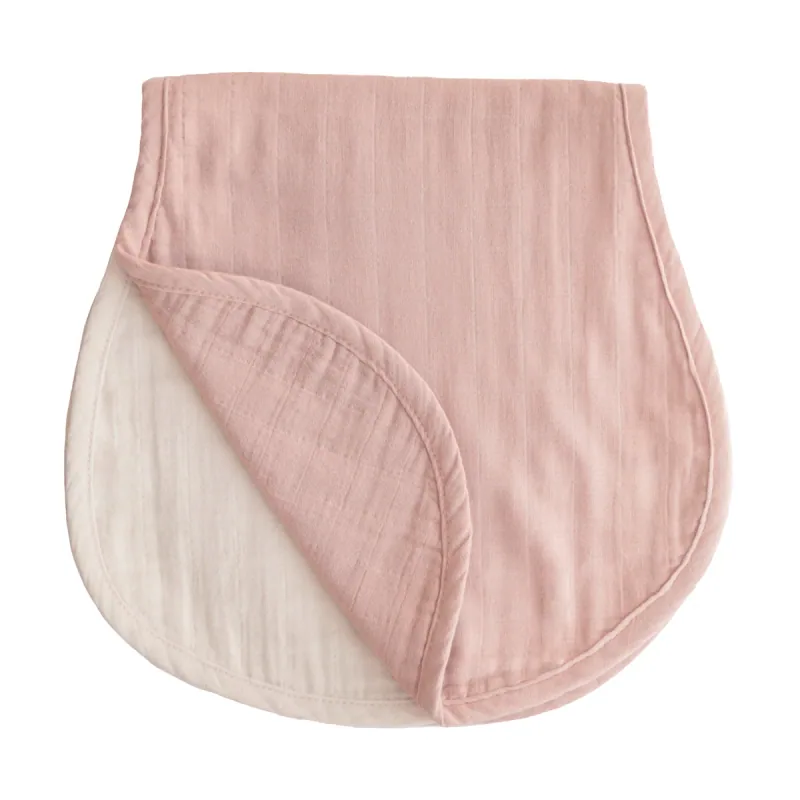
This two-pack is a concrete muslin example: Mushie lists organic cotton and a 22.5-by-11.5-inch outline. The care instructions matter as much as that size because the cloths are to be washed cold and laid flat to dry. If your feeding laundry normally goes straight into the dryer, include that separate drying step in the decision. Check how much of the curved outline actually covers your shoulder instead of comparing only the longest dimension.
100% organic cotton muslin
22.5 × 11.5 inches
Two cloths per set
Cold wash, maximum 30°C/80°F; lay flat to dry
Where it fits
Full fiber content and dimensions are published
Curved outline provides a different fit option from a rectangle
What to weigh up
Manufacturer says not to tumble dry
Compare the curved width where it rests on your shoulder
02
Seeing why terry does not necessarily mean all-cotton
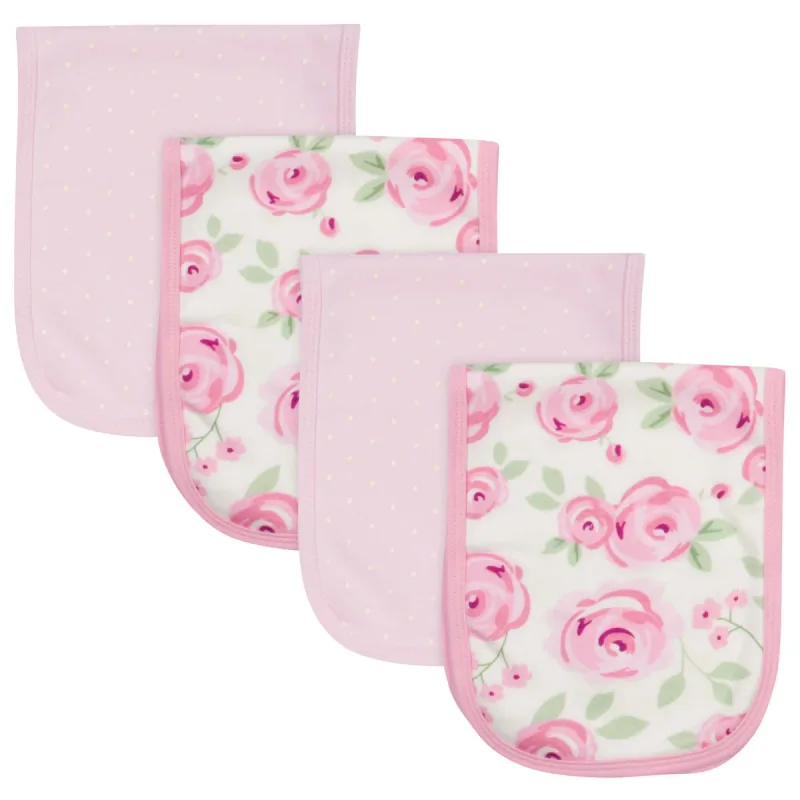
Gerber's floral four-pack identifies the front and back separately: a cotton interlock face and a knit-terry back containing cotton and polyester. This makes it a useful construction example alongside muslin and a fleece-centered cloth. The brand lists machine washing and machine drying, so check the sewn-in label for the settings required. This exact print was unavailable when checked; use it as a documented material example and verify the specifications if choosing another Gerber set.
Front: 100% cotton interlock
Back: 80% cotton, 20% polyester knit terry
Pack contains four cloths
Manufacturer lists machine washing and machine drying
Where it fits
Separate fiber percentages for the two surfaces
A terry-backed example with machine-drying guidance
What to weigh up
The complete cloth is not 100% cotton
This exact floral set was sold out when checked
03
Comparing smooth cotton surfaces with an internal fleece layer
Copper Pearl's Genevieve cloth places fleece between cotton front and back surfaces. That middle layer is the key construction detail to compare with an all-muslin cloth. The 21-by-10-inch rectangle also makes a useful shoulder-coverage comparison. Assess drying through the middle as well as the outer face, and follow the current care label. If you already own a rectangular shoulder cloth, compare its position and bulk before choosing a multipack.
Cotton front and back surfaces
Fleece middle layer
21 × 10 inches
Three cloths in this set
Where it fits
Layer construction is described separately
Rectangular size is easy to compare with your existing cloth
What to weigh up
The cotton description does not describe the fleece layer
Assess the whole cloth for dryness before storing
Start by separating fiber from construction
Cotton identifies a fiber. Muslin identifies a woven fabric, often used in layers for baby cloths. Terry has loops on its surface. Fleece describes a different fabric structure or finish and is not, by itself, a complete fiber declaration.
That means a cotton cloth can have very different thickness, surface texture, and layers from another cotton cloth. It also means a product with cotton in its title may include polyester in the backing or middle. Read the front, back, filling, and binding information separately where the manufacturer provides it. If a layer is not specified and that matters to your choice, ask before ordering.
Cotton muslin: inspect the finished shape and care label
Mushie's Organic Cotton Muslin Burp Cloths are a useful example because the listing provides composition, dimensions, and care instructions. The shape measures 22.5 by 11.5 inches and uses organic cotton. The brand specifies a cold wash and flat drying, with no tumble drying.
The practical question is whether that drying method fits your available space and turnaround time. Muslin in a product name does not promise that every item can go through the same dryer cycle. Nor do the longest dimensions tell you the width at the curved shoulder area. Use the outline in the real photograph when comparing it with a cloth you already own.
Terry: a looped surface can still be a blend
The Gerber Floral Terry Burpcloth four-pack illustrates why the full label matters. Gerber lists a cotton interlock front and a back made from 80% cotton and 20% polyester knit terry. It is a terry-backed cloth, not an entirely cotton cloth with identical surfaces. The exact floral set was sold out when checked; it is included here as a documented construction example.
Feel and inspect both sides of a product like this. Look at the looped surface, edge binding, and any decorative areas that could sit beneath the baby's cheek. Terry research has found that construction details such as weight, thickness, and yarn twist affect moisture behavior. That textile study does not rank these baby products; it explains why the word terry alone is not a performance score.
Gerber specifies the materials on each side separately. A cotton front and a terry back do not necessarily share the same fiber composition. Source: Photo: Gerber Childrenswear
Layered cotton and fleece: look beyond the outer face
Copper Pearl's Genevieve Burp Cloths have cotton on the front and back with a fleece layer in the middle. This is a different structure from an all-muslin cloth and from a cloth with exposed terry on one side.
The middle layer matters when checking whether the whole item is dry. An outer surface that feels ready is not a reason to ignore a damp center or seam. More layers also mean a different amount of material to fold, store, and position. Treat the construction as something to assess in your routine, not proof of an unlimited capacity or a leakproof result.
Absorption speed, capacity, and coverage answer different questions
A cloth may take in a small dribble promptly but become saturated during a larger mess. Another may offer plenty of material yet leave a gap where the spill actually lands. Liquid can reach clothing because it traveled around an edge, because the cloth shifted, or because the wet area soaked through.
Those observations lead to different decisions. A missed edge suggests checking shape and placement. A wet center suggests a clean change or reconsidering construction. A slipping cloth suggests checking how it lies on your usual clothing. Our bib versus burp cloth guide helps distinguish baby-worn coverage from coverage on the adult.
Compare drying in the routine you can actually maintain
Drying depends on more than the fiber name: how wet the cloth is after washing, its layers, how it is spread out, airflow, and the permitted drying method all matter. A cloth folded over itself on a rack presents a different situation from one spread flat. Keep those conditions in mind when deciding whether a new cloth takes too long for your routine.
Follow each product's care instructions rather than forcing everything through one method for a comparison. Note the time it leaves the washer and the time it is fully dry, including seams. Check your available rack space as well as elapsed time. Several cloths that require flat drying can be inconvenient even if one fits comfortably. Our washing guide covers the label checks to make first.
Try a small pack over a few ordinary days
Start with a small pack and wash it according to the label. Over several ordinary days, notice where you use it, whether it stays in position, why you change it, and when it returns dry to the clean stack. A few short notes on your phone are enough. One unusually messy feed does not need to decide your whole shopping list.
Look for a repeated inconvenience: a wet shirt at the side, a damp middle, a curled seam, or a cloth still drying when the next load starts. Then choose the next purchase to address that issue. If the shape works and clean spares are the only shortage, another pack may help. If you keep adjusting the same edge or waiting for the center to dry, try a different construction or outline before adding more of it.
Buy for the full clean-and-dry cycle
The quantity you need includes the cloths in use, waiting for washing, drying, and deliberately reserved for outings. If drying is the bottleneck, another pack of the same construction may add work without addressing the cause. A different care method or a smaller rotation of a better-fitting shape may be more useful.
Keep clean cloths separate from used ones and store them only when completely dry. For a quantity calculation, use how many burp cloths you need. For the wider shopping comparison, see burp cloths. Keep feeding cloths out of the baby's sleep space, following safe-sleep guidance.
What this means for the mybetterbib design
For mybetterbib, easy washing needs to apply to the whole design: the absorbent surface, the shelf, the seams, and the silicone interior that supports the shape. I want fewer things for a tired mom to arrange during a feed, with coverage that changes direction for baby or parent use and a separate parent strap.
Non-toxic materials, dependable absorption, and a practical wash-and-dry routine are development goals, not completed test results. The final construction and care instructions will need to be verified together. Read the mybetterbib FAQ for the concept and visit the spit-up and burping collection for the connected cleanup guides.
A few more details
Your questions, answered
Is cotton muslin always more absorbent than terry?
No reliable ranking follows from those names alone. Fiber content, layers, weight, surface construction, finishing, and product dimensions can differ. Compare actual specifications and ordinary use rather than assuming every muslin cloth outperforms every terry cloth.
Does cotton on a burp cloth listing mean every layer is cotton?
Not necessarily. A listing may describe only the face. For example, Copper Pearl describes cotton front and back surfaces with a fleece middle, while the Gerber terry example has a cotton face and a cotton/polyester backing. Read each layer separately.
Why can the outside feel dry while the cloth still needs more drying?
Layers, seams, and folded areas can retain moisture differently. Check the full item before storing it, spread it as the care instructions permit, and leave enough drying space. A dry-looking surface is not a measurement of the inside.
Can I compare cloths by pouring water onto them at home?
That may show how those specific cloths behave in that setup, but it does not establish a reliable spit-up capacity or a universal ranking. Liquid type, pour rate, pressure, surface angle, laundering, and drying conditions affect the observation. For shopping decisions, ordinary coverage and clean-change notes are more directly useful.
Sources & product information
Follow the original sources for current product details, instructions, and guidance.
Compare a burp cloth and bib by coverage, absorbency, and everyday use. See what protects baby, what protects your shoulder, and where convertible designs fit.
Estimate your burp cloth supply from daily use, laundry turnaround, and travel backups. Use clear examples and adjust a starter set without overbuying.