Choose burp cloths by the coverage and washing routine you need. Fabric names alone do not tell you how much liquid a finished cloth holds, how quickly it dries, or whether it stays on your shoulder. Compare the actual construction, dimensions, and care instructions before buying a large matching set.
Feeding3 products, compared
Burp cloths: compare fabric, shape, and laundry practicality
Compare burp cloths by usable coverage, fabric layers, backing, drying time, and care instructions. Choose a small starter set that fits your routine.
Jump to a section
The quick answer
Build a burp-cloth rotation from daily clean changes and the time until laundry is fully dry. Test one small set first, keep separate supplies for repeated locations, and compare bulk packs by dimensions and construction rather than count alone.
- A multipack is useful only if the shape works for your routine.
- Count travel and caregiver supplies separately from the home rotation.
- Wet cloths need a clear route to washing and drying.
- A matching bib bundle may include items you do not need yet.
At a glance
The details that make a difference when you’re deciding.
| Buying question | Check before ordering | Why it matters |
|---|---|---|
| How many pieces? | Actual pack contents | Photos may show several variants |
| How much coverage? | Length, width, and outline | Pack count does not measure protected area |
| How long to dry? | Material and care label | Drying time determines rotation size |
| Which extras? | Matching bibs or accessories | A bundle can include unnecessary items |
A closer look
The products, in detail
Actual product photos, manufacturer information, and direct links. Comparisons are based on published specifications; these are not hands-on test results.
013 Pack Premium Burp Cloths - Genevieve02Organic Cotton Muslin Burp Cloth 2-Pack03organic cotton muslin burpy bibs 2 pack
01
Long shoulder coverage with a layered cloth
Copper Pearl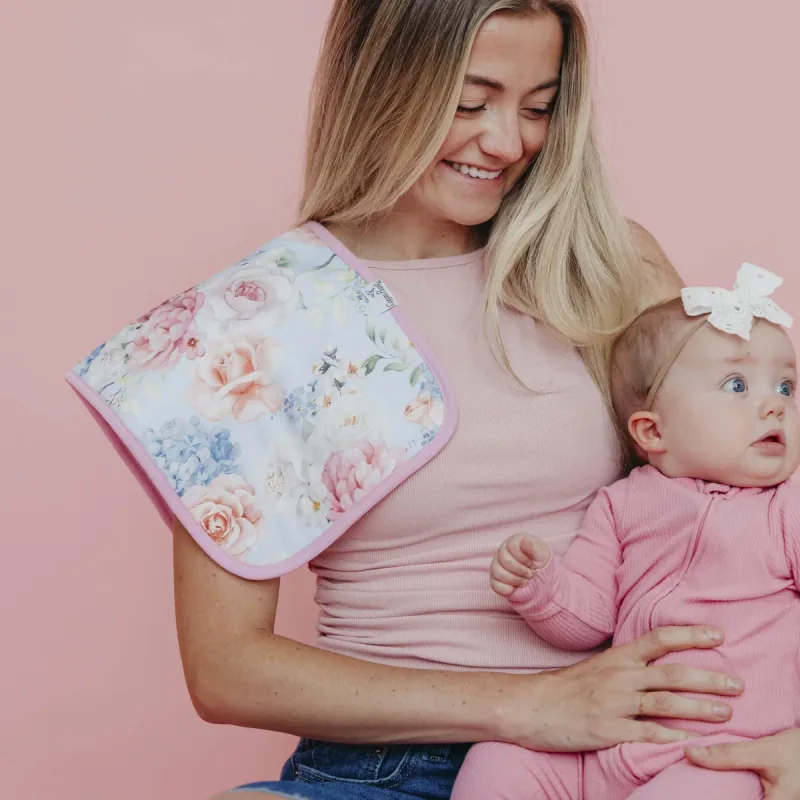
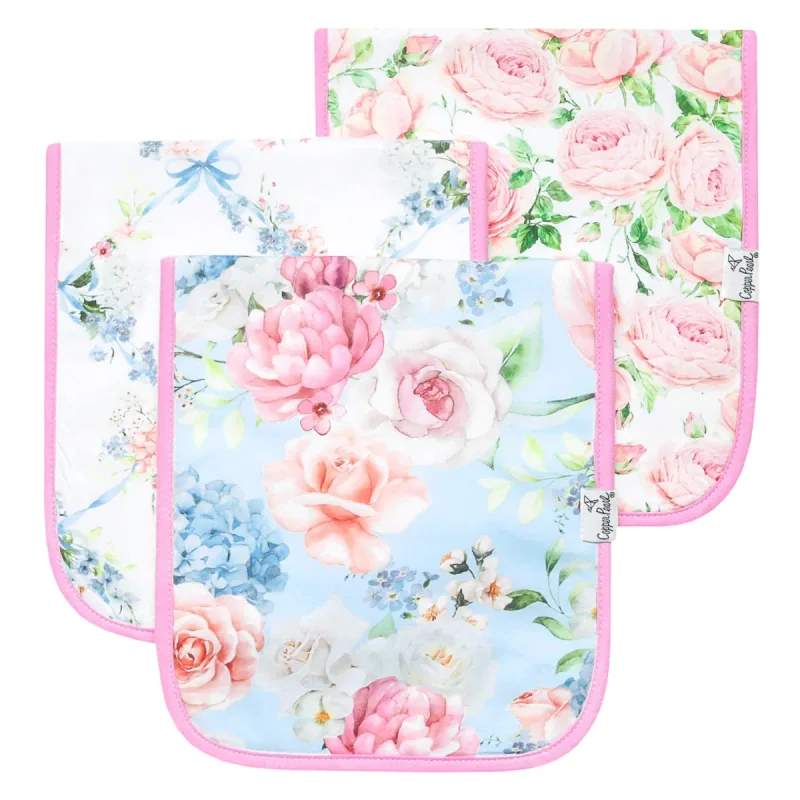
3 Pack Premium Burp Cloths - Genevieve
Copper Pearl’s Genevieve burp cloths pair cotton outer surfaces with a fleece middle layer. The 21-by-10-inch size gives a concrete measurement to compare with your shoulder, forearm, or lap. The three-pack may suit a small rotation, though the right quantity depends on your actual changes and drying time. This is a fabric cloth that needs positioning; the manufacturer’s absorbency language should not be read as a guarantee that every spill will stay off clothing.
- Three cloths in this set
- 21 × 10 inches
- Cotton front and back
- Fleece middle layer
Where it fits
- Documented dimensions
- Layered absorbent construction
What to weigh up
- Can shift while the baby moves
- Check care guidance for the layered fabric
02
An absorbent cloth for a parent’s shoulder
Mushie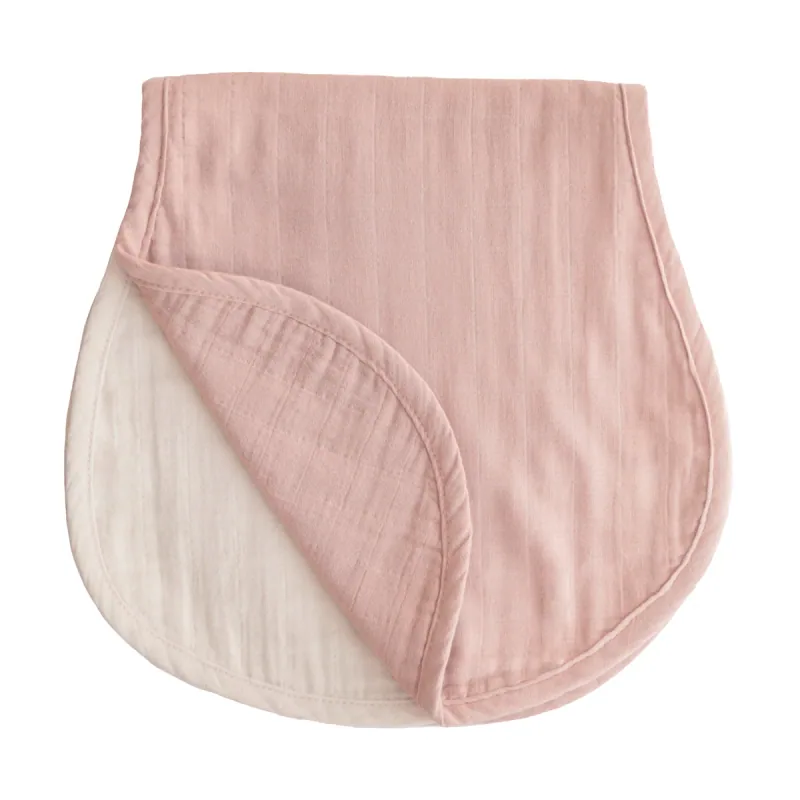
Organic Cotton Muslin Burp Cloth 2-Pack
Mushie’s curved muslin cloth is a straightforward option for milk cleanup when you want a washable fabric surface across your shoulder. The two-pack makes it possible to keep one in use and another in the wash. Its value is the coverage and absorbent construction, rather than a molded pocket. Compare the actual outline with where spit-up lands when you hold your baby; the cloth still needs positioning and replacement when wet.
- 100% organic cotton
- Pre-washed muslin
- Pack includes two cloths
- Rounded, extended shoulder shape
Where it fits
- Washable fabric for repeated feeds
- Two cloths support a small rotation
What to weigh up
- No wearable fastening for the parent
- Absorbency is finite; replace when damp
03
Comparing a bib-and-burp-cloth hybrid
HALO / aden + anais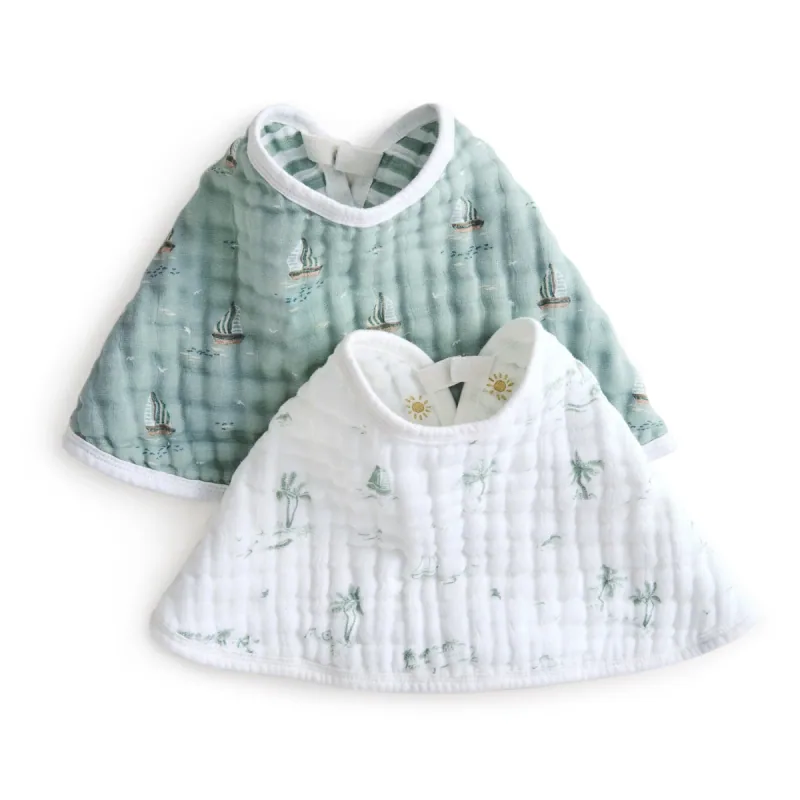
organic cotton muslin burpy bibs 2 pack
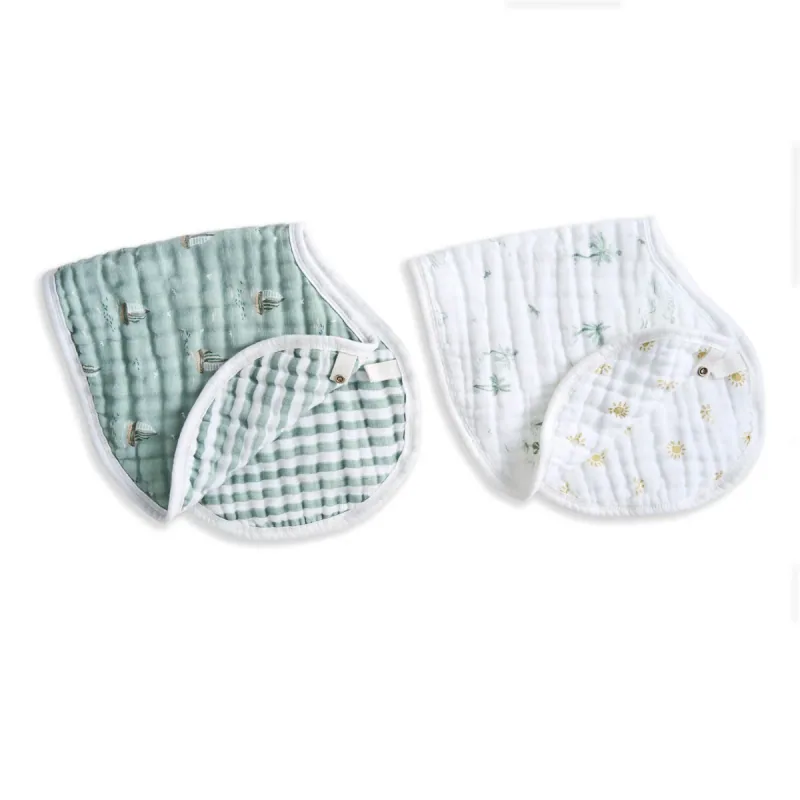
The aden + anais Organic Cotton Muslin Burpy Bib is a useful real-world example of a product that performs two cleanup jobs. It can be draped over an adult’s shoulder as a cloth or fastened as a bib on the baby. Its shaped textile design is different from a liquid-holding silicone pocket. Compare how the fastening changes the covered area and how often the cloth needs replacing; neither mode prevents spit-up itself.
- 100% organic cotton muslin
- Two-in-one bib and burp-cloth design
- Shaped coverage
- Sailing Seas print shown
Where it fits
- Two uses in one textile
- Wider outline than some bandana bibs
What to weigh up
- Needs repositioning when draped on an adult
- No molded absorbent shelf
Compare the contents of real multipacks
Copper Pearl’s Genevieve Burp Cloth set includes three 21-by-10-inch layered cloths. Mushie’s Organic Cotton Muslin Burp Cloth set includes two curved cloths. The aden + anais Organic Burpy Bibs combine shoulder-cloth and baby-bib functions. Compare the actual pieces in the current listing, not the number of patterns visible in a promotional photograph.
A larger pack of narrow cloths may provide less useful shoulder coverage than a smaller pack of a shape that works. Conversely, an elaborate hybrid may cost more than necessary if you only use it as a flat lap cloth. Price per cloth is helpful after the design question has been answered.
Look at the finished cloth, not just the fiber
Cotton muslin, terry, flannel, and fabric blends appear in many burp cloth listings. The weave, number of layers, stitching, and any backing can make two products with the same headline fiber feel quite different.
A thin cloth may fold compactly in a bag, while a layered design may take more space. A looped surface and a smooth surface may feel different against your skin. Those observations are useful; assuming one material label guarantees the best performance is less useful.
Read the full composition if material preferences matter to you. Words such as bamboo or cotton on the front of the package may not describe every layer.
Consider absorbency and backing separately
An absorbent face takes in liquid; a water-resistant backing aims to limit transfer through to clothing. Those are different functions. Liquid can still run around an edge, and a backing may change how the cloth feels and dries.
Look for clear construction information instead of treating claims such as super absorbent as comparable measurements. Unless manufacturers provide the same test method and conditions, those phrases do not support a reliable ranking.
If trying a new set, wash according to the label first, then observe ordinary use. Note whether the cloth slides, becomes damp through quickly, or takes too long to dry in your setup.
Make laundering part of the purchase decision
The AAP's clothing-care advice encourages considering durability and washability for frequently used baby items. For burp cloths, examine washing temperature, dryer restrictions, shrinkage guidance, and any warnings about backing layers.
Keep the care instructions available after removing packaging. Check whether the set can be washed with your usual similar-color laundry or needs a separate process you may struggle to maintain.
A cloth that air-dries slowly may still suit you if you have room and enough spares. It may be inconvenient if your family depends on quick wash-and-dry turnarounds.
Use a one-week observation sheet
For several ordinary days, note how many fresh cloths move out of the clean stack and when the used ones return fully dry. Include any that remain in the diaper bag, at a grandparent’s home, or near a second feeding location. The goal is to reveal a repeated shortage rather than measure every spit-up event.
If you used five clean cloths on a typical day and laundry returned every two days, ten cloths would cover that basic cycle before separate reserves. If one day was unusually messy, keep it as a reserve-planning clue rather than assuming every future day will match it. Reassess as feeding and laundry routines change.
Place small stacks where they earn their space
Keep the main supply at the usual feeding area and a purposeful spare where it is repeatedly needed. Avoid scattering single cloths across so many rooms that no one knows which are clean. A marked clean basket and a separate used-textile container make the system easier for visiting caregivers.
Reset the travel bag after each outing. Remove damp items promptly, replenish clean cloths, and check that a spare has not sat beside used feeding equipment. More cloths will not fix a bag that is never unpacked. A short reset routine can reduce the quantity needed.
Wash mixed sets with their differences in mind
Cotton muslin, fleece layers, trim, and fasteners can have different care instructions. Group compatible items before choosing the cycle and drying setting. Do not assume every white baby textile can tolerate the same bleach or high heat. Read our bib and feeding-cloth laundry guide for the care-label questions to check.
Dry completely before putting cloths into a closed drawer. Inspect edges and seams while folding so damaged items do not circulate indefinitely. If a set consistently dries too slowly for the routine, account for that in the next purchase instead of adding more of the same construction without considering the cause.
Make bundles and gifts work for the family
A matching bib-and-burp-cloth set can be attractive, but each piece should have a current role. If the family already has enough small dribble bibs, a bundle that adds more of them may be less useful than a plain cloth refill. Include a receipt and care information with a gift.
Keep one or two styles that work particularly well rather than assuming the entire collection must match. A broad shoulder cloth at home and a compact one for short outings can be a practical combination. Let coverage, drying, and actual use determine the rotation; pattern coordination can come afterward.
A few more details
Your questions, answered
Is one burp cloth fabric always the most absorbent?
No. Finished construction, layers, dimensions, and backing matter. Similar fiber labels do not establish identical performance.
Should I choose rectangular or contoured burp cloths?
Try the shape against your shoulder and usual hold. Rectangles offer flexible placement; contoured designs may suit some shoulders better.
Should all my burp cloths be the same style?
No. A consistent main style can simplify laundry, but a different shape may suit travel or another caregiver. Keep each purchase tied to a real use.
Why do we run out even though we own a large pack?
Count items in bags, at other homes, in the wash, and still drying. The usable clean supply may be much smaller than the total owned.
Sources & product information
Follow the original sources for current product details, instructions, and guidance.