Baby formula decisions get easier when you separate three questions: which formula fits your baby's needs, how it should be prepared, and how your household will handle daily feeds. Start with an age-appropriate infant formula and your pediatrician's advice if your baby has a medical condition, feeding difficulty, or suspected allergy.
Feeding3 products, compared
Baby formula: choosing, preparing, and planning your routine
Understand baby formula types, safe preparation, storage, and a practical feeding setup, with questions to discuss with your baby's pediatrician.
Jump to a section
The quick answer
Choose an age-appropriate infant formula that fits your baby’s needs, then follow the exact preparation and storage instructions. Powder, concentrate, and ready-to-use liquid are not interchangeable. Ask your pediatrician about allergies, poor feeding, growth concerns, or extra precautions for a high-risk infant.
- Ready-to-use formula should not be diluted.
- Powder is not sterile; some infants need additional preparation precautions.
- Water goes into the bottle before the measured powder.
- A mixing appliance or pitcher does not change safe storage limits.
At a glance
The details that make a difference when you’re deciding.
| Format | What the adult does | Key distinction |
|---|---|---|
| Powder | Measure water, then the matching scoop of powder | Powder is not sterile |
| Liquid concentrate | Add the exact water amount on the label | Different from ready-to-use |
| Ready-to-use | Follow opening and feeding instructions | Do not add water |
A closer look
Products mentioned in this guide
Actual product photos, manufacturer information, and direct links. Comparisons are based on published specifications; these are not hands-on test results.
01Enfamil NeuroPro Infant Formula ? Ready to Use, 2 fl oz (6 bottles)02Dr. Brown's® Formula Mixing Pitcher03Baby Bottle Gen 2
01
Understanding a ready-to-use formula format
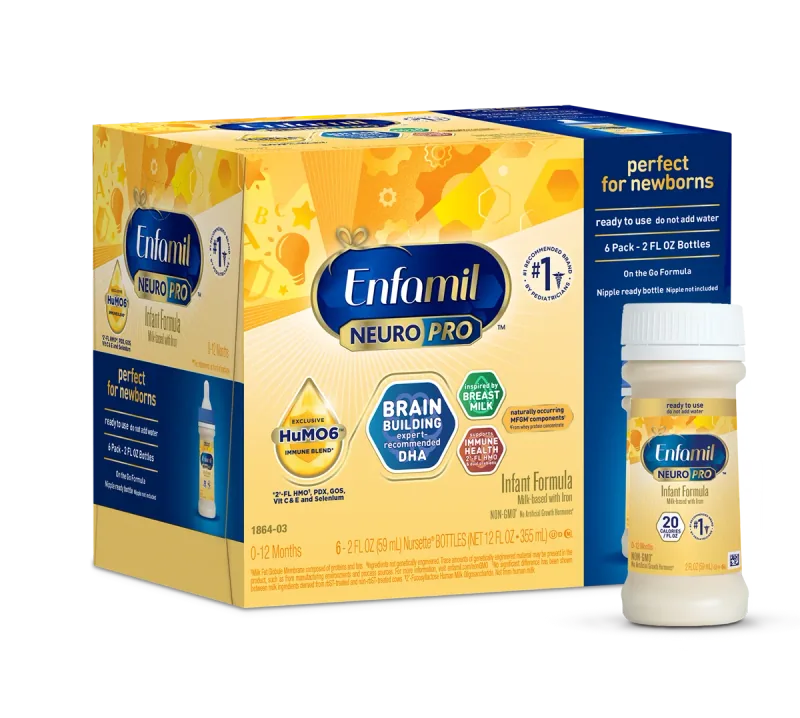
EnfamilEnfamil NeuroPro Infant Formula ? Ready to Use, 2 fl oz (6 bottles)
This Enfamil NeuroPro listing is the ready-to-use 2-fluid-ounce format, which is different from powder or liquid concentrate. It illustrates the convenience of a prepared liquid without implying that this formula is the right nutritional choice for every baby. Read the package directions for opening, feeding, and disposal, and check whether a compatible nipple is included. Discuss specialized feeding needs, allergies, or a change in formula with the baby?s clinician.
- Ready-to-use liquid; do not dilute
- Six 2 fl oz bottles in this listing
- Infant formula rather than a toddler drink
- Check packaging for nipple inclusion and storage directions
Where it fits
- No powder measurement for this format
- Small individually sealed containers
What to weigh up
- Cost and packaging differ from powder
- Formula choice should fit the baby?s clinical needs
02
Mixing a correctly measured refrigerated batch
Dr. Brown’s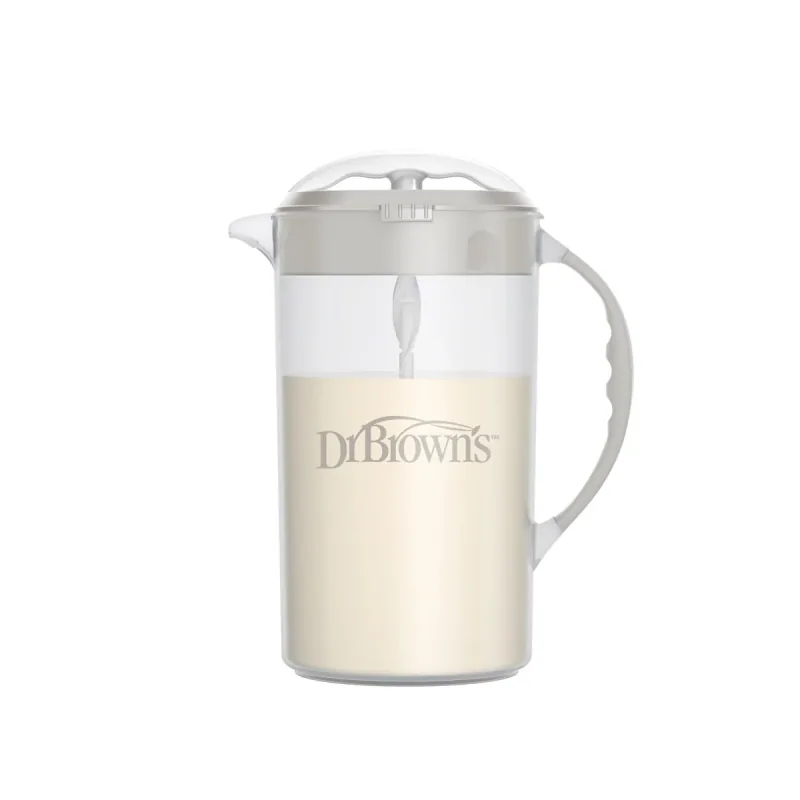
Dr. Brown's® Formula Mixing Pitcher
Dr. Brown’s Formula Mixing Pitcher has a blade, locking lid, and pouring spout for preparing up to 32 ounces. The pitcher can help organize a batch only when formula is measured exactly and stored within safe time limits. It does not change powder-to-water ratios, make powder sterile, or reset the clock when a portion is poured into a bottle. Date the batch and keep the preparation instructions visible for everyone using it.
- Up to 32 oz prepared batch
- Mixing blade
- Locking lid
- Pouring spout
Where it fits
- One container for measured batch preparation
- No powered base
What to weigh up
- Needs full disassembly and cleaning
- Batch timing and refrigeration still apply
03
A soft silicone bottle with a wide opening
Comotomo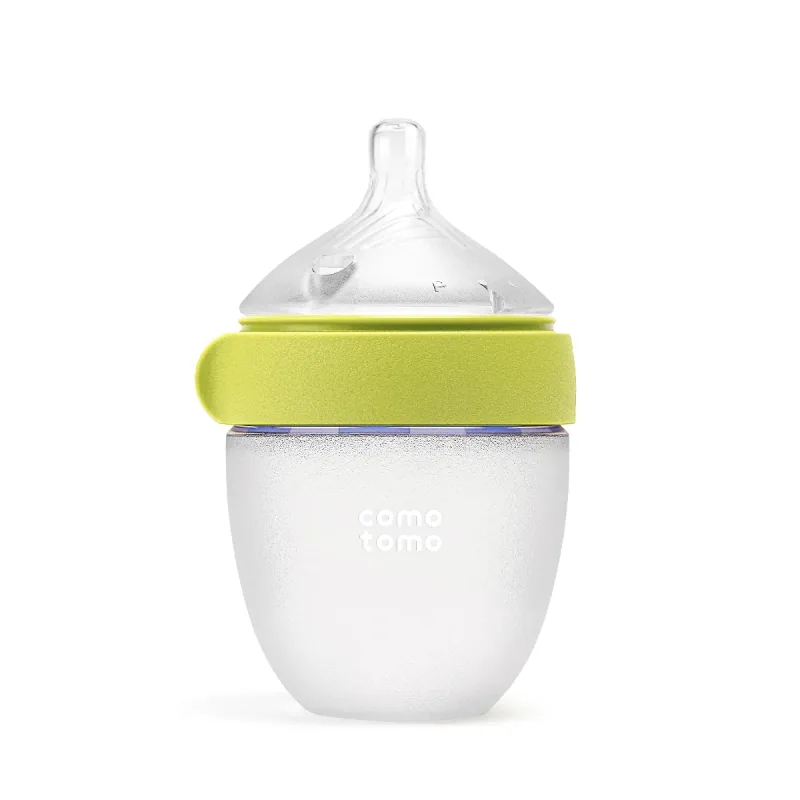
Baby Bottle Gen 2
Comotomo’s Baby Bottle Gen 2 uses a silicone body and a wide-mound nipple with built-in vents. The wide opening changes the hand-cleaning experience compared with narrower bottles, while the softer body changes how the bottle feels in the hand. It does not establish that every breastfed baby will accept it. Check current nipple-flow options, sterilization instructions, and any warmer or machine compatibility before investing in multiple bottles.
- Food-grade silicone body
- Wide opening
- Built-in nipple vents
- Wide-mound nipple
Where it fits
- Fewer separate vent pieces
- Soft bottle body
What to weigh up
- Baby acceptance cannot be predicted
- Check fit in bottle warmers and washing racks
Compare three real pieces of a formula routine
Enfamil NeuroPro Ready to Use, 2 fl oz bottles is an example of prepared liquid formula. The small sealed format may be useful when measuring powder and water would be awkward, but check opening instructions and whether the package includes a compatible nipple. It is a format example, not a recommendation that every baby should use that formula.
Dr. Brown’s Formula Mixing Pitcher illustrates a different approach: preparing a correctly measured batch of the formula already chosen for the baby. Its 32-ounce capacity is a maximum for the tool, not a suggested daily intake. Label the batch, refrigerate it promptly according to guidance, and avoid mixing a fresh batch into an older one.
A bottle such as the Comotomo Gen 2 is another separate decision. Its silicone body and wide opening affect handling and washing; they do not determine which formula is appropriate or eliminate safe-preparation steps. Match nipple flow to the baby’s feeding and obtain advice for persistent coughing, tiring, or discomfort.
Understand the format before comparing brands
Powder, concentrated liquid, and ready-to-feed formula require different preparation. Powder needs accurately measured water and powder. Concentrate needs the specified water added. Ready-to-feed formula is used as supplied; adding water changes its nutrition.
Compare the cost of a prepared feeding, rather than the container price alone. A larger container may look economical but create waste if you cannot use it within its labeled opening period. Ready-to-feed containers may suit occasional feeds or travel, while powder may fit a routine with reliable cleaning and preparation space.
Specialized formulas are a separate decision. A label such as gentle, sensitive, or comfort does not identify the cause of a baby's symptoms. Bring your concerns to the clinician before cycling through products.
Prepare each feed accurately
Wash your hands and prepare bottles on a clean surface. Follow the container's instructions exactly, measuring the water before adding its matching scoop of powder. Do not dilute formula to stretch supplies or add extra powder. Powdered formula is not sterile, and babies under two months, premature babies, and babies with weakened immunity need additional precautions. The CDC preparation guide explains these considerations.
Write the opening date on the container. Keep the included scoop with that formula rather than borrowing one from another brand. If several adults prepare feeds, leave the instructions visible and agree on the same process.
Plan storage around the actual feed
The CDC advises using prepared formula within two hours of preparation and within one hour of starting a feed. If it will not be used promptly, refrigerate it immediately and use it within 24 hours. Discard what remains after a feed; do not combine it with fresh formula. Always follow any stricter product instructions.
A simple label showing the preparation time makes a shared refrigerator easier to manage. Prepare travel supplies around access to safe water and refrigeration, rather than assuming a bottle can stay in a diaper bag indefinitely.
Bring specific observations to your pediatrician
If feeding seems uncomfortable, note when it happens, how much your baby takes, wet diapers, and any vomiting or stool changes. That record is more useful than a guess that every fussy feed means the formula is wrong.
Poor feeding, fewer wet diapers, persistent vomiting, or concerns about growth deserve medical advice. A bib can help with cleanup, but neither a bib nor a different bottle is a treatment for a feeding disorder.
Calculate cost using prepared volume and likely waste
Divide the purchase price by the amount of formula it makes when prepared exactly as labeled. Compare like-for-like units, such as cost per prepared fluid ounce, rather than comparing a large powder tub with a small ready-to-use bottle by sticker price. Include the portion you realistically discard after opening or feeding, while following the storage rules instead of stretching them to reduce waste.
For example, a small sealed bottle can have a higher unit price but less unused opened product during an occasional outing. A large powder container may be economical for a regular routine but a poor fit for infrequent use if it cannot be finished within its labeled opening period. These are household-cost questions, not reasons to alter concentration or save a partly finished feed.
Make a caregiver instruction card from the actual label
Photograph the preparation panel and leave the correct scoop with the matching container. Write down which water source and preparation method the care team recommends, especially for a premature baby, a baby younger than two months, or a baby with weakened immunity. The CDC preparation guidance distinguishes additional precautions for these higher-risk infants.
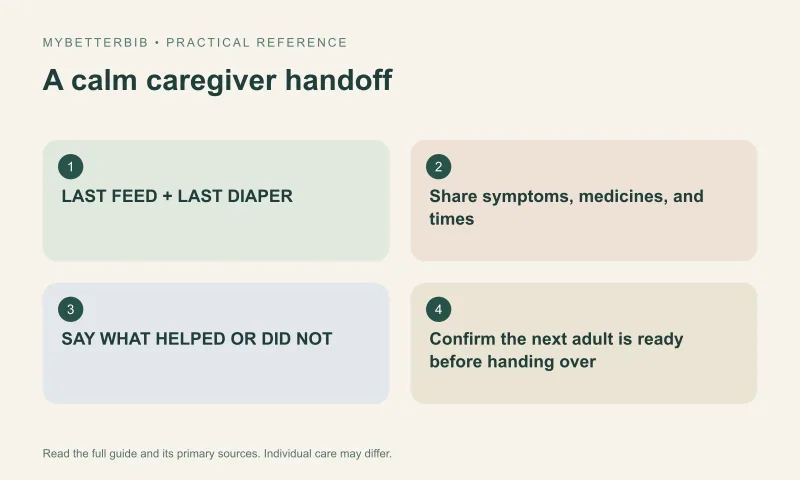
Keep the card specific to the product in use. A familiar brand name can cover several formulations with different scoop sizes or instructions. Update the card when the product changes and tell every caregiver. Do not use an old appliance setting or an old scoop because the new packaging looks similar.
Plan for a power outage or a delayed trip
Think through access to clean feeding equipment, appropriate water, and safe storage before packing. A bottle prepared for an outing does not get a longer safe-use period because it is in an insulated bag. If refrigeration or clean water may be unreliable, ask the clinician which ready-to-use option fits your baby’s needs and keep its directions with the supplies.
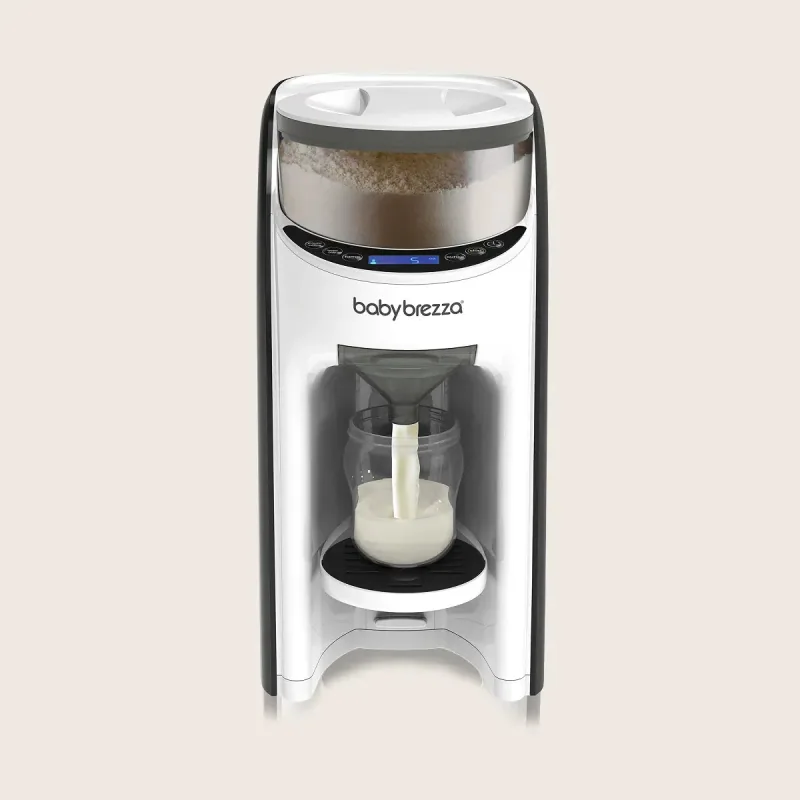
Separate clean and used bottle parts, carry enough supplies for the realistic interval between proper cleaning, and check expiration dates. A feeding plan that another adult can follow is often more valuable than a large collection of appliances. For comparing equipment, continue with the Baby Brezza guide, where each machine’s actual job is explained.
A few more details
Your questions, answered
Is ready-to-feed formula the same as concentrate?
No. Ready-to-feed is supplied at its feeding concentration. Concentrated liquid requires the exact amount of water stated on its label.
Can I save unfinished formula for the next feed?
Discard formula left after feeding. Saliva can introduce bacteria; start the next feed with a clean bottle and fresh formula.
Does a formula pitcher make powdered formula sterile?
No. It is a mixing tool. Follow the formula label and CDC guidance, including additional precautions advised for high-risk infants.
How should I compare the price of powder and ready-to-use formula?
Compare the cost per correctly prepared ounce and likely waste within safe storage limits. Do not change the powder-to-water ratio to reduce cost.
Sources & product information
Follow the original sources for current product details, instructions, and guidance.