A crying baby may need food, a clean diaper, sleep, less stimulation, or simply closeness. Start by checking whether your baby seems ill, then work through one need at a time. Crying is communication, and a baby who takes time to settle is not evidence that you are doing something wrong.
CareA practical guide
Baby crying: common reasons and a calm way to respond
Work through feeding, comfort, tiredness, and overstimulation when your baby cries, with clear signs for medical help and a plan for overwhelmed parents.
Jump to a section
The quick answer
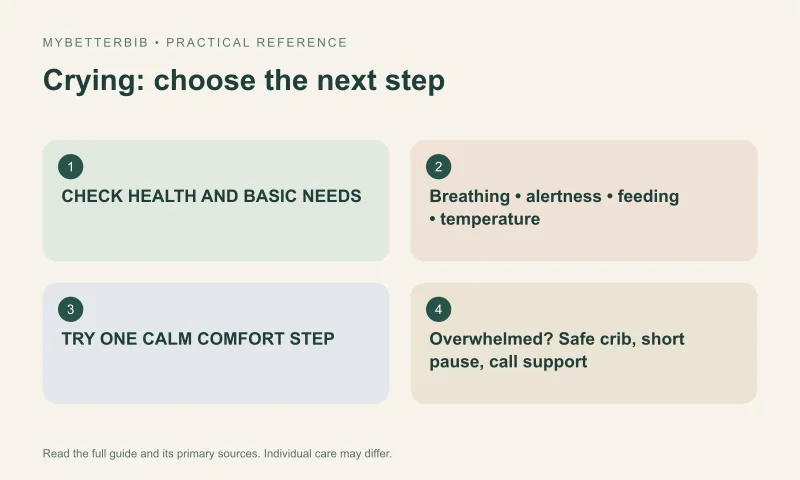
For a crying baby, first check breathing, responsiveness, fever, feeding, and signs of pain. If the baby seems well, try one calm comfort step at a time. If you feel overwhelmed, place the baby on their back in a safe crib and step away briefly while arranging support.
- A change from the baby’s usual cry is useful information.
- Check illness and basic needs before trying a product.
- Never shake a baby.
- A safe pause is better than continuing while you feel out of control.
Check health before trying another soothing trick
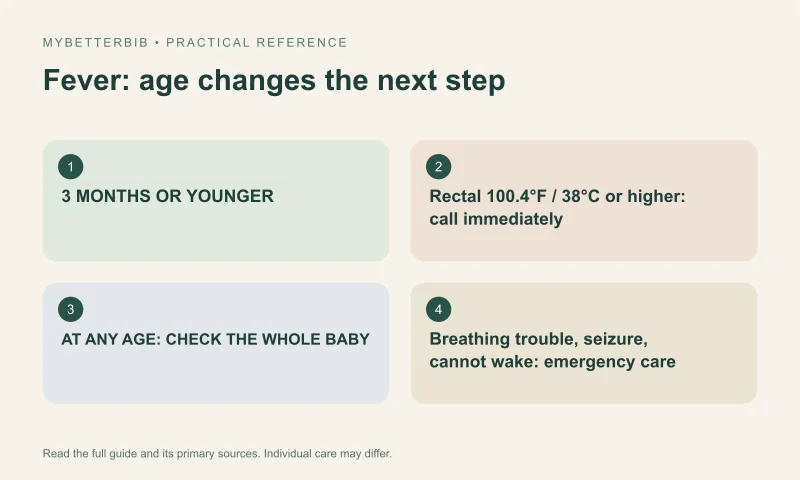
Look at breathing, color, alertness, and feeding. Call emergency services for severe breathing difficulty, blue or gray lips, a seizure, or a baby who is unresponsive. A young infant with fever needs prompt medical assessment. A cry that sounds very different, persistent inconsolable crying, or poor feeding also merits a call to your clinician. The NHS crying guidance outlines these warning signs.
If something feels unusual, explain the change clearly: “This cry is different, and she has refused two feeds” is more useful than trying to decide on a diagnosis yourself.
Work through the ordinary needs
Check the diaper and whether clothing feels uncomfortable. Look for a folded seam or an outfit that has become wet. Consider when your baby last fed and whether early feeding cues were missed during a busy outing.
If feeding is due, settle into a comfortable position and watch the baby's cues. Pause if your baby needs a break. A baby who is already distressed may need a little quiet contact before feeding becomes easier.
Do not assume every cry is hunger or every spit-up episode is painful reflux. If crying repeatedly happens during feeds, record the pattern and discuss it with a clinician.
Try less stimulation and steady comfort
Move to a calmer space and lower the amount of talking, passing between people, and bright visual activity. Hold your baby securely, speak softly, or try gentle rocking. Give an approach a little time rather than switching every few seconds.
Some babies settle with a predictable rhythm; others need the activity to stop. Notice whether your baby relaxes, turns away, becomes more tense, or continues searching for food. These observations help you choose the next step without expecting one technique to work forever.
A practical sequence for the next ten minutes
Start by looking at the baby, not at a timer. Are they breathing normally, responding to you, and their usual color? If there is difficulty breathing, a seizure, inability to wake, or another emergency sign, seek emergency help. A baby three months or younger with a rectal temperature of 100.4°F (38°C) or higher needs immediate medical advice. Do not spend ten minutes on a settling routine in those situations.
If the baby appears well, consider the last feed and hunger cues, check the diaper and clothing, and move to a calmer environment. Hold and support the baby comfortably. Choose one gentle approach, such as quiet talking or rhythmic walking, instead of rapidly switching among bright toys, music, bouncing, and feeding. Pause to notice whether the baby responds; there is no requirement to finish a checklist before meeting a clear need.
Explain the pattern without diagnosing it yourself
The useful questions are when crying starts, how long episodes last, what happens around feeding, and whether anything reliably changes it. Record only enough to describe the pattern. A parent holding a distressed baby does not need to maintain a minute-by-minute spreadsheet.
For example, “cries during the bottle, pulls away, then settles when we pause” gives the pediatrician a different starting point from “cries most evenings but feeds comfortably and has usual wet diapers.” Neither description establishes a diagnosis. The AAP’s guide to responding to cries emphasizes responding to needs and cautions against assuming marketed remedies are proven solutions.
Protect the caregiver during a difficult stretch
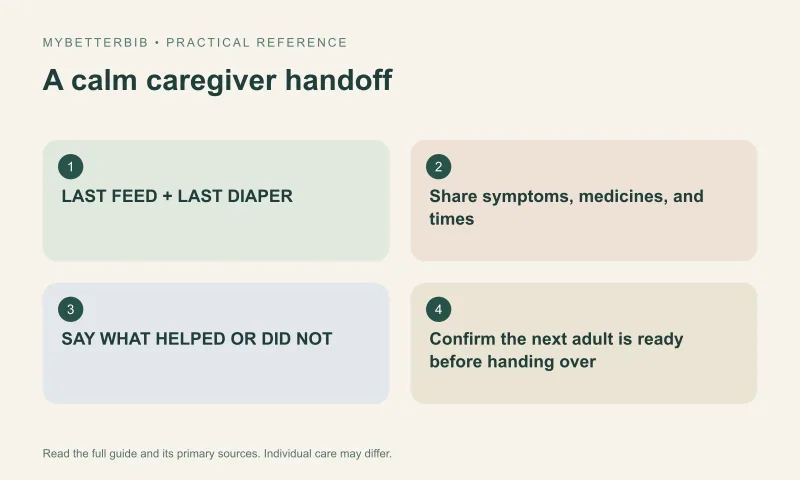
Agree in advance on a handoff sentence such as “I need you to take over now.” The receiving adult does not have to solve the crying immediately; their first job is to hold the baby safely while the other person regains composure. If no one is available, put the baby on their back in a clear, safe crib or bassinet and step away briefly. Check back and call someone who can help.
Avoid pacing on stairs, driving while distracted by distress, or trying to do chores while your grip and concentration are failing. Never shake or strike the baby. A short period of crying in a safe sleep space while you calm yourself is a responsible response to being overwhelmed.
When soothing equipment adds work instead of help
White-noise machines, swings, pacifiers, and bottles address different situations; none should be presented as a universal solution for crying. A baby who falls asleep in a swing still needs transfer to an appropriate firm, flat sleep surface. A bottle should not be propped, and crying alone does not establish hunger after every feed.
Before buying anything, identify the repeated problem you hope it will solve and discuss persistent symptoms with the clinician. For an at-home settling plan with a caregiver handoff, see our crying-baby action guide. If you are worried about the baby’s health or your ability to stay safe, ask for help now rather than waiting to complete another technique.
A few more details
Your questions, answered
Does crying always mean my baby is hungry?
No. Hunger is one possibility, alongside discomfort, tiredness, overstimulation, illness, or a need for closeness. Check the baby's overall condition and cues.
What if I feel too overwhelmed to keep holding my baby?
Place the baby on their back in an empty, safe crib or bassinet, step away briefly, and ask another trusted adult for help. Never shake a baby.
Should I try several soothing techniques at once?
Try one calm approach at a time after checking health and basic needs. Rapidly adding noise, movement, and toys can make it harder to see what helps.
Does crying after a feed always mean reflux?
No. A feeding-related pattern is useful information, but a clinician needs to assess it. Seek advice for persistent pain, poor feeding, fewer wet diapers, or poor growth.
Sources & product information
Follow the original sources for current product details, instructions, and guidance.