A baby's bib should sit comfortably, cover the intended area, and be easy for an adult to remove. The same item can fit differently as a baby grows or after repeated washing. Use a quick check each time, especially when another caregiver is taking over.
Feeding3 products, compared
A baby's bib: a fit and comfort checklist for every caregiver
Check a baby's bib for comfortable coverage, working closures, and clean, dry fabric. Use a simple handoff routine for parents, grandparents, and daycare.
Jump to a section
The quick answer
If you are searching for “babies bib,” choose by the baby’s current stage: a soft absorbent bib for milk dribbles, a food bib for meals, and a separate cloth when the adult’s shoulder needs protection. Confirm the exact size and fastening instructions before checkout.
- Newborn photos and toddler photos are not interchangeable fit guides.
- Material, coverage, and closure tell you more than decorative wording.
- A gift set should match the stage the family is using now.
- Remove bibs and loose feeding cloths before sleep.
At a glance
The details that make a difference when you’re deciding.
| Search need | Compare this type | Example to inspect |
|---|---|---|
| Milk dribbles on baby’s front | Absorbent cloth bib | Mushie Muslin or aden + anais Snap Bib |
| Food at a high chair | Pocket meal bib | Mushie Silicone Bib |
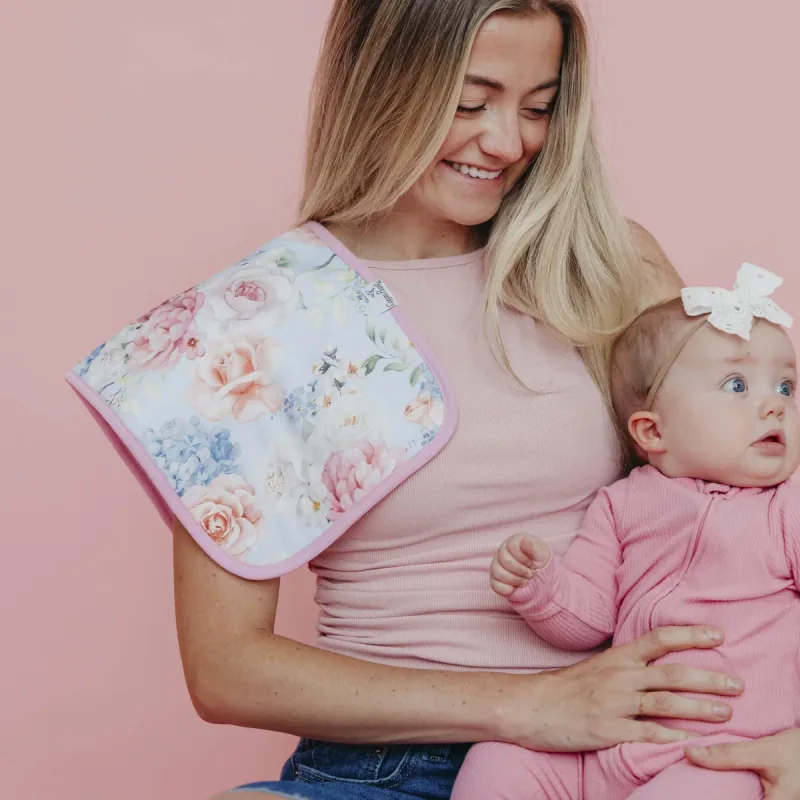
| Spit-up on an adult | Shoulder burp cloth | See the separate burp-cloth guide |
A closer look
Products mentioned in this guide
Actual product photos, manufacturer information, and direct links. Comparisons are based on published specifications; these are not hands-on test results.
01
Broad cloth bib coverage in a small set
HALO / aden + anais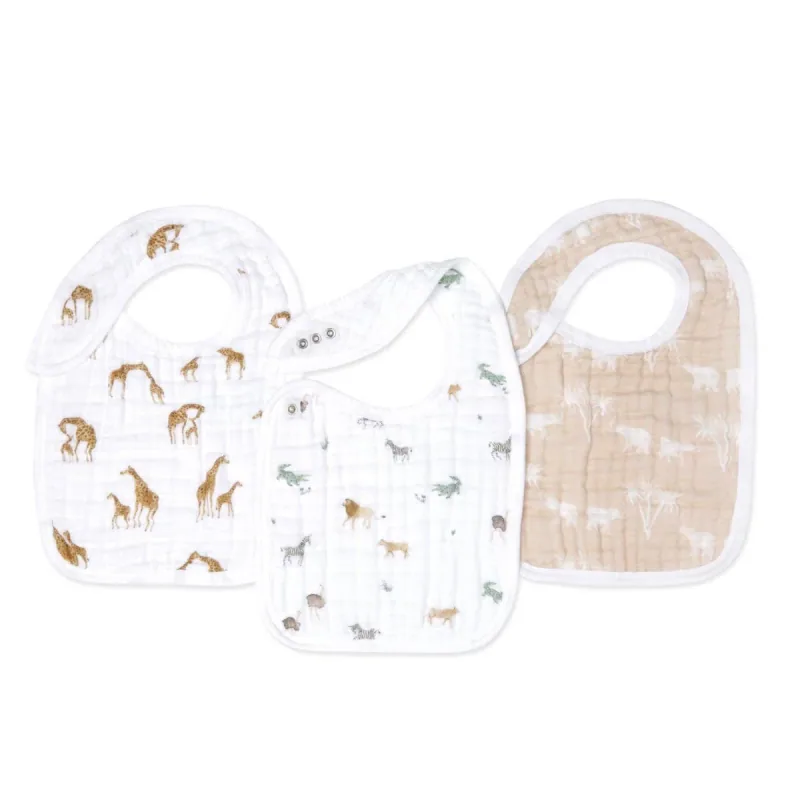
organic cotton snap bibs 3 pack
The aden + anais Organic Cotton Snap Bibs shown here use three layers of muslin and an adjustable fastening. The Safari Dreams three-pack provides another fabric construction to compare with fleece-backed bandanas and smaller two-layer options. Look at the neckline and actual washed dimensions before choosing by pack count. Layer count describes construction, but it is not an independently measured capacity rating or a promise that a bib will stay dry through every feed.
- Three-pack
- Three layers of organic cotton muslin
- Adjustable snap fit
- Safari Dreams print shown
Where it fits
- Several bibs for rotation
- Absorbent textile layers
What to weigh up
- Needs laundering and drying
- Fit still depends on the individual baby
02
Soft dribble coverage during awake time
Mushie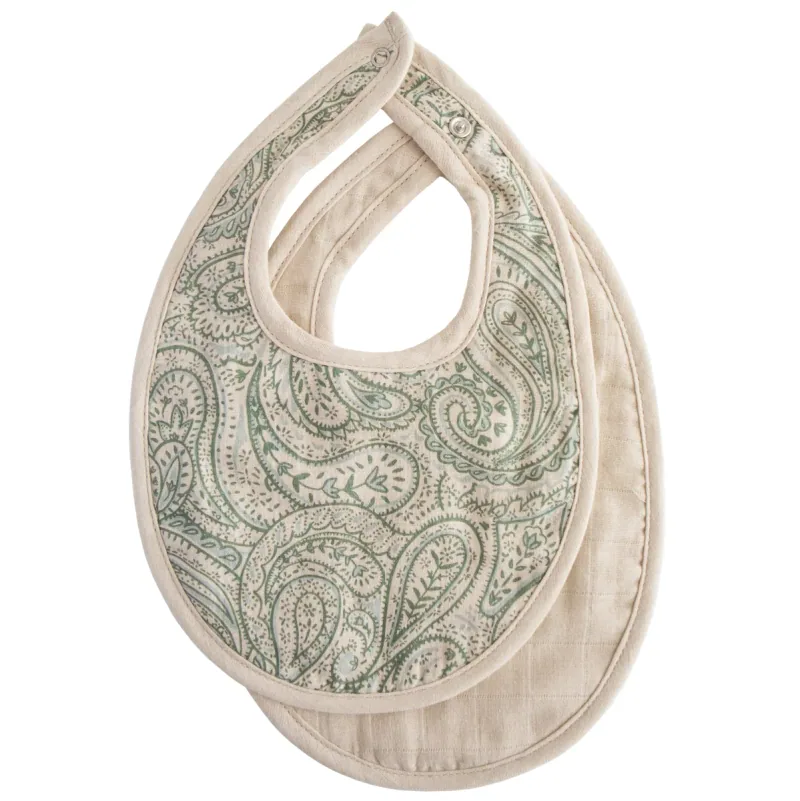
Muslin Bib
This Mushie bib uses layers of muslin and two snap positions, so its main role is catching moisture on the baby’s front. It belongs in a different comparison from a silicone food bib: the fabric absorbs liquid while a molded pocket holds it. The small pack is useful for trying the fit before committing to a large drawer of matching bibs. Always remove it before sleep and check the neckline on the individual baby.
- Organic cotton muslin
- Two snap positions
- Two bibs per set
- Multi-layer fabric
Where it fits
- Adjustable closure
- Soft absorbent construction
What to weigh up
- Protects the baby’s front rather than the parent’s shoulder
- Needs laundering after wet use
03
Catching food during supervised meals
Mushie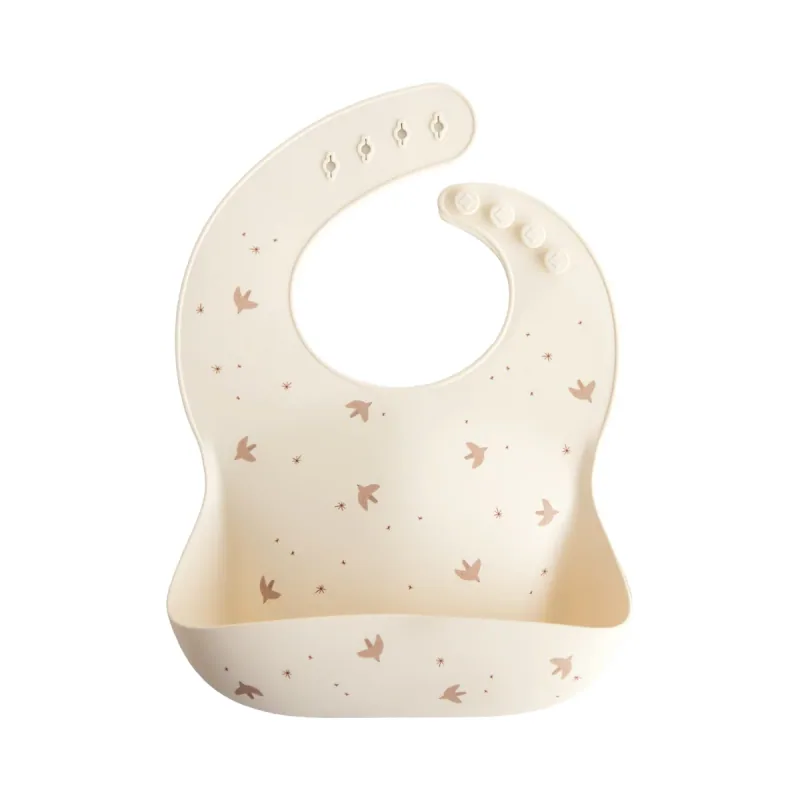
Silicone Baby Bib
Mushie’s silicone bib has a structured front pocket and an adjustable neck fastening. It is a meal-cleanup option once its fit and age guidance suit your child. Unlike a muslin bib, silicone does not soak up liquid; spills remain in the pocket until you empty and clean it. That makes the distinction especially relevant for families comparing food bibs with spit-up cloths. Check how the pocket sits against the high-chair tray before ordering several.
- Silicone construction
- Deep front pocket
- Adjustable neck strap
- Multiple colors and patterns
Where it fits
- Wipe-clean surface
- Pocket for food pieces
What to weigh up
- Not an absorbent spit-up cloth
- Pocket contents need emptying before removal
Turn a broad search into a short shopping list
Write three facts before opening more tabs: who needs coverage, what kind of mess occurs, and how the item will be washed. “Baby’s front, milk dribbles, machine-washed cloth” leads to a different shortlist from “toddler’s sleeves, food, wipe-clean surface.” It also avoids choosing a parent’s burp cloth when you meant to buy a wearable bib.
For the first situation, compare the aden + anais Organic Cotton Snap Bibs with Mushie Muslin Bibs. For meals, inspect the Mushie Silicone Bib. The product photos show how the outlines differ, while the exact listings provide size and care details that a generic search thumbnail omits.
Check the bib before putting it on
Open it fully and look at both sides. Make sure the fabric is clean and dry, the closure works, and there are no loose threads or damaged decorative pieces.
Look closely at the parts that touch the neck. A curled backing layer, rough label, or stiff seam may matter more during wear than it did in a shop. Set aside a damaged bib rather than leaving it in the drawer for someone else to discover.
If it is unfamiliar, find the manufacturer's instructions and size information. A hand-me-down without clear fitting information deserves a closer look before use.
Check the neckline in the baby's actual position
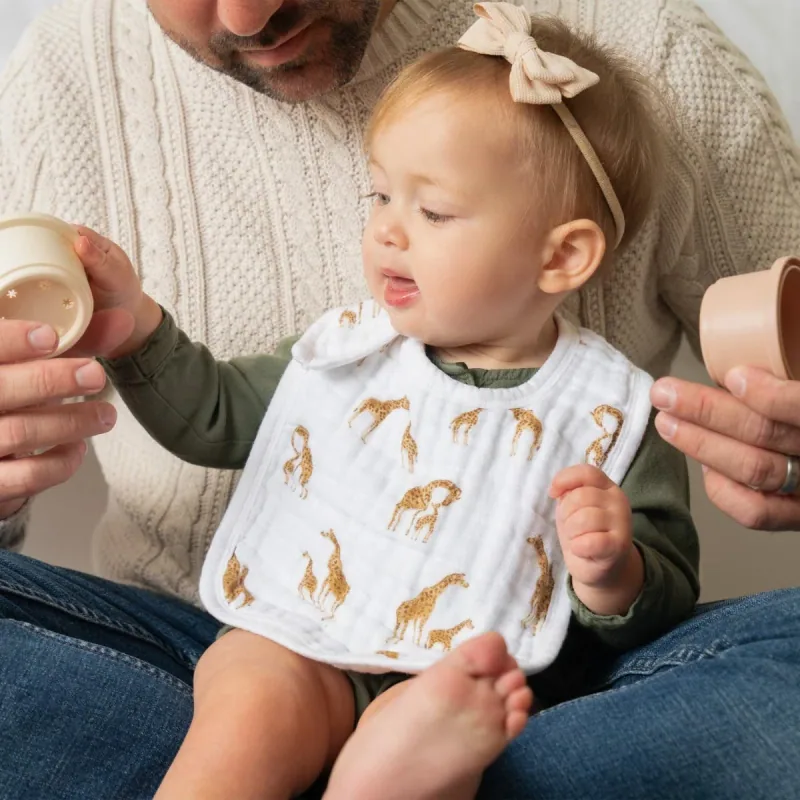
Fasten the bib according to its instructions while the baby is supported. Make sure it does not pull tightly, ride toward the mouth, or bunch beneath the chin.
Observe the fit in the position used for feeding or awake care, not only while the bib lies flat. Fabric can shift when a baby turns their head or when an adult changes how they hold them.
Do not add improvised ties, clips, elastic, or extra fasteners to make a poorly fitting bib stay put. Choose a size and design that fits as intended.
Make changing the bib part of care
Check for dampness after a feed and whenever the fabric looks soiled. Change to a clean, dry item when needed. Turning a wet bib over does not create a fresh bib if moisture has already reached the other layer.
Keep a spare within easy adult reach before starting a feed. Put used items in their designated laundry area so another caregiver does not mistake a folded used bib for a clean one.
If skin becomes irritated, remove the item and discuss persistent or worsening symptoms with your pediatrician. A different bib cannot diagnose the cause of a rash.
Make the caregiver handoff explicit
Show the next adult which bibs fit now, where clean ones are stored, and where used ones go. Demonstrate any closure that is not immediately obvious.
Include a clear instruction to remove bibs before sleep. The Canadian Paediatric Society specifically includes bib removal in its guidance for preventing strangulation during sleep.
A practical handoff sounds like this: “These are the current bibs, clean extras are in the top drawer, and the bib comes off before the nap.” Keep product details on the care label available if someone else will do laundry.
Revisit the fit when the baby grows or the fabric changes after washing. For care by material, see how to wash baby bibs. A thirty-second check is easier than expecting every caregiver to remember the history of every item.
Read a product listing from the inside out
Start with material and construction: absorbent layers, fleece backing, silicone, or water-resistant fabric. Then look at the closure and neckline. Finally compare coverage, washing, pack count, and pattern. A phrase such as “premium baby essential” does not answer any of those questions by itself.
Check whether the listing sells one bib, a pair, or a mixed-stage set. Review the selected color and size before paying, especially when a product page combines several options. A review of one option may not describe the exact item in your cart. Manufacturer instructions should remain available after the packaging is discarded.
Make a bib gift useful to the parents
If you do not know the family’s preferences, a small set with clear care information and a gift receipt is easier to use than a large personalized bundle that cannot be returned. Check whether the registry already contains absorbent cloth bibs, meal bibs, or burp cloths so you are filling a gap rather than duplicating the same category.
Choose prints after the practical questions. A beautiful bib may still be inconvenient if its closure is awkward for the caregiver or it requires a drying method the household cannot maintain. A simple note about the product’s intended job can be helpful: “soft cloth bibs for supervised awake-time dribbles” communicates more than “for every stage.”
Watch what happens during use
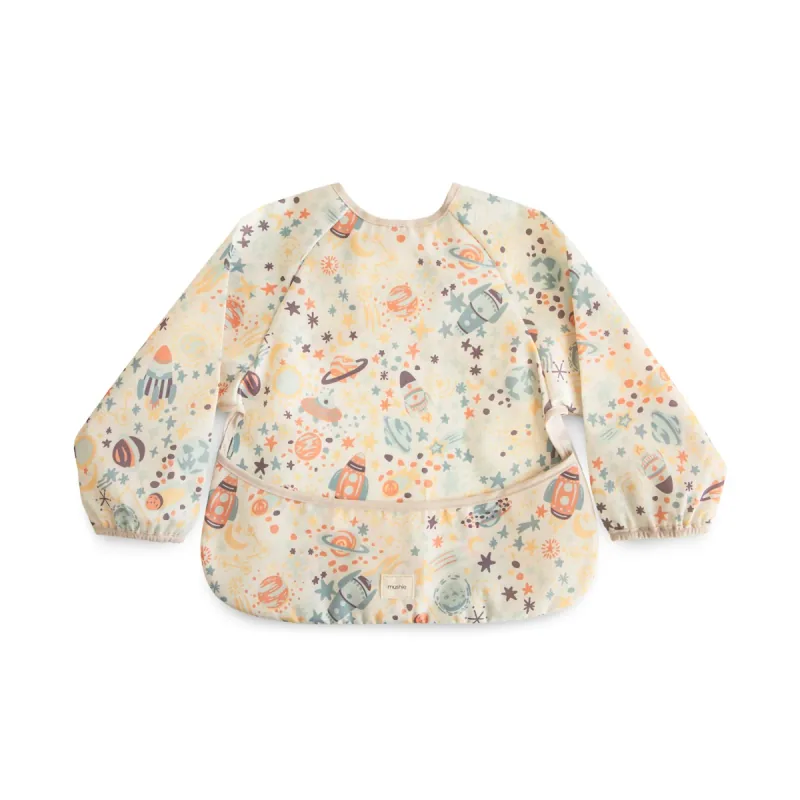
Check whether fabric rides upward, bunches under the chin, or leaves a frequent spill route uncovered. A larger size does not necessarily solve the issue; it may introduce a loose neckline. Compare a different shape or a separate shoulder cloth instead of modifying the fastening.
Replace a bib once it is wet or soiled. Damp fabric against the skin is a reason to change it, not evidence that the baby needs to wear a thicker bib indefinitely. Inspect snaps, seams, and edges when sorting laundry, and keep damaged pieces out of the active drawer.
Know when the search should switch categories
If your shirt is getting wet during burping while the baby’s chest stays mostly clean, read the burp cloth guide. If food reaches sleeves during supervised meals, look at a long-sleeve bib rather than expecting a small neck bib to protect the entire outfit. If the concern is frequent painful vomiting or poor growth, the next step is a pediatrician’s advice, not a different bib shape. Cleanup equipment can make a routine easier without explaining the cause of a symptom.
A few more details
Your questions, answered
Should I tighten a bib if milk gets underneath?
Do not tighten it beyond the manufacturer's fitting instructions. Check coverage, positioning, and size, or use a different suitable design.
What should I tell another caregiver about bib use?
Show which bibs currently fit, how they fasten, where clean and used items go, and that the bib must be removed before sleep.
What is the difference between a baby bib and a burp cloth?
A bib fastens on the baby to cover clothing. A burp cloth usually lies over an adult’s shoulder or lap during burping. Some products can do both in different arrangements.
What should I check when buying bibs as a gift?
Check the baby’s current stage, pack contents, fit information, washing instructions, and the family’s registry. A small useful set with a receipt is often easier to fit into the routine.
Sources & product information
Follow the original sources for current product details, instructions, and guidance.