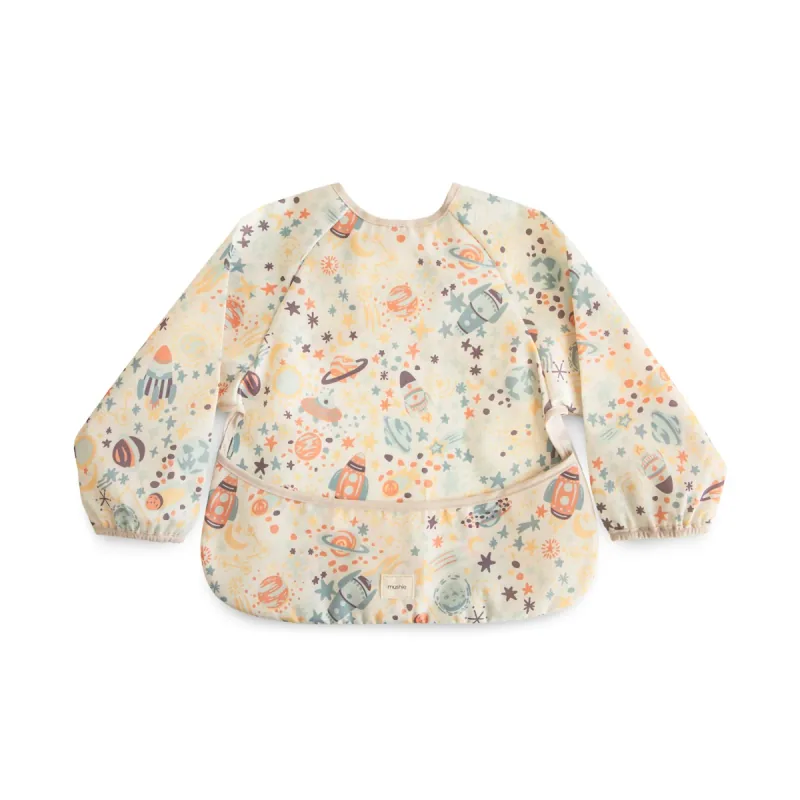
Absorbent bibs vs silicone bibs: catching is not the same as soaking up
Compare cloth and silicone bibs for spit-up and meals: absorption, pocket spills, fit, removal, washing, and real examples from Mushie and Copper Pearl.
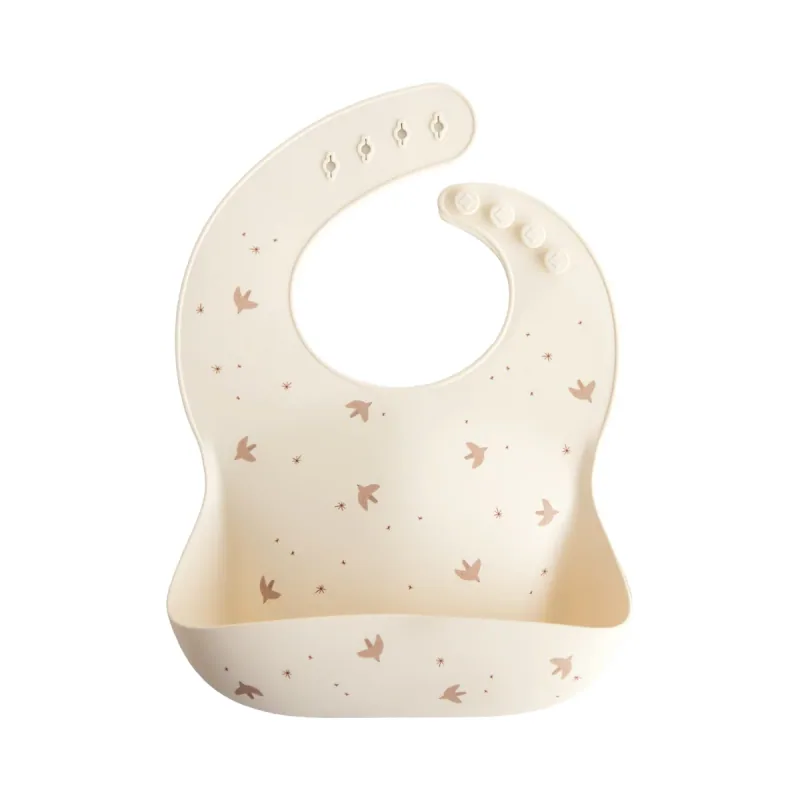
Photo: Photo: Mushie · A molded pocket can catch a spill, but the silicone itself does not soak up the liquid.Jump to a section
The quick answer
Choose an absorbent cloth bib for dribbles that land on the baby's chest and a silicone pocket bib for food and spills during suitable supervised meals. A silicone pocket holds liquid without soaking it up. For spit-up over your shoulder, check adult coverage separately; neither front bib automatically protects your back.
Absorption, a catching pocket, and coverage solve different parts of the mess.
Liquid held in a silicone pocket can spill when the bib is tilted.
Check the actual layers and care label, not only 'cotton' or 'easy-clean' on the listing.
The mybetterbib design aims to combine an absorbent shelf with interior silicone support and two wearing directions.
A bib can catch a spill without absorbing it, and absorb plenty while leaving the wrong part of your shirt uncovered. That distinction matters when you are choosing between a soft fabric bib and a silicone pocket. My starting question is simple: where will the mess land, and what happens to it before I can clean up?
For milk dribbles, food, and over-the-shoulder burping, the answer can be different. The examples here compare published product features, not hands-on performance scores. For the wider cleanup setup, start with our spit-up and burping guides.
At a glance
The details that make a difference when you’re deciding.
Example
What handles the mess
Removal and cleaning
Coverage to check
Mushie Muslin Bib
Layered absorbent fabric
Change when damp; wash and flat-dry
Baby's front and neckline
Mushie Silicone Baby Bib
A pocket holds food and liquid
Keep pocket upright; empty and wash
Front pocket and clearance at the tray
Copper Pearl Genevieve Bandana Bib
Cotton face with fleece backing
Check dampness through all layers; follow label
Width near the chin and shoulders
A closer look
The products, in detail
Actual product photos, manufacturer information, and direct links. Comparisons are based on published specifications; these are not hands-on test results.
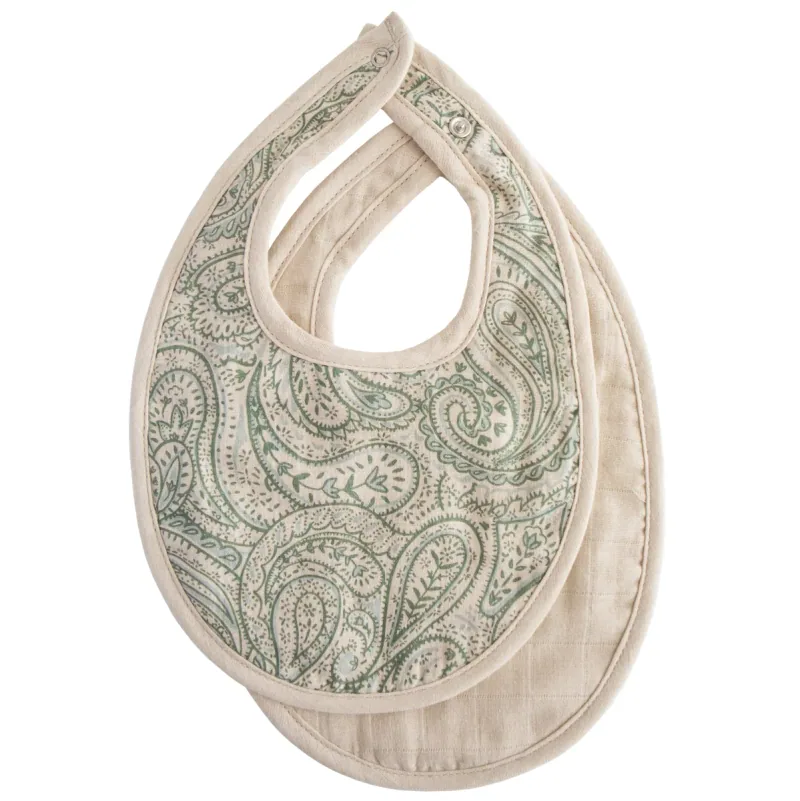
Mushie's muslin bib is the absorbent fabric example in this comparison. Its rounded panel and two fastening positions address a different job from a deep food pocket. Before choosing a set, check where the upper edges sit on your baby and allow for the manufacturer's flat-drying instructions. A good match is a bib that covers the actual dribble path and returns to the clean drawer in time for the next round of feeds.
Organic cotton muslin, layered construction
Two snap positions
Pack of two
Cold wash; lay flat to dry
Where it fits
Fabric takes in liquid instead of holding a loose puddle
The molded pocket makes Mushie's silicone bib a useful example of catching without absorbing. Food pieces and liquid can remain in the pocket, so the adult still needs to keep it upright during removal and empty it. Its washable surface may suit meal cleanup, but it does not replace a shoulder cloth during burping. Check how the pocket sits against the high-chair tray and follow the care instructions for the exact printed or plain version.
Food-grade silicone
Deep front pocket and adjustable fastening
Wash with mild soap and warm water; top-rack dishwasher option
Manufacturer recommends hand washing printed versions for longevity
Where it fits
Separate pocket collects food pieces
Surface can be washed without a fabric laundry cycle
What to weigh up
Liquid remains mobile until emptied
Pocket position and tray clearance need checking
03
Comparing a cotton-front bib with a fleece backing
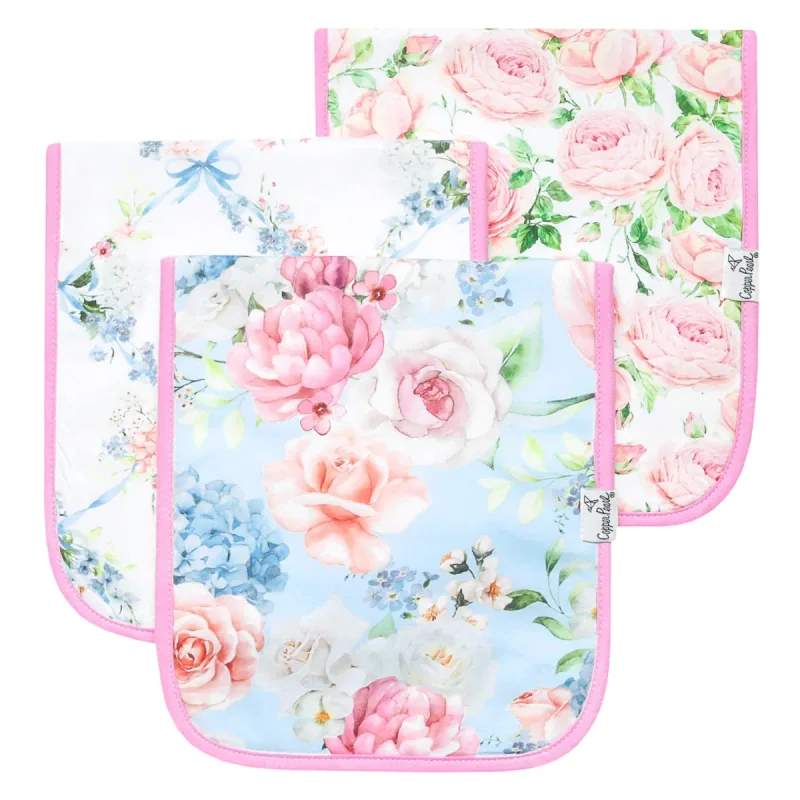
Copper Pearl's Genevieve bibs show why 'cloth bib' is not one construction. They combine a cotton face with polyester fleece on the back and use a triangular outline. Compare the width near the chin with a rounded muslin bib, then check how the layers feel when damp. A fleece backing is a documented material choice; it does not establish a measured capacity or promise that liquid cannot reach clothing around the edges.
Cotton front; polyester fleece backing
Four bibs in this set
Two nickel-free snaps
Bandana shape
Where it fits
Small multipack for clean changes
Different face and backing materials to compare
What to weigh up
Contains polyester as well as cotton
A long point does not guarantee broad shoulder coverage
Three jobs that a bib can do
Absorbing means taking liquid into a textile. A damp patch spreads through the material, and the item eventually needs changing. Catching means intercepting something, often in a shaped pocket. A food piece or puddle can remain there until you remove it. Covering means placing enough material across the surface you want to protect.
These jobs overlap, but one does not prove the others. An absorbent bib can be too narrow for the spill. A large pocket can hold liquid until it tilts. A broad cloth can cover your back but slip before spit-up arrives. Look for the missing function before assuming a thicker or more expensive product will solve the problem.
Match the material to the actual spill route
A small dribble beneath the chin points toward baby-worn coverage. A front fabric bib can put an absorbent surface between that liquid and the clothing underneath. During burping against your shoulder, however, the wet area may be on your shirt behind the baby. A bib sitting on the baby's chest can remain perfectly positioned while your shoulder still needs protection.
This is why an ordinary burp cloth remains useful alongside a bib. Decide whether you need chest coverage, shoulder coverage, or both during a feed. Our bib versus burp cloth comparison explains those different placements.
Compare the fabric layers, not just the word cotton
The Mushie Muslin Bib uses layered organic cotton and a rounded shape. The Copper Pearl Genevieve Bandana Bibs pair a cotton front with polyester fleece behind it. Those are different finished products even though cotton features prominently in both descriptions.
A backing can change the feel and laundering needs. It does not make every seam and edge a sealed barrier. Check the neckline and shoulder width in the product photos, read the full composition, and inspect both surfaces when the bib becomes damp. Turning a used bib around is not a clean change when moisture has reached the other side.
Rounded fabric coverage and a silicone catching pocket answer different cleanup questions. Compare the area beneath the chin before choosing by material alone. Source: Photo: Mushie
Why a silicone pocket makes sense for meals
The Mushie Silicone Baby Bib has a molded pocket and an adjustable fastening. That pocket gives food somewhere to land during a meal. It also creates a separate cleanup step: emptying what it contains.
A silicone bib is not an absorbent burp cloth. If liquid collects in its pocket, it stays liquid. The choice may still be convenient for a child whose feeding stage, fit, and seated setup suit the product. Check whether the high-chair tray pushes the pocket closed or upward; the photograph of an empty bib cannot answer that for your particular chair.
Comfort includes what happens when the baby moves
Lay the bib flat to inspect the closure and edges, then fit it according to the manufacturer's instructions. Observe the neckline in the position in which it will be used. Fabric can gather under the chin, and a pocket can press differently when the child leans forward.
A material label alone cannot establish comfort. Look at the weight, seams, edge finish, fastening, and whether the item stays clear of the face. Do not add improvised ties or clips to make a poor fit work. Remove bibs before sleep, as the Canadian Paediatric Society advises.
Think through removal before the first spill
With an absorbent fabric bib, support the baby and open the intended fastening without dragging the wet area across the face. Keep the damp side contained while moving it to the used-laundry area. Check the shirt underneath rather than assuming it stayed dry.
With a pocket bib, look inside before releasing the closure. Keep the opening upright as you remove it, then empty the contents and clean the inside corners as well as the broad front. A catching pocket is helpful only if removal does not create another spill. Have the cleanup cloth ready before starting so you are not reaching across the child for one.
Compare two different cleaning routines
Mushie instructs owners to cold-wash its muslin bib and lay it flat to dry. Its silicone bib can be washed with mild soap and warm water or on the dishwasher's top rack; the brand recommends hand washing printed versions to preserve the print. These are specific product instructions, not rules for every cloth or silicone bib.
Consider which routine fits your home. A fabric item needs time to become fully dry and a spare while that happens. A washed silicone pocket still needs cleaning around the fastening and drying inside its recesses. Keep the exact instructions with the rest of your feeding equipment and use our bib washing guide for the questions to check.
Make the choice from three ordinary situations
If the recurring mess is milk down the baby's chest, compare absorbent shapes and how often you need a fresh one. If it is food dropping during meals, compare pockets, tray clearance, and cleaning access. If it is spit-up down your own front or back, begin with shoulder placement and the coverage you need when holding the baby.
You may use more than one item across those situations. Buying a small set first gives you room to observe the fit and laundry routine. A small initial purchase also lets you notice whether extra coverage or a different cleaning routine matters more than another matching bib.
Why I want mybetterbib to bring those jobs together
As a mom of two, I want the design to account for the person holding the baby as well as the baby wearing it. The mybetterbib concept changes direction for baby or parent use, with a separate stretch strap for the parent's configuration. Its absorbent shelf is intended to catch and soak up spit-up around the covered area before it runs down clothing.
The silicone interior has a different job from an exposed food pocket: supporting the shape beneath the soft material, with less cloth arranging during a midnight feed. Non-toxic material selection and easy washing are design goals. Final materials, fit, wash instructions, and performance still need verification before launch. You can read the mybetterbib FAQ and join the Kickstarter update list below.
A few more details
Your questions, answered
Will a silicone bib absorb spit-up?
No. Silicone can form a pocket that holds liquid, but it does not absorb it like a cloth surface. Consider where spit-up lands and how the pocket will be emptied before choosing it for that job.
Is a fleece-backed bib automatically waterproof?
No. A fleece layer is a construction detail, not proof of a sealed waterproof barrier. Check the exact manufacturer's claims and remember that liquid can also pass around the edges or neckline.
Can I wash every silicone bib in the dishwasher?
Follow the exact product's instructions. Mushie lists a top-rack option for its Silicone Baby Bib and recommends hand washing printed versions for longevity. Other designs and components may have different requirements.
How is mybetterbib's planned silicone interior different from a silicone food bib?
The planned interior supports the shape under an absorbent textile surface. The shelf is intended to catch and soak up spit-up in baby and parent configurations. A typical exposed silicone food pocket holds liquid until emptied. mybetterbib is still a prelaunch design, with final specifications and performance to be verified.
Sources & product information
Follow the original sources for current product details, instructions, and guidance.
Compare a burp cloth and bib by coverage, absorbency, and everyday use. See what protects baby, what protects your shoulder, and where convertible designs fit.