A newborn night feeding station that makes the next feed easier
Set up a practical night feeding station with clean burp cloths, a separate used-cloth spot, milk storage checks, and a simple handoff plan for tired parents.
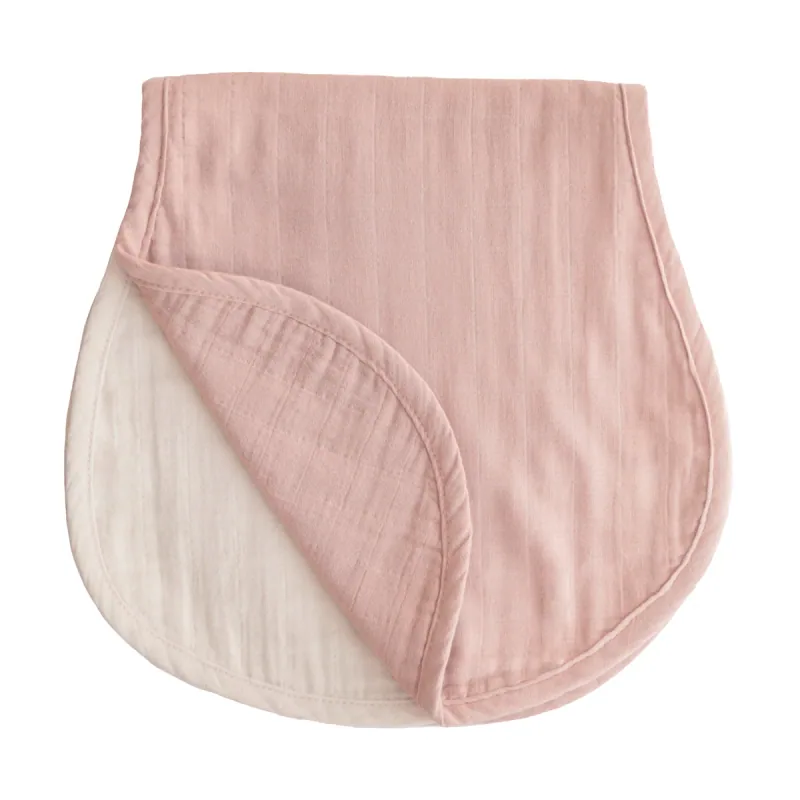
Photo: Photo: Mushie · Open a fresh shoulder cloth before the feed and keep a spare nearby. These are Mushie’s 22.5-by-11.5-inch muslin burp cloths.Jump to a section
The quick answer
A useful night feeding station keeps the next clean cloth, your feeding supplies, and a place for used items easy to find. Set it up around a separate, clear baby sleep space, and plan what to do when you feel too tired to hold your baby safely. You do not need a new cart or a cupboard full of gadgets.
Keep clean burp cloths separate from damp cloths and used bottle parts.
Store milk safely; a bedside tray does not replace refrigeration.
Give each adult a clear handoff and a manageable reset job.
Keep bibs, feeding cloths, storage baskets, and cords out of the baby’s sleep space.
The best newborn night feeding station solves small, predictable problems: the clean burp cloth is within reach, the used one has somewhere to go, and the next adult knows what needs doing. It can fit on a shelf or a small table. Start with the supplies your feeding routine actually uses, then arrange them so a tired person can find them.
As a mom of two, I want feeding products to make less work for the person holding the baby. That is the perspective behind mybetterbib, and it is also a useful test for a nighttime setup: does this arrangement help you care for your baby, or give you more things to manage?
At a glance
The details that make a difference when you’re deciding.
Place
Keep here
Keep separate
Beside the adult
Clean burp cloths, water, needed feeding supplies
Used cloths and dirty bottle parts
Laundry collection
Used feeding cloths and damp clothing
Fresh cloths and clean feeding equipment
Washing area
Bottle or pump cleaning supplies and a drying area
Spit-up cloths used as drying towels
Baby’s sleep space
Approved sleep surface and fitted sheet
Bibs, cloths, baskets, loose items, and cords
Start with the sleep space and a clear route
Identify where your baby will return after feeding before deciding where to put a basket. The American Academy of Pediatrics recommends placing babies on their backs on a firm, flat sleep surface in their own crib or bassinet, with a fitted sheet and no loose bedding. Sharing your room does not mean sharing your sleep surface.
Put the adult supplies outside that space. Do not drape burp cloths over the sleeping baby, tuck one under their head, or turn crib rails into a storage rack. Keep cords and small supplies out of reach. Leave enough floor space to stand and move without stepping over a laundry basket.
Make three places: clean, in use, and ready to wash
Fold a few clean, completely dry burp cloths together. Put the cloth for the next feed on top, with a spare directly behind it. Avoid deep stacks that require rummaging while holding a baby.
Use a separate washable container for used cloths. It need not match the room; it needs to be recognizably different from the clean basket. A damp cloth that looks nearly clean in low light should not accidentally return to the fresh pile. Empty and clean this container regularly rather than letting wet fabric sit for days.
Keep used feeding equipment separate from that laundry. A bottle with milk residue belongs in the cleaning routine, not underneath clean textiles. If you pump, identify a clean place for dry parts and a separate place for parts awaiting washing.
Prepare the shoulder cloth before picking up your baby
Open the cloth to its usable width before a feed instead of leaving it tightly folded. For shoulder burping, think about coverage over the top of your shoulder and down both sides. A long rectangle folded into a narrow strip leaves less room to catch a spill.
Mushie’s Organic Cotton Muslin Burp Cloths are one concrete example: the manufacturer lists a 22.5-by-11.5-inch cloth. Measure that outline against your usual burping position instead of assuming every product called a burp cloth offers the same coverage.
If fabric slips, support your baby first and reposition it when you can do so safely. Replace a saturated cloth rather than folding the wet patch against your shoulder. For choosing coverage, read how to protect clothes from baby spit-up.
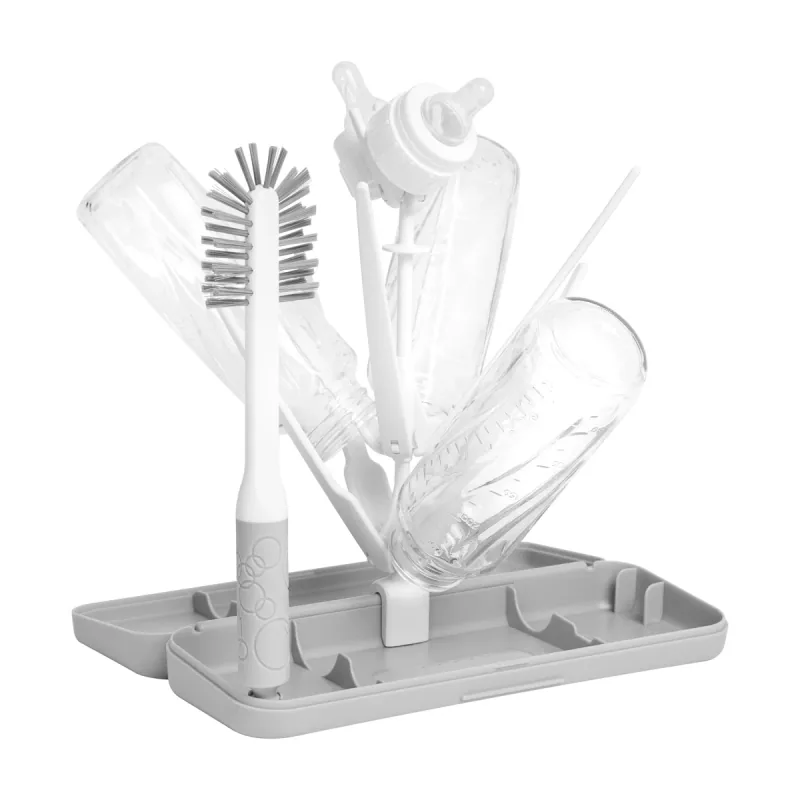
Keep the washing area separate from clean bedside textiles. Ubbi’s four-piece travel set is one compact drying accessory; it does not clean or sanitize bottles for you. Source: Photo: Ubbi
Keep milk preparation separate from convenient storage
A nearby clean bottle is useful. A prepared bottle left on a nightstand for later is a different matter. Follow the storage rules for the milk you are using, and your baby's individual feeding advice.
For formula, CDC guidance says to use a prepared bottle within two hours of preparation and within one hour after feeding begins. If it will not be used within two hours, refrigerate it immediately and use within 24 hours. Discard leftovers after feeding. Powdered formula needs preparation precautions for babies under two months, premature babies, and babies with weakened immune systems; read the full guidance when planning your routine.
Write a preparation time when it helps the next adult avoid guessing. Keep the container instructions available, and do not improvise powder-to-water proportions to save a trip. Breast milk has its own CDC storage guidance; formula times are not a universal rule for all milk.
Let the kitchen handle washing and drying
The bedside station can stay small if washing happens in a dedicated area. Set aside the cleaning equipment required for your bottles or pump rather than trying to balance a washing basin beside the bed.
The CDC advises cleaning bottles after each feeding, taking their components apart and letting cleaned parts air-dry fully. Follow the item's instructions for cleaning and sanitizing. A cloth used for spit-up should not double as a towel for drying bottle interiors.
An Ubbi on-the-go drying rack and brush illustrates a compact option for the washing area: the four-piece set includes a case, rack, bottle brush, and small nipple brush. It is a drying accessory, not a sanitizer or a reason to skip cleaning. You may already have suitable equipment.
Decide the tired-parent handoff before midnight
A useful handoff is specific: “The feed is finished; this bottle needs washing; two clean cloths are left.” It tells the next adult what has happened without requiring a new system to learn.
If another adult is available, agree who can take the baby when you feel drowsy and who will reset supplies. Breastfeeding does not make every surrounding task the nursing parent's job. Someone else can bring water, restock cloths, wash feeding equipment, and take over an appropriate part of care.
Fatigue deserves a plan, not just determination. AAP advice for sleep-deprived parents warns against feeding on a sofa or armchair when you may fall asleep. Ask another adult to stay with you when possible. If you fall asleep while feeding, return your baby to their own sleep space on their back as soon as you wake.
Use this short reset checklist
Do the reset when your baby is safely settled or another adult is holding them. There is no benefit to organizing everything while trying to manage a moving baby with one arm.
Restock clean, dry cloths and one spare baby outfit.
Move used cloths into the laundry routine.
Deal with milk leftovers and used feeding equipment.
Refill your own water and put essentials back in their usual places.
Check that the walking route and baby's sleep space remain clear.
Start with enough cloths to cover the feeds before your next realistic laundry opportunity, then adjust from actual use. Our burp cloth quantity guide helps you account for changes and drying time.
Why this matters to mybetterbib
I am creating mybetterbib around the work that happens between feeding and getting settled again. The prelaunch design changes direction for baby or mom, with a separate parent strap for shoulder use. An absorbent shelf is intended to catch spit-up before it travels down the front or back of clothing.
A cushioned silicone interior is intended to help the shape settle into place with less cloth adjusting. Non-toxic materials and easy washing are design goals, with final specifications and care instructions still to come. It is a feeding and burping product, to be removed before sleep. See the design and join the Kickstarter updates, or explore our spit-up and burping guides.
A few more details
Your questions, answered
Do I need a nursing cart or special feeding organizer?
No. Start with a shelf, shallow basket, or small table you already own. Choose a location that is easy for the adult to reach and outside the baby's sleep space; buy an organizer only if it solves an actual storage problem.
Can I leave a prepared formula bottle at the station for the next feed?
Only within safe storage limits. CDC says prepared formula must be used within two hours of preparation and within one hour of starting the feed. If you will not use it within two hours, refrigerate immediately and use within 24 hours; discard leftovers after feeding.
What should another adult do during a breastfeeding handoff?
Agree on the help wanted. Useful jobs include bringing water, replacing cloths, washing equipment, taking over care when appropriate, and resetting the station. Ask clearly before assuming the nursing parent wants a particular task or feeding routine changed.
Should I keep a cloth under the baby in the bassinet in case of spit-up?
No. Loose feeding cloths do not belong in the baby's sleep space. Remove bibs before sleep and use the baby's own firm, flat sleep surface with its fitted sheet. Speak with your pediatrician about feeding concerns rather than changing the sleep setup.
Sources & product information
Follow the original sources for current product details, instructions, and guidance.
Estimate your burp cloth supply from daily use, laundry turnaround, and travel backups. Use clear examples and adjust a starter set without overbuying.
Compare two-use bib designs, the aden + anais Burpy Bib, and separate bibs and cloths. Check conversion, coverage, care, and what mybetterbib is developing.