Good baby wipes clean effectively without making each diaper change harder. Start with an alcohol-free, fragrance-free option or soft cotton with water, then judge the wipe by your baby's skin and the way it works in your hands. The thickest package or longest ingredient claim does not always make the most useful wipe.
Care4 products, compared
Baby wipes: choosing a simple option for everyday changes
Compare baby wipes by skin needs, texture, packaging, and real cost. Build a practical diaper-change routine and know when a rash needs medical advice.
Jump to a section
The quick answer
Choose baby wipes by skin tolerance, the exact ingredient list, how the pack dispenses, and cost per usable wipe. Fragrance-free wet wipes, dry cotton wipes, and reusable cloths are different options. Try a small pack before buying a case, and do not flush diaper wipes.
- Compare wipe count and sheet size, not just the price of a pack.
- A flip-top pack and a refill pack may require different storage.
- Dry wipes need suitable water at the point of use.
- Plant-based or compostable does not mean safe to flush.
At a glance
The details that make a difference when you’re deciding.
| Option | Ready to use? | Ongoing task |
|---|---|---|
| Pipette / Honest wet wipes | Yes, moistened in the pack | Reseal and dispose appropriately |
| Honest dry cotton wipes | Dry; add water if needed | Keep clean water and supplies available |
| Mushie muslin cloths | Reusable cloth | Separate, wash, and dry used cloths |
A closer look
The products, in detail
Actual product photos, manufacturer information, and direct links. Comparisons are based on published specifications; these are not hands-on test results.
01
Fragrance-free wet wipes with added moisturizers
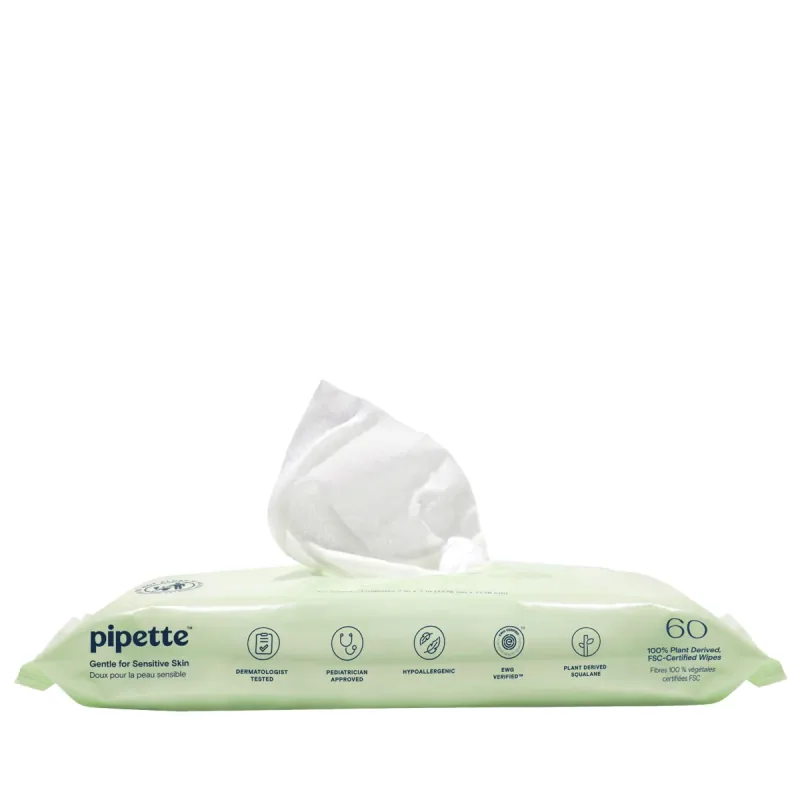
PipetteBaby Wipes
Pipette Baby Wipes use plant-derived cloth fibers and a water-based solution containing squalane and glycerin. They are a concrete alternative when comparing wipe ingredients and fabric feel rather than just package artwork. Test one pack before buying a case, close the opening after each change, and watch how the skin tolerates the formula. Plant-derived fibers do not make a used diaper wipe suitable for flushing.
- Fragrance-free
- Plant-derived cloth fibers
- Water-based solution
- Contains squalane and glycerin
Where it fits
- Ready-moistened for travel
- Documented moisturizing ingredients
What to weigh up
- Added ingredients may matter for individual sensitivities
- Dispose of used wipes appropriately; do not flush
02
A flip-top pack of fragrance-free wipes
The Honest Company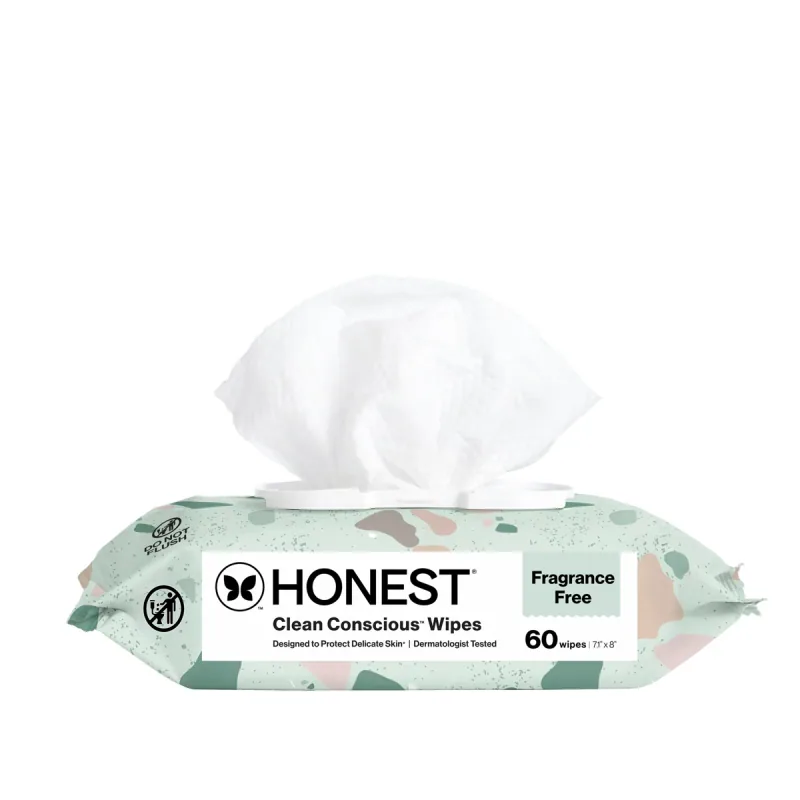
Clean Conscious™ Wipes
Honest Clean Conscious Wipes combine a thick plant-based cloth with a short listed formula and a flip-top pack. Compare the exact pack count and cost per wipe before choosing a subscription or bulk bundle. Environmental claims need context: disposal facilities and rules matter, and a wipe used for diaper cleanup should never be flushed. Start with the baby’s skin tolerance and the pack’s usefulness during one-handed changes.
- Fragrance-free
- Plant-based cloth
- Flip-top dispenser
- Manufacturer lists seven ingredients
Where it fits
- Resealable travel-friendly pack
- Ingredients published by the brand
What to weigh up
- Case sizes and patterns vary
- Compostability claims do not mean flushable
03
Dry cotton wipes you moisten yourself
The Honest Company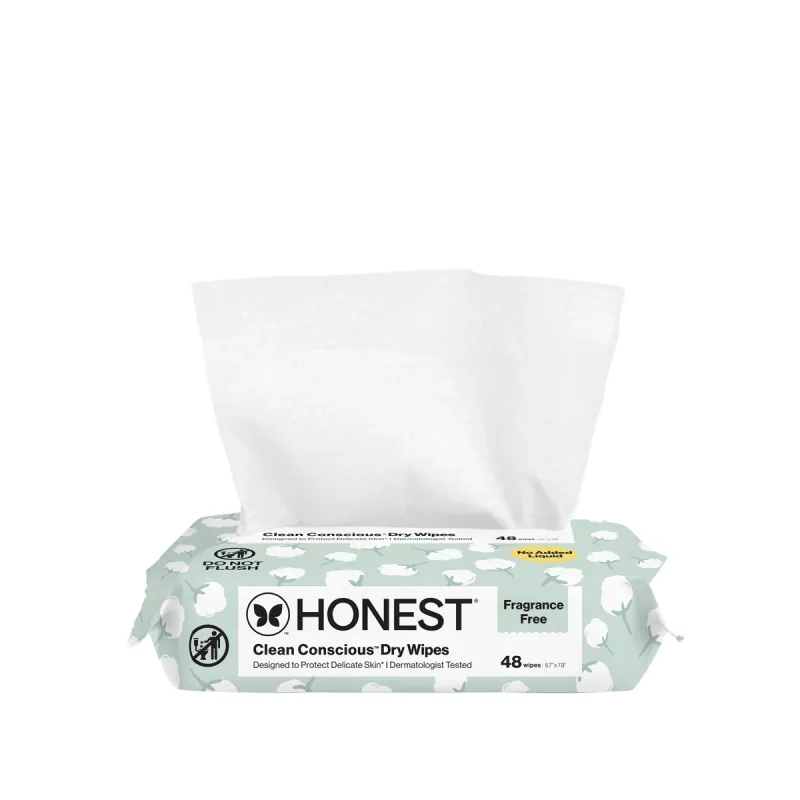
Clean Conscious™ Dry Wipes
Honest Clean Conscious Dry Wipes are made from organic cotton and can be used dry or moistened for a particular cleanup. They let the adult choose the water amount and temperature, which differs from a ready-wet pack. The tradeoff is preparation: keep suitable water and a clean work surface available, and do not store homemade wet batches indefinitely. A dry-wipe pack also needs protection from splashes so unused wipes stay clean.
- 100% organic cotton
- Supplied dry
- Use wet or dry
- No pre-added cleansing solution
Where it fits
- Control the amount of water
- Useful comparison for sensitive-skin routines
What to weigh up
- Less convenient when water is unavailable
- Disposable cotton still creates waste
04
Reusable cloths for washing and wiping
Mushie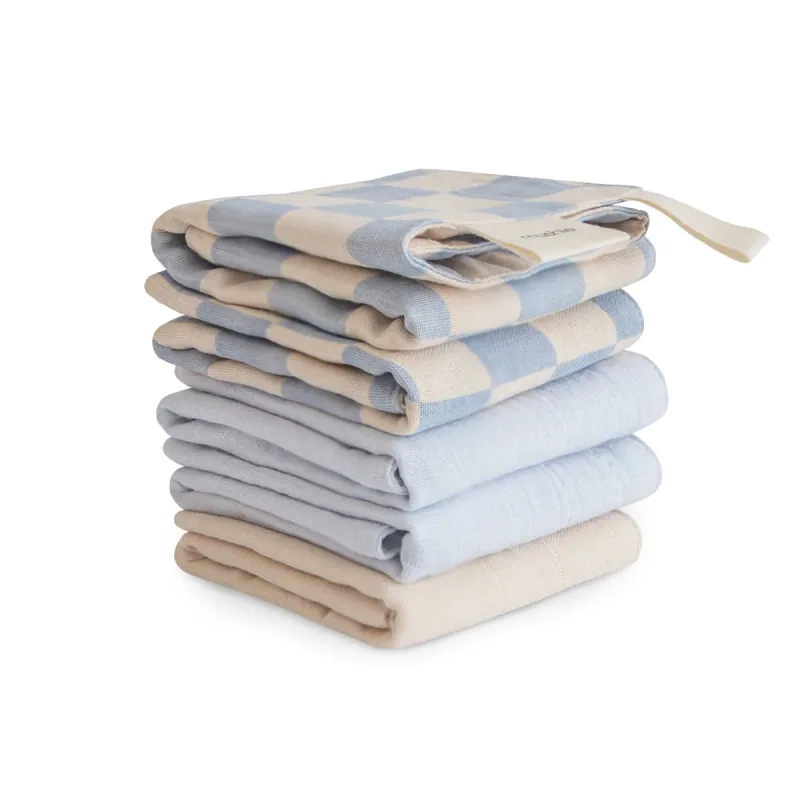
Muslin Cotton Washcloth
These square Mushie muslin washcloths are a reusable option for a bath or a carefully separated diaper-cleaning routine. Each cloth measures 11 by 11 inches and includes a hanging loop. Their size is useful for a hand-held wipe but is different from a long shoulder burp cloth. If you use washable cloths for several jobs, keep diaper cloths separate from face and feeding cloths, and plan how you will wash and dry each group.
- 100% organic cotton
- 11 × 11 inches
- Hanging loop
- Machine washable
Where it fits
- Reusable textile option
- Small enough for a bath caddy
What to weigh up
- Requires laundry and drying
- Not a pre-moistened disposable wipe
Four real options, with four different routines
Pipette Baby Wipes are fragrance-free wet wipes with a water-based formula containing squalane and glycerin. Honest Clean Conscious Wipes are another ready-moistened option, with a flip-top dispenser and a published ingredient list. Compare both on your baby’s skin and the practical experience of pulling one sheet while keeping a safe hand on the baby.
Honest Clean Conscious Dry Wipes are supplied dry and made from organic cotton. You choose whether to moisten them, which can suit a planned changing station but adds a step away from home. Mushie Muslin Washcloths are a reusable textile alternative. They require a clean-to-used laundry system rather than a disposable-wipe bin.
Those examples are not interchangeable refills for the same system. Choose the routine first: pre-moistened convenience, controlled wetting at the changing station, or reusable cloths with regular washing. It is reasonable to use different approaches at home and on outings.
Choose for the job you actually need
The NHS diaper-changing guide recommends water and cotton wool or fragrance-free, alcohol-free baby wipes. It also emphasizes careful cleaning and frequent changes.
For home changes, water and a soft cloth may be practical. For a diaper bag, a securely closing pack can be easier. For daycare, ask whether staff need a labeled package or an individual supply. Those three settings may call for different packaging even if you use the same wipe material.
A wipe made for surfaces is not a baby wipe. Keep household disinfecting wipes away from the changing area to avoid confusion.
Compare texture and dispensing before buying in bulk
A useful wipe should unfold easily and stay intact during cleaning. If several wipes pull out together, you may use more than expected. If a pack dries out quickly, the lowest unit price stops looking economical.
Try one small package before committing to a case. Check whether the lid opens quietly, closes securely, and works with one hand. Look at sheet size as well as sheet count; a small, thin wipe and a larger, sturdy one are not identical purchases.
A refill container only helps if it keeps wipes moist and is easy to keep clean. Follow the manufacturer's storage instructions, and do not add homemade mixtures to a dried-out pack.
If the skin becomes sore
Pause a newly introduced product if you suspect irritation and ask your pediatrician about persistent or worsening rash. Fever, blisters, open sores, or a baby who seems unwell warrant prompt advice.
A wipe change can simplify care, but it cannot diagnose a rash. Take a photo for your clinician if the appearance changes between appointments, and note when you changed wipes, diapers, creams, or detergents. That short record can make the next conversation much more useful.
Calculate a meaningful cost per change
Divide pack price by the number of wipes for a starting unit price, then consider how many sheets you typically use. A low price per sheet can be less economical if the wipe tears, dispenses in a long chain, or dries before the pack is finished. Sheet dimensions and texture can matter as much as the printed count.
For a subscription, check the delivery interval, cancellation controls, and whether the next case will be useful before the baby’s needs change. Keep an unopened backup rather than several open packs drying in different rooms. If you prefer reusable cloths, include your realistic laundry and drying capacity, not just the purchase price of the cloth set.
Make one-handed use safer and easier
Set out a clean diaper, wipes, and any clinician-recommended barrier product before putting the baby on a changing surface. Keep one hand on the baby when using an elevated surface. A product that dispenses neatly can make the routine easier, but no pack feature makes stepping away safe.
Close the pack after each use and keep unused wipes clean. For dry wipes, wet only what you need using suitable water and a clean container; do not turn a whole package into an indefinitely stored homemade wet batch. Separate cloths used for diaper cleaning from those used on the face or during feeding, and wash hands after the change.
Read environmental language with the disposal step in mind
“Plant-based,” “plastic-free,” and “compostable” describe different things. A fiber claim is not a complete disposal instruction, and a compostability claim can depend on specific conditions. Check your local waste rules, especially for a wipe contaminated during diaper care. Used baby wipes should not be flushed.
Skin comfort comes first. If wiping seems painful or a rash persists, use the pediatrician’s advice rather than simply moving to a more heavily scented product to cover odor. A gentle approach and an appropriate diaper-care plan may matter more than switching among premium wipe brands. For related skin questions, read the baby eczema guide, while remembering that not every diaper rash is eczema.
A few more details
Your questions, answered
Can I use water instead of baby wipes?
Yes. Water with soft cotton or a clean soft cloth can be practical for diaper changes. Clean gently and dry the skin before replacing the diaper.
Should I buy baby wipes in bulk before birth?
Try a small package first. Skin tolerance, sheet size, and how the pack dispenses matter as much as the price per wipe.
Are compostable baby wipes flushable?
No. Compostability and sewer compatibility are different claims. Do not flush diaper wipes, and follow local disposal rules for contaminated wipes.
Can I use reusable washcloths instead of disposable wipes?
A planned cloth routine can work for cleaning, but it needs suitable water, separate clean and used storage, washing, and complete drying. Keep diaper cloths separate from face and feeding cloths.
Sources & product information
Follow the original sources for current product details, instructions, and guidance.