Tylenol is a brand name for acetaminophen, a medicine used for pain and fever. Before giving it to a baby, confirm that it is appropriate with your pediatrician and get instructions for your child's current weight and the exact bottle you own. This guide deliberately does not provide a dose.
CareA practical guide
Baby Tylenol: what to check before giving acetaminophen
Understand infant acetaminophen labels, measuring devices, duplicate ingredients, and the questions to ask a clinician before giving a baby Tylenol.
Jump to a section
The quick answer
Tylenol is a brand of acetaminophen. For a baby, confirm with a clinician whether it is appropriate and obtain instructions for the baby’s current weight and the exact product concentration. A fever in the first three months needs immediate medical advice.
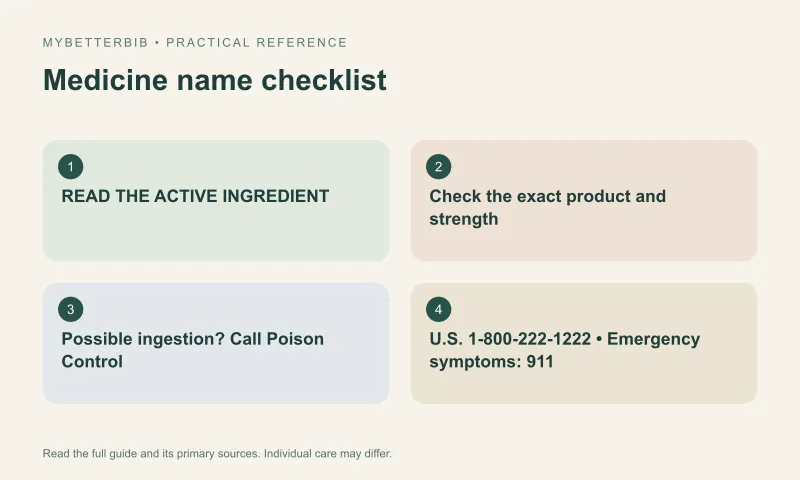
- Read “acetaminophen” and the concentration on the actual bottle.
- Use the measuring device intended for that product, never a kitchen spoon.
- Keep one shared record to prevent duplicate doses.
- Call Poison Control after a possible dosing error.
A young baby's fever comes first
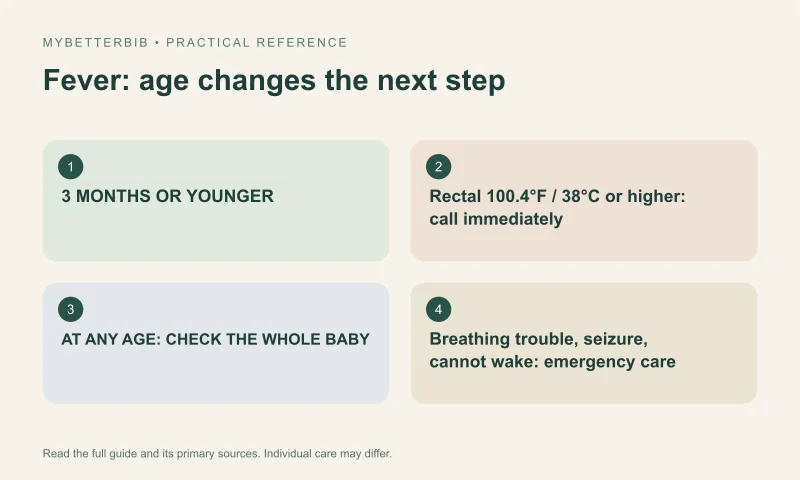
If your baby is three months or younger and has a rectal temperature of 100.4°F (38°C) or higher, contact your pediatrician immediately. Do not give medicine simply to see whether the fever disappears before seeking advice.
The AAP's medicine guidance advises calling a pediatrician before giving acetaminophen to a child under two years. The reason for discomfort matters: medicine can reduce symptoms without explaining why they occurred.
Call emergency services for a baby who is unresponsive, has a seizure, or has serious breathing difficulty.
Read the active ingredient and concentration
Check the front label and the Drug Facts panel. The active ingredient, concentration, and measuring instructions are separate pieces of information. Brand familiarity is not enough, especially when traveling or using a product purchased in another country.
Do not transfer a dose instruction from an old bottle to a new one without checking. A family member may use the word drops for any liquid medicine, but that nickname does not tell you how concentrated it is.
Store medicine in the original container so that instructions, expiration date, and identifying information stay with it. If the label is unreadable, ask a pharmacist rather than guessing.
Use the intended measuring device
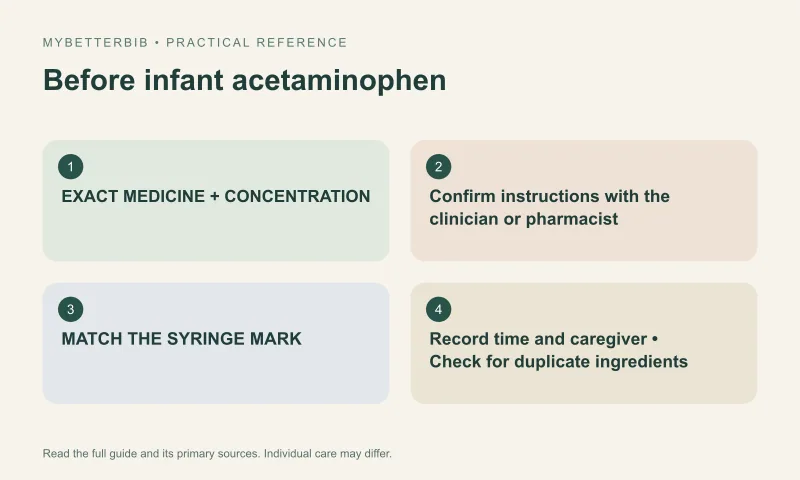
Use the oral syringe or appropriate device supplied or recommended for that product. Kitchen teaspoons vary and should not be used as medicine measures. Ask the pharmacist to show you which marking matches the clinician's instructions.
Read instructions aloud to the other caregiver. Confirm whether the volume is expressed in milliliters and write it exactly as instructed. Do not estimate a partial amount by eye or reuse a syringe with unfamiliar markings.
If the baby spits out a dose or vomits afterward, ask the clinician or pharmacist what to do. Automatically repeating the dose can create a mistake.
Understand the units before measuring anything
Milligrams describe the amount of medicine; milliliters describe the amount of liquid. They are not interchangeable. The concentration connects those two measurements for a specific product. Instructions copied from a bottle sold in another country, a different formulation, or an old handout may not match what is in your cabinet today.
Ask the clinician or pharmacist to show you the exact mark on the supplied oral syringe. Repeat the instruction back using the same units. If you cannot clearly match the instruction to the label or the syringe, stop and resolve that mismatch before giving medicine. A capful, dropperful, or kitchen teaspoon is not a sufficiently precise substitute.
Read every active ingredient in combination products
Acetaminophen can appear in more than one medicine. A caregiver may think they are giving two different products because the boxes have different branding while actually giving the same active ingredient twice. Do not use an adult cold-and-flu medicine or an older sibling’s combination product for a baby.
The AAP’s acetaminophen information emphasizes using the right medicine and measurement. Bring all products being used to a pharmacist if you are unsure about overlap. Include any medicine administered by a daycare provider or relative when you explain what the baby has already received.
A shared log prevents a common handoff error
Use one place to record the exact product, time, amount directed by the clinician, and the adult who administered it. Check the log before each administration, not afterward. If there is uncertainty about whether a dose was already given, obtain advice instead of automatically repeating it.
For travel, take the original labeled container and its measuring device together. Keep the log accessible to caregivers, but keep the medicine itself locked away and out of sight. Do not prefill an unlabelled syringe and leave it beside a feed where another adult could mistake its contents.
What to do after a possible mistake
Call U.S. Poison Control at 1-800-222-1222 promptly if too much may have been given, the wrong concentration was used, or two products may have overlapped. Have the package, time, estimated amount, child’s age, and current weight available. Do not wait for symptoms to decide whether to call; early advice matters.
If the baby cannot be awakened, has a seizure, or has breathing difficulty, call emergency services. Do not induce vomiting or try to counteract the medicine with food, another drug, or a home remedy. Follow the specialist’s instructions. Poison Control’s first-aid page explains the immediate approach to a possible poisoning.
Keep the reason for treatment in view
Pain relief does not explain why a baby is uncomfortable. Mention persistent poor feeding, unusual sleepiness, fewer wet diapers, or a worsening pattern to the pediatrician. If a baby three months or younger has a rectal temperature of 100.4°F (38°C) or higher, obtain immediate medical advice rather than treating the thermometer number first and postponing the assessment.
A few more details
Your questions, answered
Is baby Tylenol a different drug from acetaminophen?
Tylenol is a brand of acetaminophen. Check the exact product concentration and obtain instructions for your baby from a clinician.
Can I repeat a dose if my baby spits some out?
Do not automatically repeat it. Ask a pharmacist or clinician what to do because you may not know how much was swallowed.
Are milligrams and milliliters the same?
No. Milligrams measure medicine amount; milliliters measure liquid volume. The exact product concentration determines their relationship. Ask a pharmacist to confirm the syringe measurement.
What if two caregivers may have given acetaminophen?
Do not give another dose to guess or compensate. Contact Poison Control promptly with the package, estimated amounts, times, age, and weight.
Sources & product information
Follow the original sources for current product details, instructions, and guidance.