A baby teeth chart shows common eruption ranges, not a deadline for your child. Babies usually develop 20 primary teeth, beginning around six months, but the order and timing vary. Use the chart to recognize patterns and prepare questions for your dentist, rather than to diagnose a delay at home.
CareA practical guide
Baby teeth chart: eruption ranges and how to use them
See typical baby tooth eruption ranges, understand why timing varies, and learn how to track new teeth without treating a chart as a deadline.
Jump to a section
The quick answer
Most babies develop 20 primary teeth, with substantial variation in timing. Lower front teeth often appear first. Use the eruption ranges below as a reference and arrange the first dental visit by the first birthday or within six months of the first tooth.
- Ranges overlap; teeth do not follow an exact monthly schedule.
- The upper and lower versions of a tooth have different typical ranges.
- Start brushing when the first tooth appears.
- A chart cannot explain fever, diarrhea, or an ill-looking baby.
Typical primary tooth eruption ranges
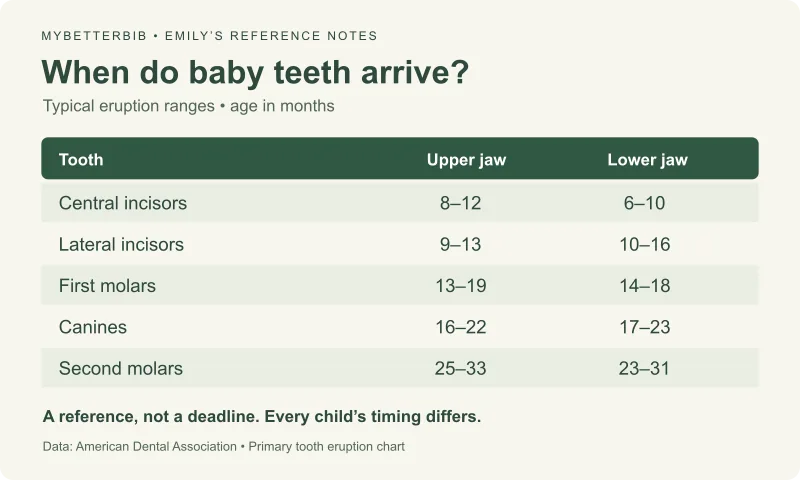
The following ranges follow the American Dental Association's primary tooth chart. Ages are in months, and upper and lower teeth may arrive at different times.
| Tooth | Upper jaw | Lower jaw |
|---|---|---|
| Central incisors | 8–12 months | 6–10 months |
| Lateral incisors | 9–13 months | 10–16 months |
| First molars | 13–19 months | 14–18 months |
| Canines | 16–22 months | 17–23 months |
| Second molars | 25–33 months | 23–31 months |
Teeth generally arrive in pairs over time, but do not expect an identical mirror image from one week to the next. A calendar entry such as “first lower tooth visible” is enough for a home record.
Separate teething from illness
Drooling and chewing may occur around teething, but a chart cannot explain fever, significant diarrhea, or a baby who seems ill. Do not postpone a medical call because a tooth is expected that month.
For discomfort, ask your clinician about suitable comfort measures. The FDA advises against teething jewelry and topical teething medicines containing benzocaine or lidocaine. A necklace is not a safe way to mark a milestone.
Bring a useful record to the dentist
Write down the first visible tooth, any injury, areas that seem painful, and questions about brushing or fluoride. If several adults share care, agree on who handles brushing at each part of the day.
Save the chart as a reference, but put the dental appointment on the calendar. Your child's examination matters more than matching a diagram. For daily care rather than timing, read our baby teeth guide.
Find the tooth’s position before reading the month range
Central incisors are the two teeth at the center of each jaw. Lateral incisors sit immediately beside them. Canines are the pointed teeth farther toward each side, with the first and second molars behind them. This map matters because a parent can easily compare a newly visible first molar with the age range for a canine and assume the sequence is abnormal.
Look briefly during routine brushing rather than repeatedly pulling the baby’s lips or pressing on the gums. If you are uncertain which tooth you are seeing, ask the dentist to identify it at the visit. A simple note such as “lower front tooth visible in September” is enough for a family milestone record.
Understand what the ranges do and do not predict
An eruption chart describes when teeth commonly become visible. It does not predict when a specific baby will experience gum discomfort, start chewing more, or need a new food texture. Drooling can occur before a tooth arrives, and one uncomfortable day does not identify which tooth is moving.
The ADA eruption chart is a reference for discussing development, not a diagnostic screening tool a parent must score. Prematurity, the child’s history, and what the dentist sees during an examination can all affect the conversation. Bring concerns about unusual appearance, injury, or very delayed eruption rather than deciding from the table alone that treatment is needed.
Make the first-tooth transition practical
Choose a small, soft-bristled toothbrush and let an adult do the brushing. For children younger than three, the ADA recommends a smear of fluoride toothpaste about the size of a grain of rice. Keep the tube and brush under adult control. A baby chewing on a training brush may enjoy the sensation, but that activity does not replace cleaning the tooth surfaces.
Put the first dental appointment on the calendar when the first tooth appears. Waiting until every tooth has erupted misses the opportunity to discuss brushing, fluoride, feeding patterns, and early signs of decay. Tell the dentist about any medicines, medical conditions, or concerns about bottle use so advice fits the child.
Save questions that a chart cannot answer
Ask which surfaces are hardest to reach, whether the baby’s drinking water contains fluoride, and what to do if a tooth is chipped or darkens after a bump. Describe discoloration without assuming it is a cavity; several causes require different assessments. If the baby has swelling of the face, significant pain, or another urgent symptom, seek care instead of waiting for the next routine appointment.
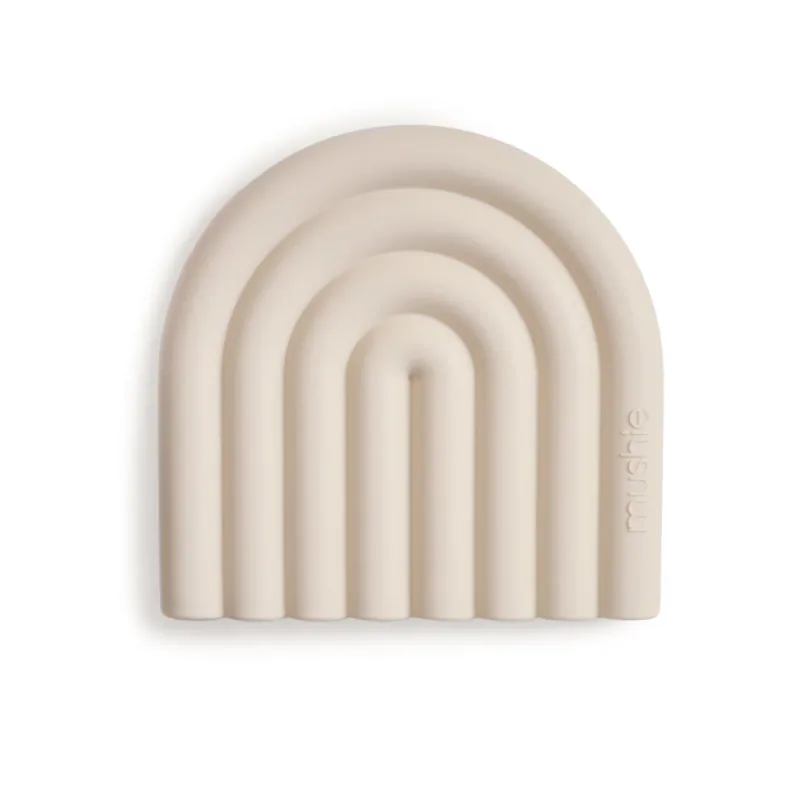
For ordinary gum discomfort, a clean finger massage or a suitable teether used as directed may help. Avoid teething necklaces and medicated gels discouraged by the FDA’s teething advice. The useful role of the chart ends where symptoms need an individualized medical or dental assessment.
A few more details
Your questions, answered
Do all babies get teeth in the same order?
No. Charts describe typical patterns and ranges. Your dentist can assess your child's individual timing and tooth development.
When should the first dental visit happen?
Arrange the first dental visit within six months after the first tooth appears, and no later than the first birthday, according to ADA guidance.
Why does the chart have separate upper and lower ranges?
Teeth in corresponding positions do not necessarily erupt at the same age in both jaws. Read the range for the correct tooth and jaw rather than averaging the two.
Can an eruption chart predict teething symptoms?
No. The chart describes common timing for visible teeth. It cannot explain significant fever, diarrhea, pain, or a baby who seems ill.
Sources & product information
Follow the original sources for current product details, instructions, and guidance.