Most nonwalking babies do not need shoes for development. Once a child walks outdoors, choose protection that fits both feet, bends appropriately, and stays on securely. A prewalker bootie, toddler clog, and adjustable walking shoe are different products.
Style3 products, compared
Baby shoes: when they are useful and how to check the fit
Learn when baby shoes are useful, how to compare first footwear, and what to check for fit, practical everyday use, and care before buying a pair.
Jump to a section
The quick answer
Most nonwalking babies do not need shoes for development. Once a child walks outdoors, choose protection that fits both feet, bends appropriately, and stays on securely. A prewalker bootie, toddler clog, and adjustable walking shoe are different products.
- Start with the child’s activity, not a baby-shoe age label.
- Measure both feet and check width as well as length.
- Try the actual shoe with the socks normally worn.
- Recheck fit regularly as feet grow.
At a glance
The details that make a difference when you’re deciding.
| Example | Construction | Useful comparison |
|---|---|---|
| Cris Prewalker | Leather; faux elastic laces | Optional prewalker outfit shoe |
| Artie | Leather; strap and elastic laces | Several widths on checked listing |
| Quinn Mini | Leather; hook-and-loop closure | Adjustable opening and wipe-clean care |
A closer look
The products, in detail
Actual product photos, manufacturer information, and direct links. Comparisons are based on published specifications; these are not hands-on test results.
01Cris Prewalker Sneaker - Little Kid White02Artie Shoe - Little Kid White/Classic Navy03Quinn Mini Sneaker - Little Kid Tan
01
A soft prewalker-style shoe comparison
Stride RiteCris Prewalker Sneaker - Little Kid White
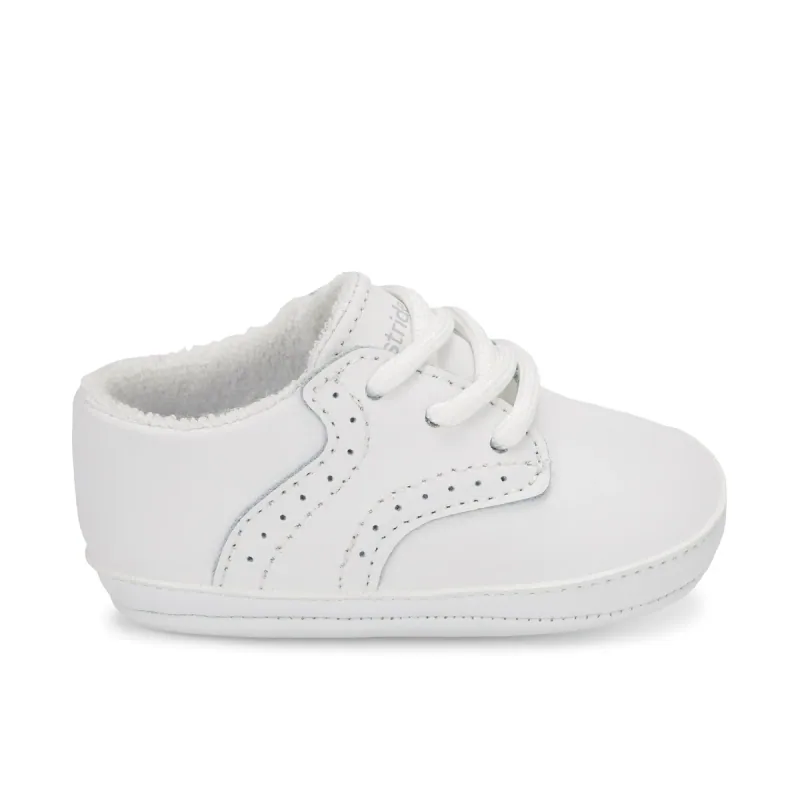
The Cris prewalker is a leather shoe with faux elastic laces and a flexible construction. Its prewalker label matters: a tiny fashion shoe and a shoe for regular outdoor walking are different shopping decisions. For a baby who is not walking, first ask whether any shoe is needed for the setting. If choosing it for an outfit, inspect toe room and closure comfort rather than relying on age alone.
- Leather upper
- Faux elastic laces
- Flexible construction
- Listed as a prewalker
Where it fits
- Simple understated style
- Flexible construction described
What to weigh up
- Not an essential for every nonwalking baby
- Check fit and intended use
02
A first-shoe comparison with width choices
Stride Rite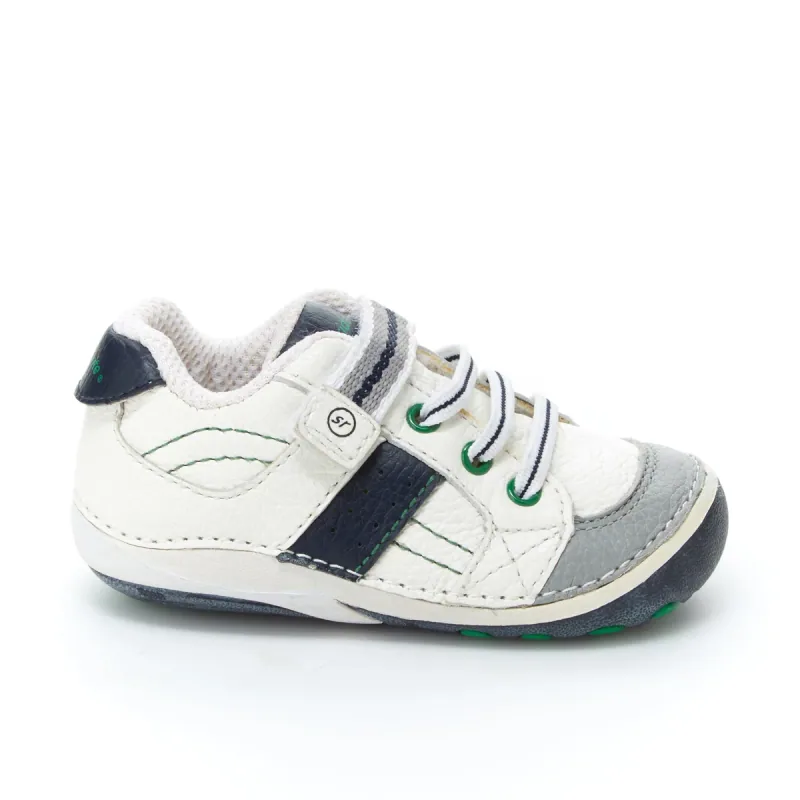
Artie Shoe - Little Kid White/Classic Navy
The Artie provides a concrete example of a leather shoe with a hook-and-loop closure and elastic laces. The checked page offers several width choices, which can be useful when length alone does not describe fit. Measure both feet and try the shoe with the socks normally worn. A manufacturer’s approval claim does not mean this particular shoe is the right fit for every child.
- Leather upper with textile lining
- Hook-and-loop strap and elastic laces
- Memory-foam footbed
- Checked page offers M, W, and XW widths
Where it fits
- Adjustable closure
- Multiple width options listed
What to weigh up
- Measure both feet
- Wipe-clean care; verify selected-size availability
03
An adjustable leather sneaker example
Stride Rite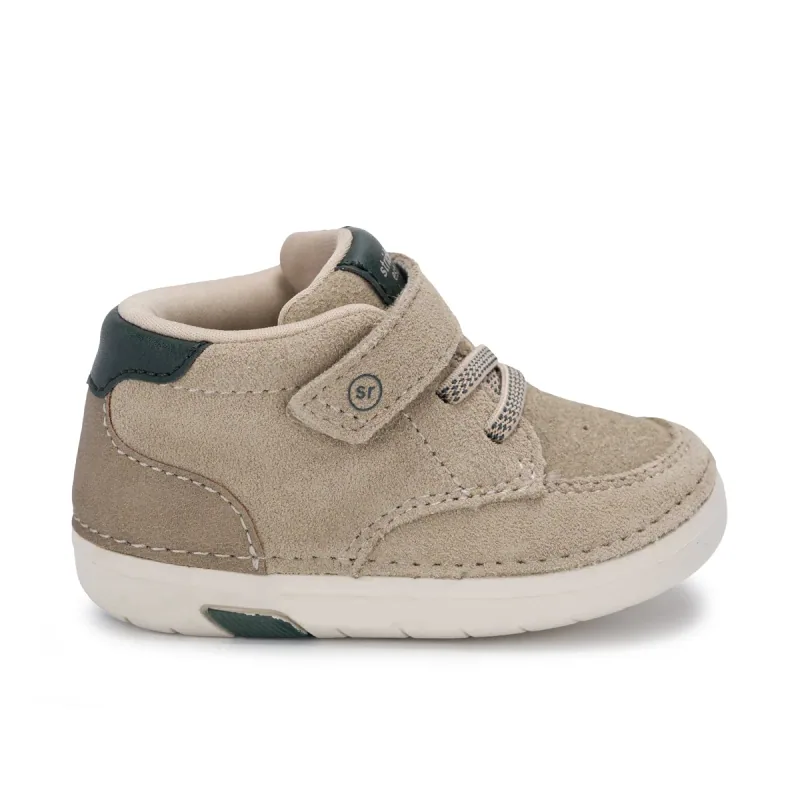
Quinn Mini Sneaker - Little Kid Tan
The Quinn Mini shows another everyday shoe construction, with leather and an adjustable hook-and-loop strap. Compare the opening, flexibility, and actual on-foot fit rather than choosing solely from a side photograph. A child’s two feet can need slightly different accommodation, so use the larger measurement as a starting point and inspect both shoes. Check the maker’s size guide and watch for rubbing or heel slip during a supervised try-on.
- Genuine leather listed
- Adjustable hook-and-loop closure
- Ortholite memory-foam cushioning
- Wipe-clean care
Where it fits
- Adjustable fastening
- Clearly specified maintenance
What to weigh up
- Fit still needs an on-foot check
- Not a guarantee of suitability for every walker
Three real shoe types worth distinguishing
The Stride Rite Cris Prewalker is a leather prewalker-style shoe with faux elastic laces. It is an example of a small shoe someone might choose for an outfit, but the prewalker label should prompt the first question: does this baby need shoes in this setting? A shoe is not required simply because a baby has reached a particular age or because it completes a photograph.
The Stride Rite Artie has a hook-and-loop closure, elastic laces, and several widths on the checked page. That makes it a useful comparison when you need to secure a shoe around a foot that does not fit a standard width well. The strap and width options are concrete features; they still need to work for the actual child.
The Quinn Mini is another leather sneaker example with a hook-and-loop strap and wipe-clean care. Compare its opening and shape with the Artie rather than assuming two models from one brand fit identically. The real photos below let you inspect the closure layout before following the exact product links.
What the pediatric guidance actually says
The American Academy of Pediatrics’ toddler-shoe guidance explains that shoes are mainly needed for protection once a child walks outside. In early months, feet do not need to be confined in shoes. For warmth in a suitable setting, socks may be enough.
That guidance does not establish one universally best brand. Choose for the surface, weather, and activity, and ask the child’s clinician if there is a specific foot, gait, or developmental concern. Do not use a retail product’s marketing claim as an individual diagnosis or a reason to buy corrective footwear without professional advice.
A practical fit check
Measure both feet using the manufacturer’s current method. Compare the larger measurement with the relevant size chart, then try both shoes. Check that the toes are not compressed, the heel does not repeatedly slip, and the fastening can hold comfortably without being pulled to an extreme position.
If the child can safely stand or walk for a try-on, observe a few ordinary steps on a suitable surface. Look for repeated tripping, rubbing, or a change caused by a shoe that is too loose or stiff. A shoe that stays on only when the toes curl is not made suitable by adding a tighter sock.
Care is part of choosing a first shoe
Leather wipe-clean shoes and machine-washable textile booties have different maintenance instructions. Check the actual model before putting any shoe in a washing machine or dryer. Allow shoes to dry as directed and inspect inside for grit or a folded lining before reuse.
For secondhand shoes, inspect the sole, closure, lining, and shape rather than relying on the outside looking clean. A heavily worn shoe may have an uneven pattern or compressed shape that does not suit the next wearer. For a growing child, repeat the fit check regularly and after an obvious growth change; the date printed on the size chart cannot tell you when an individual pair is outgrown.
Use the actual foot measurement
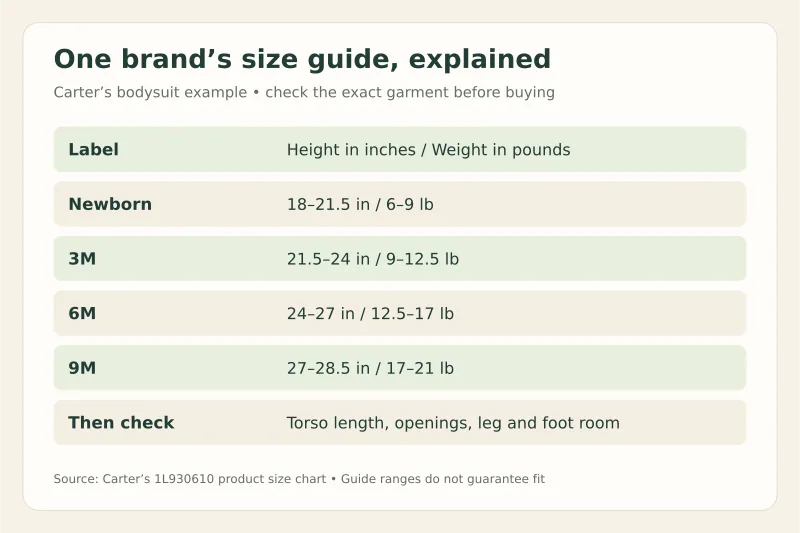
Check the manufacturer’s size guide for the particular model and market. A U.S. infant number, a toddler number, and a European size are not interchangeable. Age ranges provide rough context, not a guarantee of fit.
Measure both feet using the brand’s instructions and choose with the larger measurement in mind. If a printed measuring guide is used, check that it prints at the required scale. Repeat the measurement when shopping again rather than assuming the next age label is the next correct size.
Inspect how the shoe works on the foot
Look at the opening and closure. Can you put the shoe on without forcing the foot through a tight entry? Does it stay on without requiring excessive tightening? Check that the toes have room and that the heel does not repeatedly slip free.
The AAP recommends comfortable footwear with nonskid soles for toddlers and regular fit checks. If you see discomfort, persistent marks, or a change in the way the child moves, reassess the fit. Pain or a persistent limp deserves a conversation with the child’s clinician, not a trial of increasingly expensive shoes.
Compare everyday practicality
A pair that looks appealing online may be difficult to clean or put on quickly. Read care instructions, inspect the sole, and consider the places the shoes will be used. If a product is intended for indoor use, do not assume it will be suitable for wet pavement or rough ground.
For a gift, ask the parents for the current measurement or offer an exchangeable purchase. Shoes can be especially difficult to buy far in advance because the relevant size and season may not align. Keep packaging until the fit is confirmed.
Buy a useful pair before building a collection
Start with footwear that covers the child’s actual routine. Add another pair only when it solves a different need, such as allowing time for a wet pair to dry. More pairs do not improve the fit of the first one.
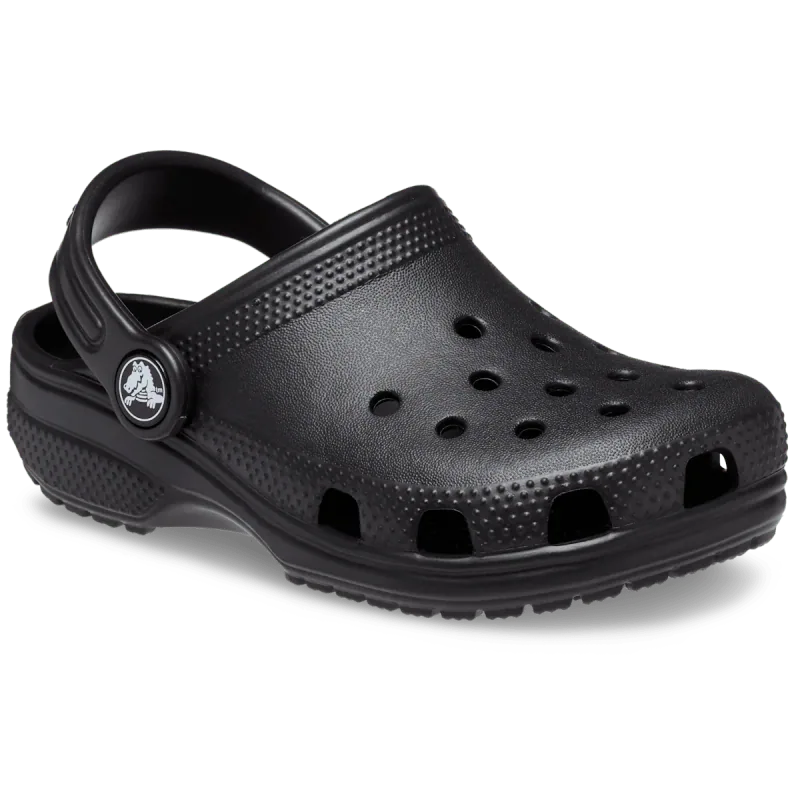
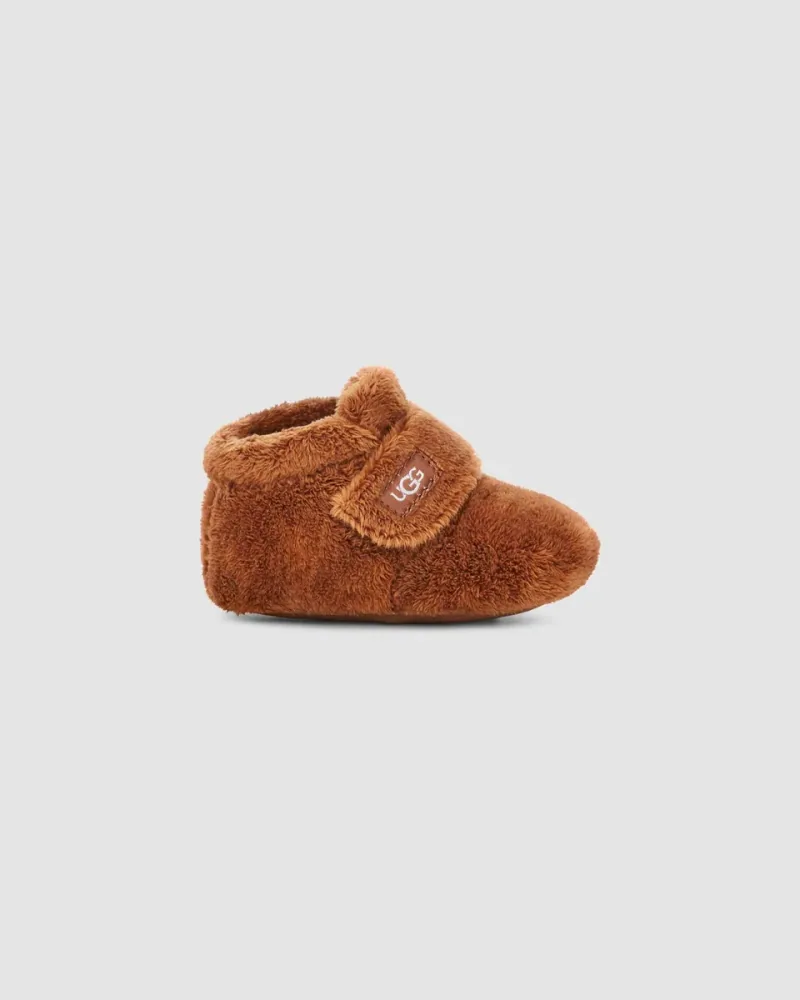
Recheck the shoes as your child grows and retire damaged pairs. For specific brand questions, our baby Crocs guide and baby UGG guide explain what to compare without treating a brand name as a substitute for fit.
A few more details
Your questions, answered
Should I buy shoes larger so they last longer?
Do not choose an excessively loose pair. Use the manufacturer’s fit instructions and check that the shoe stays secure while leaving appropriate toe room.
Do newborns need shoes?
Usually no. AAP guidance describes shoes as protection once children walk outdoors; early nonwalking feet do not need shoes for development.
Is a wider size the same as buying a longer shoe?
No. Width and length are different fit dimensions. A longer shoe can remain too narrow while creating excess space at the toes.
Sources & product information
Follow the original sources for current product details, instructions, and guidance.