A useful baby wardrobe starts with easy-opening basics that fit now: bodysuits, one-pieces, and a few compatible layers. Choose quantities from your laundry interval and outfit-change routine, then add a small buffer instead of buying a full year of sizes.
Style3 products, compared
Baby clothes: build a small wardrobe that earns its space
Choose baby clothes around comfort, diaper changes, laundry, and season. Use this practical wardrobe plan to buy useful basics without overfilling drawers.
Jump to a section
The quick answer
A useful baby wardrobe starts with easy-opening basics that fit now: bodysuits, one-pieces, and a few compatible layers. Choose quantities from your laundry interval and outfit-change routine, then add a small buffer instead of buying a full year of sizes.
- Choose by measurements and garment openings, not age alone.
- Count complete outfits and laundry days before choosing quantities.
- Compare a bodysuit, zip one-piece, and separate layer as different tools.
- Keep occasion clothing separate from everyday and sleepwear needs.
At a glance
The details that make a difference when you’re deciding.
| Wardrobe item | Job | Planning question |
|---|---|---|
| Bodysuit | Base layer with diaper snaps | Do suitable bottoms complete the outfit? |
| Zip one-piece | Simple whole-garment change | Does the torso and foot room fit? |
| Jacket | Removable extra layer | Does it fit over the clothes already owned? |
A closer look
The products, in detail
Actual product photos, manufacturer information, and direct links. Comparisons are based on published specifications; these are not hands-on test results.
01Baby First Favorites Organic Cotton Bodysuit (3-Pack)02Flower Meadow Organic Cotton Sleep & Play03Organic Cotton Matelassé Baby Jacket - Heather Grey
01
A small cotton layering wardrobe
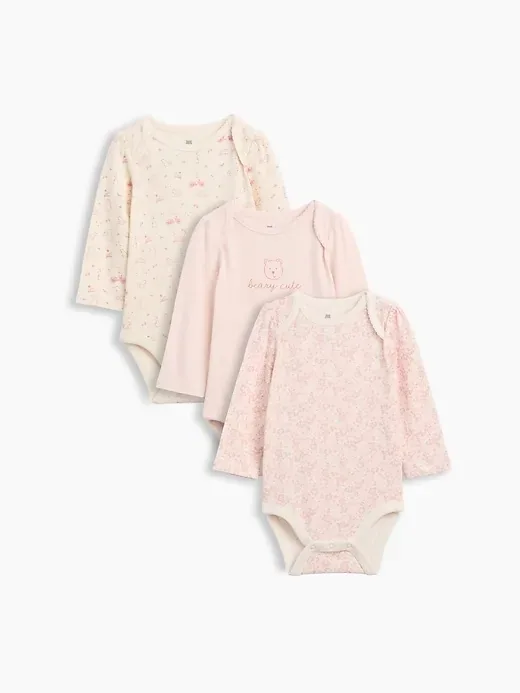
GapBaby First Favorites Organic Cotton Bodysuit (3-Pack)
This three-pack is a useful example of buying repeat-use basics by cut and openings. The long sleeves provide arm coverage, while the overlapping shoulders make the neck opening easier to manage. Match the selected size to the current guide and plan suitable bottoms if you need leg coverage. I would compare one pack’s fit before buying several copies; a familiar brand does not remove the need to check torso length.
- Three long-sleeve bodysuits
- Cotton jersey; checked listing identifies 100% organic cotton
- Overlapping shoulder construction
Where it fits
- Several everyday changes in one pack
- Pairs with existing comfortable bottoms
What to weigh up
- Does not cover the legs
- Print, size, and product details can change between variants
02
A newborn-stage zip sleep-and-play
Burt's Bees Baby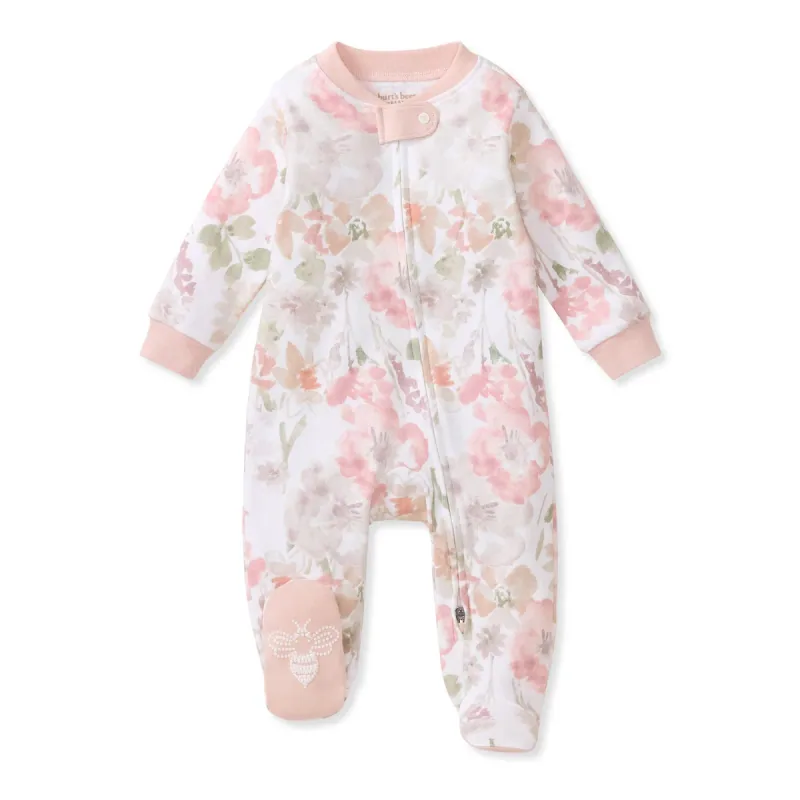
Flower Meadow Organic Cotton Sleep & Play
The Flower Meadow sleep-and-play provides a concrete example of the brand’s relaxed small-size garment layout. A two-way zipper and neckline guard support ordinary dressing and changes, while foldover mittens are limited to specified small sizes. Read the section for the selected garment: the same print can appear on older snug-fit sleepers and two-piece pajamas with different details. This comparison is based on the manufacturer listing, not a wear or wash test.
- Newborn-to-9M sleep-and-play format
- Two-way zipper with neckline tab and interior guard
- Foldover mittens listed for newborn and 0–3M
- Brand identifies GOTS-certified organic cotton
Where it fits
- One-piece outfit for simple changes
- Bottom-opening zipper access
What to weigh up
- Check size-specific cuffs and feet
- Older sleeper versions have a different intended fit
03
An additional daytime layer
Burt's Bees Baby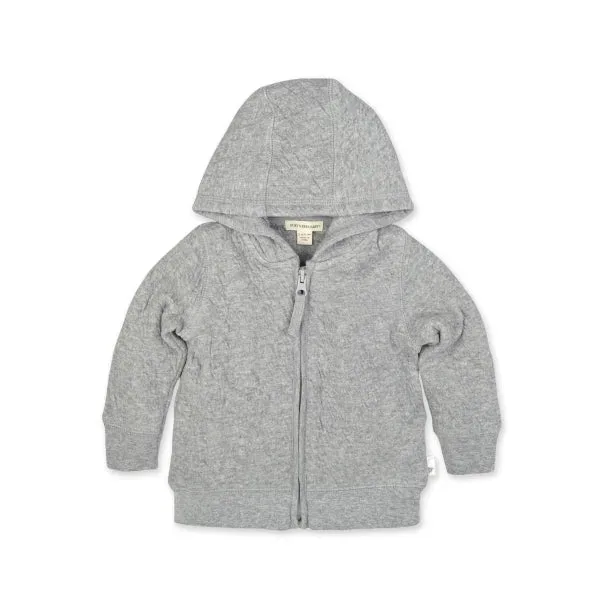
Organic Cotton Matelassé Baby Jacket - Heather Grey
The Matelassé jacket is an example of a separate layer rather than another complete outfit. Compare how it fits over the clothes your baby already wears and inspect the neck and arm room with the full combination on. A jacket’s appearance does not establish that it is appropriate for every temperature or travel setup. Keep the selected garment’s composition and washing instructions with the rest of the wardrobe care notes.
- Matelassé fabric construction
- Heather-grey baby jacket
- Manufacturer identifies organic cotton
Where it fits
- Adds a removable layer
- Neutral color can pair with existing basics
What to weigh up
- Check fit over an underlayer
- Follow the exact garment’s care and use instructions
A starter wardrobe you can actually calculate
Use a simple planning estimate: expected outfit changes per day multiplied by days between washes, plus a small spare allowance. If you expect two changes daily and wash every two days, four wearable outfits cover that interval; adding two spares gives six. This is an illustration, not a required newborn quantity. Frequent spit-up, diaper leaks, drying time, and laundry access change the result.
Count clothes that fit and work together. A bodysuit is one garment, but it may need trousers or leggings for the conditions. A footed one-piece is more complete on its own. A special dress with a matching bloomer is an event outfit, while a jacket is an extra layer rather than another change of basics. A drawer full of attractive pieces can still lack six complete usable combinations.
Compare three common approaches with real products
Bodysuit multipacks: Gap’s First Favorites cotton three-pack and Carter’s white cotton four-pack show what to inspect: shoulder openings, sleeve length, diaper snaps, and the exact fiber label. Multipacks make sense when you already know the cut works. Buying several packs before checking torso fit can create a pile of the same unsuitable garment.
Zip sleep-and-play pieces: Burt’s Bees Baby’s Flower Meadow example has a two-way zipper and small-size foldover mittens. Those features serve concrete tasks: opening from the bottom for a change, and covering hands when that feature is appropriate. Check the particular size because manufacturers can change the fit and foot details between newborn sleep-and-play and older snug-fit sleeper ranges.
Separate layers: The Burt’s Bees Baby Matelassé jacket provides an example of an extra layer with a different job. Compare the opening, bulk, and care requirements to the clothes underneath. A warm-looking photo cannot tell you whether the complete combination suits the temperature or a particular car-seat setup.
Fabric words that need a closer look
Cotton describes the fiber; jersey, rib, and terry describe different fabric structures. A stretch blend may fit differently from a non-stretch woven fabric even if both feel soft in the shop. “Organic” relates to the stated production or certification standard and is not a guarantee that a garment can never irritate skin or stain.
Look for the actual percentages, whether trims or feet use another blend, and the washing and drying instructions. Compare these details on the chosen variant, then check the label when it arrives. If one family member handles laundry, pick a routine that person can follow without memorizing a separate treatment for every everyday outfit.
What to do when clothes stop fitting
Watch the garment rather than the calendar. Pulling at the diaper line, tight cuffs, compressed toes in a footed piece, or difficulty fastening can signal that the cut or size no longer works. Move the next-size group into view and compare it calmly rather than forcing a tight garment through one more week.
Keep an outgrown basket beside the laundry area. Label reusable clothes with the actual size and condition, separating stained playwear from giftable pieces. That small habit makes later resale or hand-me-down sorting easier and gives you a clearer picture of what the current wardrobe is missing.
Choose practical garment shapes
Bodysuits stay together when a baby is picked up. Separate tops and bottoms let you replace just one messy piece. One-piece outfits reduce matching but can require a full change when one area gets wet.
Compare the openings rather than assuming one closure is always best. Can you reach the diaper without removing the upper half? Does the neckline open comfortably? Can another caregiver work out the fasteners quickly? These small details matter more during an ordinary busy day than a perfect outfit photo.
Buy for measurements and season
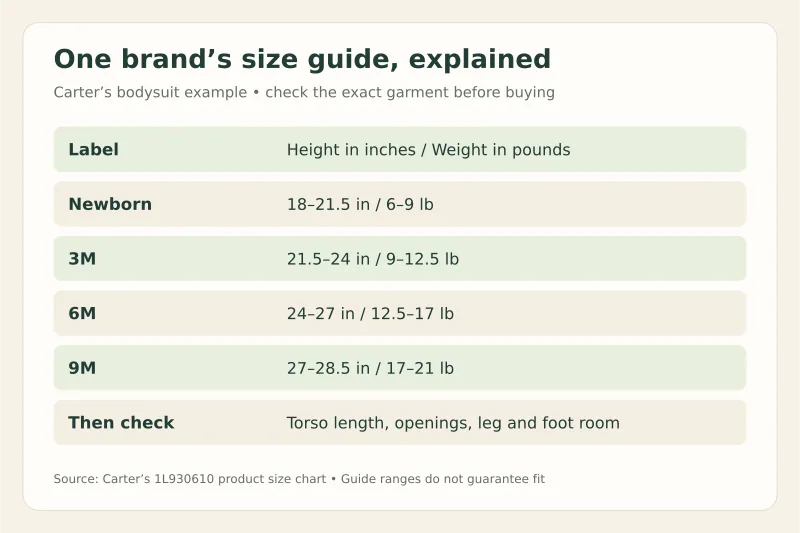
Use the manufacturer’s chart for height and weight. Carter’s size chart, for example, provides measurement ranges rather than relying only on age labels.
Keep the first purchase modest if you do not yet know the baby’s fit. Buying a large winter wardrobe months ahead risks having the right season in the wrong size. A few flexible layers and a plan to reassess can work better. For gifts, ask the parents which size and season would be useful.
Evaluate comfort and care before adding more
Look for smooth inner seams, manageable fasteners, and a cut that leaves room for normal movement. Check the care label and wash new garments as directed before use. Inspect secondhand pieces for damage, missing parts, or fasteners that no longer close securely.
Avoid assuming that an expensive fabric name means a garment is better for your household. A piece that requires care you cannot maintain may sit unused. Compare fiber content and construction, then see how a small initial purchase performs in your actual routine.
Organize clothing so changes stay simple
Create separate spaces for “fits now,” “next size,” and “outgrown.” Keep a complete spare outfit in the diaper bag and replace it when used. Recheck that spare regularly; a clean outfit is not useful if the baby has outgrown it.
Store feeding cleanup supplies near the places you feed, so every small spill does not automatically require searching the nursery. Keep only a few special-occasion pieces and choose basics that work together. Read our baby clothes sizes guide when labels differ between brands or you are deciding what to buy next.
A few more details
Your questions, answered
Are newborn and 0–3 month clothes the same?
They may cover different measurement ranges. Check the individual brand’s chart rather than treating the labels as interchangeable.
How many outfits does a newborn need?
There is no universal number. Estimate daily changes times days between washes, then add a few spares for drying delays and unexpected messes.
Is a bodysuit the same as a sleeper?
No. A bodysuit closes at the diaper area but normally leaves the legs uncovered. A sleeper or sleep-and-play often covers the legs and sometimes the feet.
Sources & product information
Follow the original sources for current product details, instructions, and guidance.