A baby carrier should fit both the baby and the person wearing it, in a position permitted by the product's instructions. The best starting point is your baby's size and development, followed by the kind of carrying you expect to do. A soft wrap, buckle carrier and hip seat solve different problems.
Gear3 products, compared
Baby carrier guide: styles, fit and a useful first check
Compare wraps, structured baby carriers and hip seats, then learn the fit questions and everyday checks that help you choose for your actual routine.
Jump to a section
The quick answer
A baby carrier should fit both the baby and the person wearing it, in a position permitted by the product's instructions. The best starting point is your baby's size and development, followed by the kind of carrying you expect to do. A soft wrap, buckle carrier and hip seat solve different problems.
- Ergobaby Embrace Newborn Carrier: a soft carrier without wrap tying.
- BabyBjörn Baby Carrier Harmony: longer-term use with a supporting waistbelt.
- Tushbaby Hip Carrier: repeated up-and-down carries with one supporting arm.
- Details come from manufacturer documentation; Emily has not claimed hands-on testing.
At a glance
The details that make a difference when you’re deciding.
| Product | Useful for | Detail to know | Before buying |
|---|---|---|---|
| Ergobaby Embrace Newborn Carrier | A soft carrier without wrap tying | Manufacturer weight range: 7–25 lb | Lower maximum weight than larger structured carriers |
| BabyBjörn Baby Carrier Harmony | Longer-term use with a supporting waistbelt | Manufacturer range: 7–40 lb | More adjustment points than Mini |
| Tushbaby Hip Carrier | Repeated up-and-down carries with one supporting arm | Structured seat attached to an adult waistband | Not hands-free by itself |
A closer look
Products mentioned in this guide
Actual product photos, manufacturer information, and direct links. Comparisons are based on published specifications; these are not hands-on test results.
01
A soft carrier without wrap tying
ErgobabyErgobaby Embrace Newborn Carrier
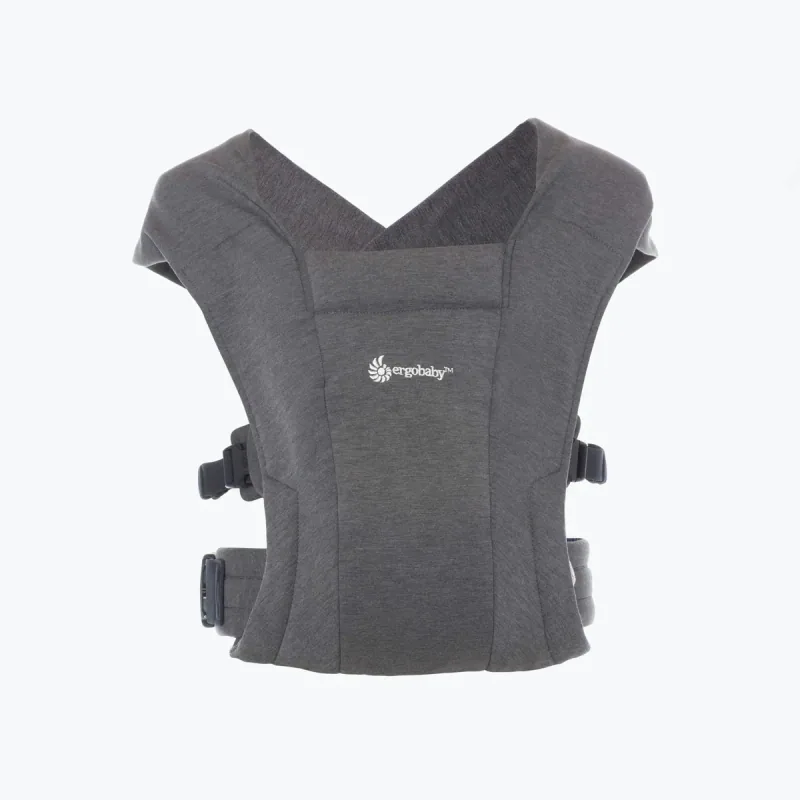
Embrace combines a soft knit panel with buckles and cross-back straps. It is useful to compare with both a stretchy wrap and a more structured carrier: you avoid tying a long length of fabric but still get a relatively soft, close-fitting design. The newborn adjustment is important, particularly for a shorter baby, so use the supplied illustrated instructions. Its smaller maximum weight makes it an early-stage option. A household hoping to buy one carrier through larger toddlerhood should compare a longer-range model before committing.
- Manufacturer weight range: 7–25 lb
- Soft knit fabric
- Cross-back shoulder straps
- Front inward and outward modes with readiness requirements
Where it fits
- No wrap knots to learn
- Machine-washable fabric
What to weigh up
- Lower maximum weight than larger structured carriers
- Newborn waistband adjustment needs attention
02
Longer-term use with a supporting waistbelt
BabyBjörn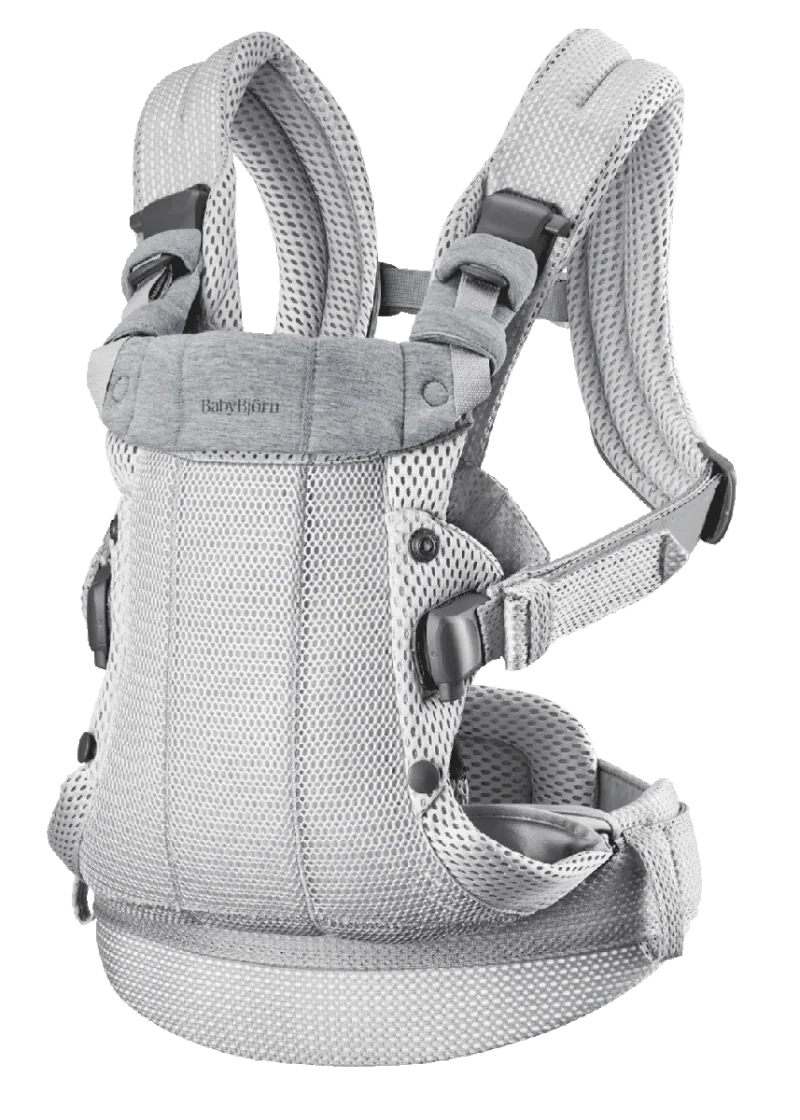
BabyBjörn Baby Carrier Harmony
Harmony adds a waistbelt, padded shoulder straps, and back support to the BabyBjörn range. That makes it a different fit proposition from Mini, especially as the child grows. Its adjustable panel and head support need to be set for the individual baby rather than copied from another caregiver’s settings. The brand permits several carry positions, but each has its own readiness rules; a large printed weight range does not make every position suitable from birth. Try the buckles and adjustments while wearing the clothes you normally use outside.
- Manufacturer range: 7–40 lb
- Adjustable seat and head support
- Front inward, front outward and back modes
- Waistbelt with padded shoulder and back support
Where it fits
- Distributes load across waist and shoulders
- Adjustable for a growing child
What to weigh up
- More adjustment points than Mini
- Back carry has separate age requirements
03
Repeated up-and-down carries with one supporting arm
Tushbaby
Tushbaby Hip Carrier
Tushbaby is a hip seat: the child sits on a platform attached to a wide adult waistband. That is useful for a child who asks to be picked up and put down repeatedly, because there is no full fabric panel to adjust each time. The seat by itself does not secure the child hands-free. Keep a supporting arm around the baby and follow the stage-specific directions, including the separate rules for newborn feeding support. Pockets may replace a small bag on a short outing, but they do not change the support required.
- Structured seat attached to an adult waistband
- Storage pockets built into the carrier
- Seat alone requires continuous adult support
- Different use directions by developmental stage
Where it fits
- Quick up-and-down access
- Integrated storage
What to weigh up
- Not hands-free by itself
- Waistband fit and pressure vary by wearer
Three concrete styles to compare
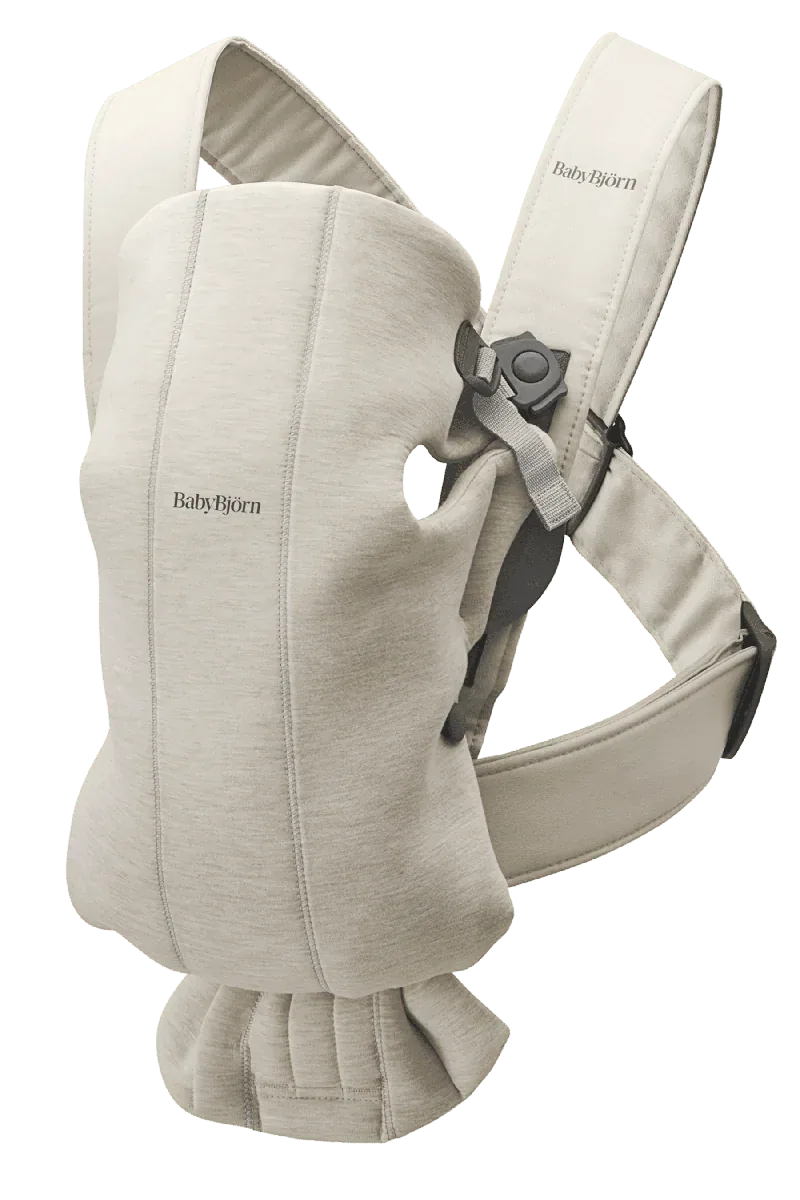
Ergobaby Embrace is a soft buckle carrier for the early stage. Its manufacturer lists a 7–25-pound range and cross-back straps, making it a useful comparison for someone who likes a wrap-like feel but does not want to tie a long wrap. It still requires the correct newborn adjustment and an individual fit check.
BabyBjörn Harmony is a more structured option with a waistbelt, padded straps and back support. Its wider weight range and additional carry positions make it worth considering for longer-term use, although that flexibility also means more settings to understand. Tushbaby, by contrast, is a supporting hip seat. The platform reduces the need to hold the child’s entire weight in your arms, but the basic seat does not secure the baby hands-free.
These examples help clarify what you are buying. If you need both hands free, the hip seat alone will not meet that requirement. If you mainly want short newborn cuddles, a large carrier’s future back-carry mode may not justify its bulk today. Start with the job, then compare suitable products.
Separate the baby’s fit from the adult’s fit
The baby’s size and developmental readiness determine which settings are permitted. Check minimum weight, panel height, seat-width adjustment and head-support instructions. A baby reaching the minimum printed weight still needs to fit the carrier correctly. For a preterm baby, a baby with low birth weight or a relevant medical condition, ask the baby’s clinician about carrying before choosing a product.
The adult’s fit determines whether the carrier can be used consistently. Put it over ordinary clothing, check whether the waistbelt lands comfortably, and confirm that you can reach the buckles. Try adjusting one strap at a time according to the manual. Pain, restricted breathing or a strap pressing in a sensitive area is a reason to stop and reassess rather than tighten further.
Practice a complete trip, not just a mirror pose
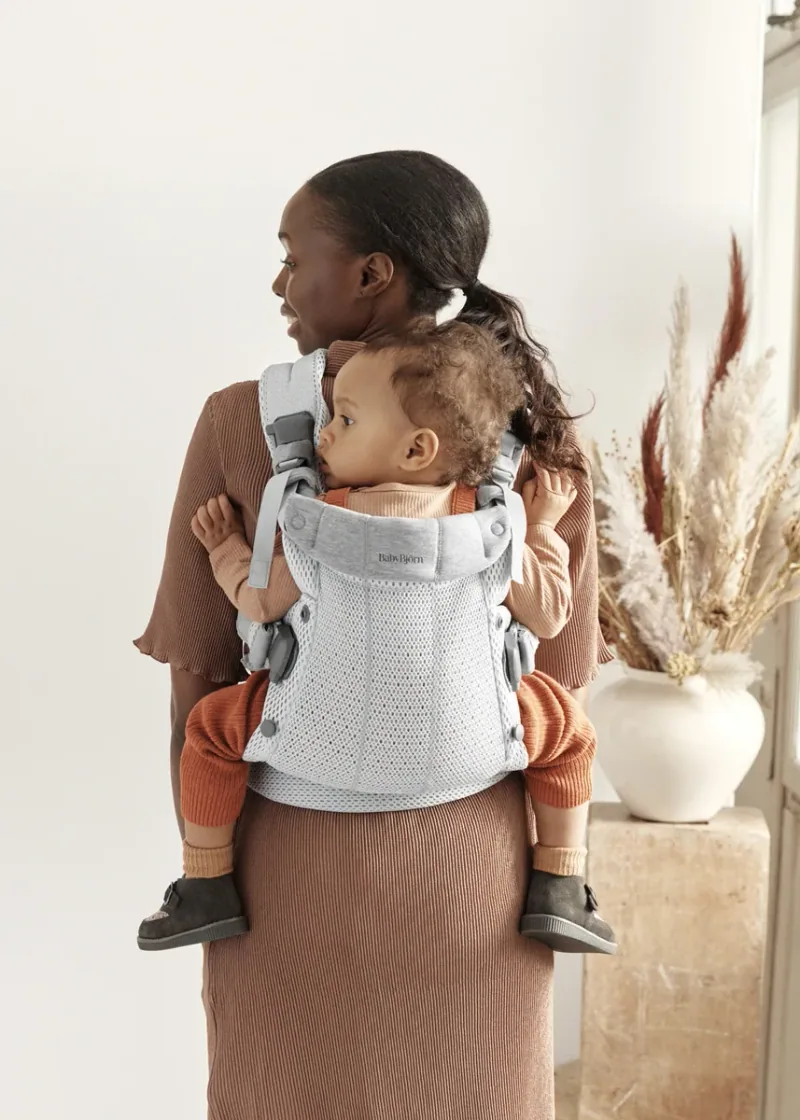
Rehearse putting the carrier on, loading the baby, checking position, walking a short route and taking the baby out. Have another adult help while learning. Notice whether a coat hides the baby’s face, whether a bag strap interferes with the carrier or whether you keep having to lift the baby back into position. A still photograph cannot answer those questions.
If two adults share the carrier, leave enough time for each to make their own adjustments. A quick photo of the correctly adjusted empty carrier can be a reminder, but it should never replace a fresh fit and airway check. Washing may also change strap settings, so recheck after cleaning.
Decide what you can realistically carry and wash
Measure the packed carrier against your day bag and read drying instructions before buying spare covers. Avoid adding an improvised towel, bib or pad inside the carrier where it could affect fit or cover the face. Manufacturer-approved accessories need their own instructions. For a more focused shortlist, the best baby carriers comparison connects these designs with different daily routines.
Understand the main carrier styles
A wrap uses fabric adjusted around the wearer and child. A structured carrier uses a shaped panel and fastening system. A ring sling adjusts through rings and places its load differently on the wearer. Each has its own learning curve, permitted positions and fit instructions.
A hip seat is a separate category. Some support the child's weight while requiring an adult arm around them. Do not assume that a seat attached at the waist is hands-free. Compare the complete product, including any approved attachment, and read the instructions for that configuration.
Start with the baby, then the adult
Check minimum and maximum measurements and the requirements for head control. A “newborn” description is not permission to use every position from birth. If your baby was premature, has low birth weight or has a medical condition, ask your clinician about babywearing before starting.
For the adult, consider torso length, belt placement, shoulder reach and ease of fastening. If two people will share the carrier, both should try adjusting it. A carrier that technically fits a broad size range may still feel different on different bodies, so fit matters more than a friend's enthusiastic recommendation.
Keep the airway visible and unobstructed
Your baby's face should remain visible, with the nose and mouth clear and the chin away from the chest. CPSC describes the risks of slumped positioning and fabric covering the face in its babywearing guidance. Check frequently, including after movement or repositioning.
Avoid adding a loose blanket or cloth over the carrier opening. Feeding and repositioning require attention; do not treat carrying as permission to stop checking the baby. Follow the manual's restrictions on activities, and remove the baby before any task that creates a heat, fall or collision risk.
Practice the actual daily routine
Try the carrier over ordinary clothing. Practice putting it on, taking it off and adjusting it before you need to leave the house. If possible, ask a trained babywearing educator or the manufacturer for a fit check rather than guessing from a photograph.
Think through the destination too. Will you sit down on public transportation? Carry a bag? Switch adults halfway through an outing? Can you loosen or refasten the carrier without setting parts on the ground? These questions reveal practical differences that do not appear in a feature chart.
Buy for a clear use case
For frequent short transfers, ease of getting the baby in and out may matter most. For longer walks, compare how the load feels over time. For a small home or diaper bag, look at how the carrier stores and whether the care instructions fit your laundry routine.
Choose an identifiable product from a seller who supplies the manual and model information. Inspect stitching, fasteners and fabric before use, including on hand-me-down carriers. A good purchase is one you can fit correctly and use comfortably within its limits, without needing to improvise extra supports.
A few more details
Your questions, answered
Can every baby carrier be used from birth?
No. Check the exact carrier's minimum size, newborn configuration and positioning requirements. Medical or prematurity concerns should be discussed with a clinician.
Are hip-seat carriers hands-free?
Some hip seats require continuous support from an adult arm. Read the instructions for the exact seat and any approved attachment rather than assuming it is hands-free.
Is a Tushbaby hip seat a hands-free carrier?
The basic hip seat is not hands-free. It supports the child from below while an adult keeps an arm around the baby. Attachments and other carriers have separate instructions.
What makes Embrace different from Harmony?
Embrace is a soft knit buckle carrier with a 7–25-pound listed range. Harmony has a supporting waistbelt, padded straps and a longer listed range. Fit and position-specific rules still need checking.
Sources & product information
Follow the original sources for current product details, instructions, and guidance.