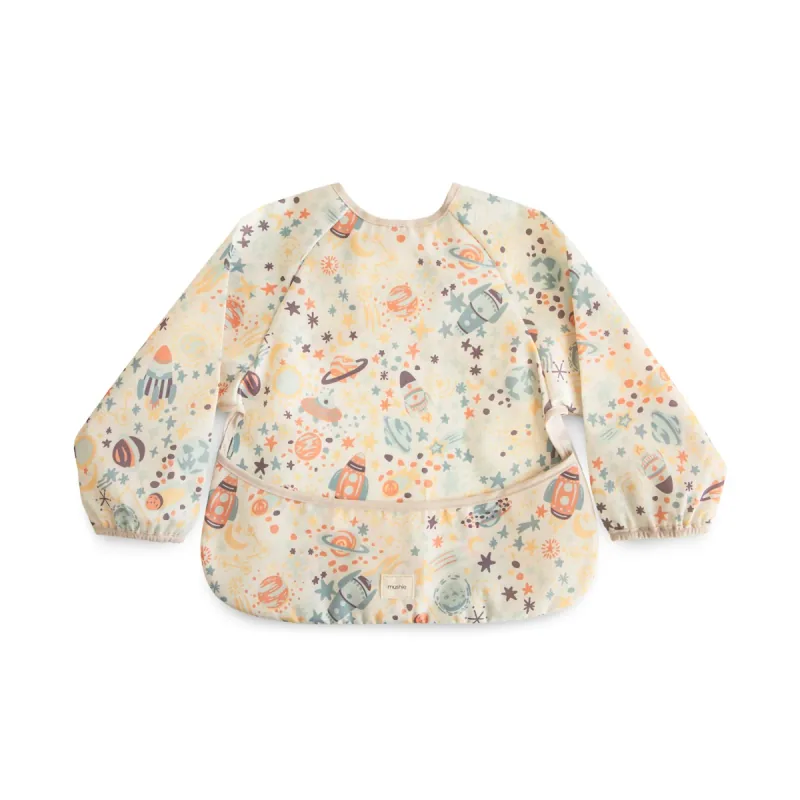
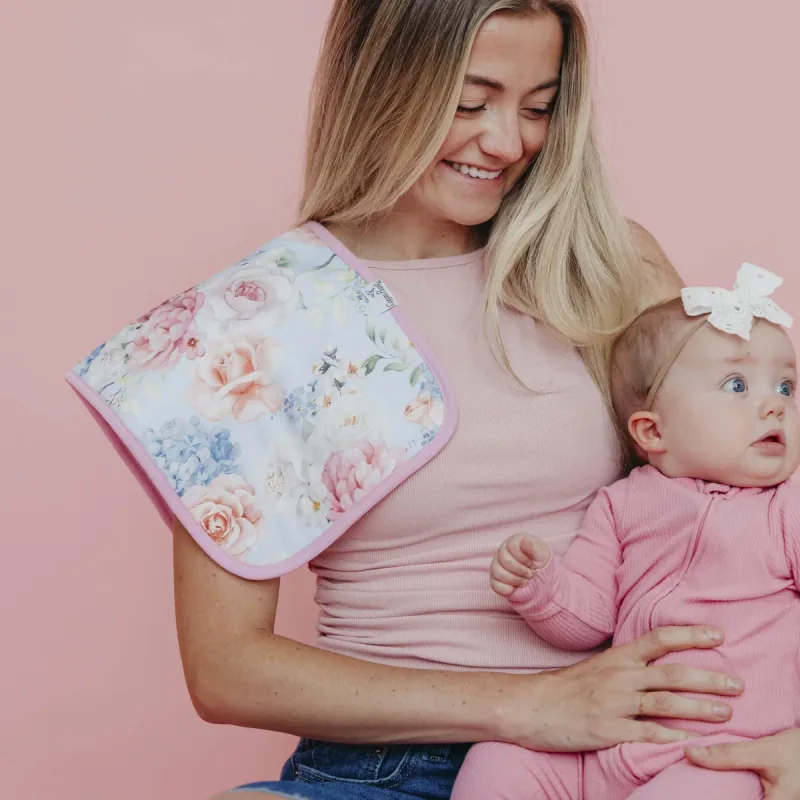
A useful collection of baby bibs supports your laundry schedule and the places your baby spends time. It does not need to contain every style on a registry list. Begin with a small group suited to the current stage, then add more when you can identify a specific shortage.
Feeding4 products, compared
Baby bibs: build a useful collection without overbuying
Plan a practical baby bib collection for home, daycare, and outings. Match quantities to laundry, compare sets, and organize a rotation that gets used.
Jump to a section
The quick answer
Plan a baby-bib collection around actual daily changes, completed laundry loads, and separate supplies for outings or daycare. Keep absorbent milk bibs and wipe-clean meal bibs in different counts because they do different jobs.
- Count clean changes, not how many bibs come in a gift set.
- Include drying time in the laundry interval.
- Test fit and laundering before buying duplicate packs.
- Keep current-size bibs and damaged items clearly separated.
At a glance
The details that make a difference when you’re deciding.
| Supply location | Planning input | Example only |
|---|---|---|
| Home rotation | Daily changes × days to finished laundry | 4 changes × 2 days = 8 bibs |
| Diaper bag | Recent use on a similar outing | 2 dedicated clean bibs |
| Other caregiver | Caregiver’s requested supply | 2 separate bibs |
| Reserve | Your actual interruption risk | Add a modest backup after observing use |
A closer look
The products, in detail
Actual product photos, manufacturer information, and direct links. Comparisons are based on published specifications; these are not hands-on test results.
014 Pack Baby Bandana Bibs - Genevieve02organic cotton snap bibs 3 pack03Muslin Bib04Silicone Baby Bib
01
A multipack of bandana-style dribble bibs
Copper Pearl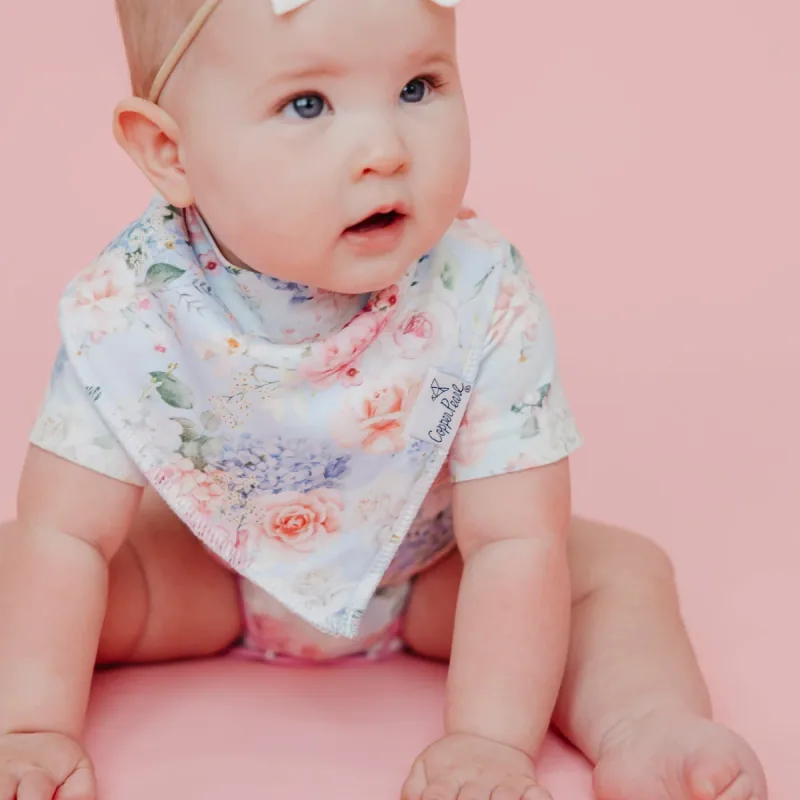
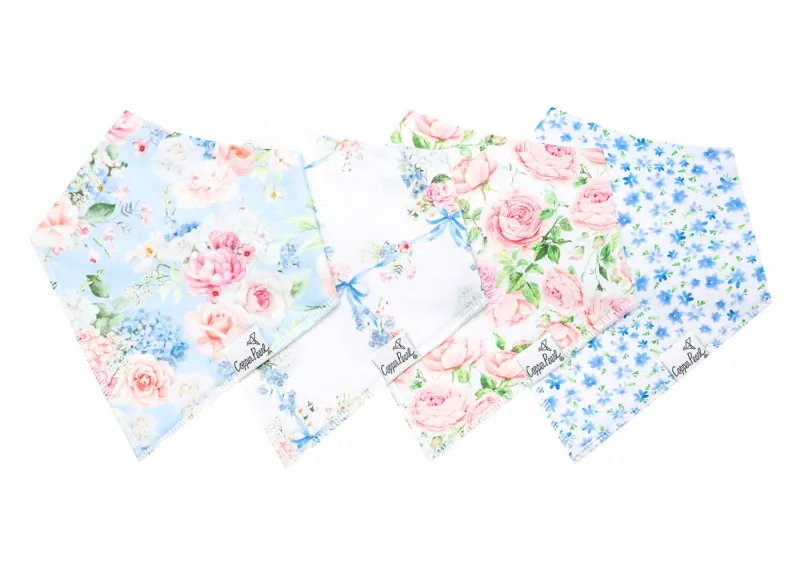
4 Pack Baby Bandana Bibs - Genevieve
Copper Pearl’s Genevieve set contains four bandana bibs with a cotton front and polyester fleece backing. Two nickel-free snaps provide adjustment. The triangular outline makes this a useful comparison with a rounded muslin bib: look at coverage near the shoulders and how fabric gathers under the chin. The listed age range is a shopping guide, not proof that a specific fastening is comfortable on your baby. Change damp bibs and remove them before sleep.
- Four-pack
- Cotton front with polyester fleece backing
- Two nickel-free snaps
- Manufacturer lists ages 0–36 months
Where it fits
- Coordinated small rotation
- Adjustable fastening
What to weigh up
- Bandana shape covers differently from a broad bib
- Contains polyester as well as cotton
02
Broad cloth bib coverage in a small set
HALO / aden + anais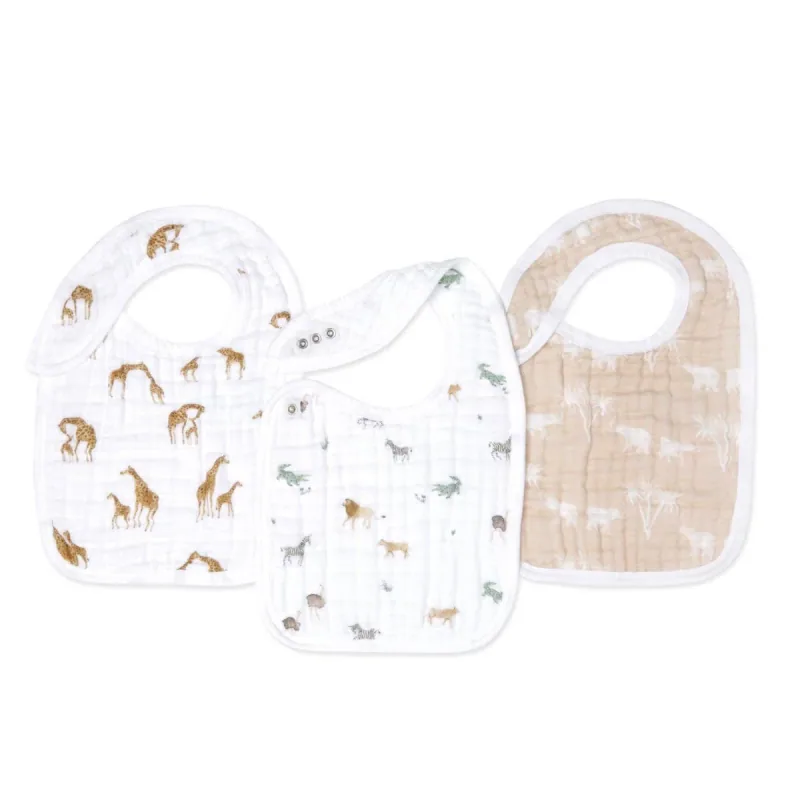
organic cotton snap bibs 3 pack
The aden + anais Organic Cotton Snap Bibs shown here use three layers of muslin and an adjustable fastening. The Safari Dreams three-pack provides another fabric construction to compare with fleece-backed bandanas and smaller two-layer options. Look at the neckline and actual washed dimensions before choosing by pack count. Layer count describes construction, but it is not an independently measured capacity rating or a promise that a bib will stay dry through every feed.
- Three-pack
- Three layers of organic cotton muslin
- Adjustable snap fit
- Safari Dreams print shown
Where it fits
- Several bibs for rotation
- Absorbent textile layers
What to weigh up
- Needs laundering and drying
- Fit still depends on the individual baby
03
Soft dribble coverage during awake time
Mushie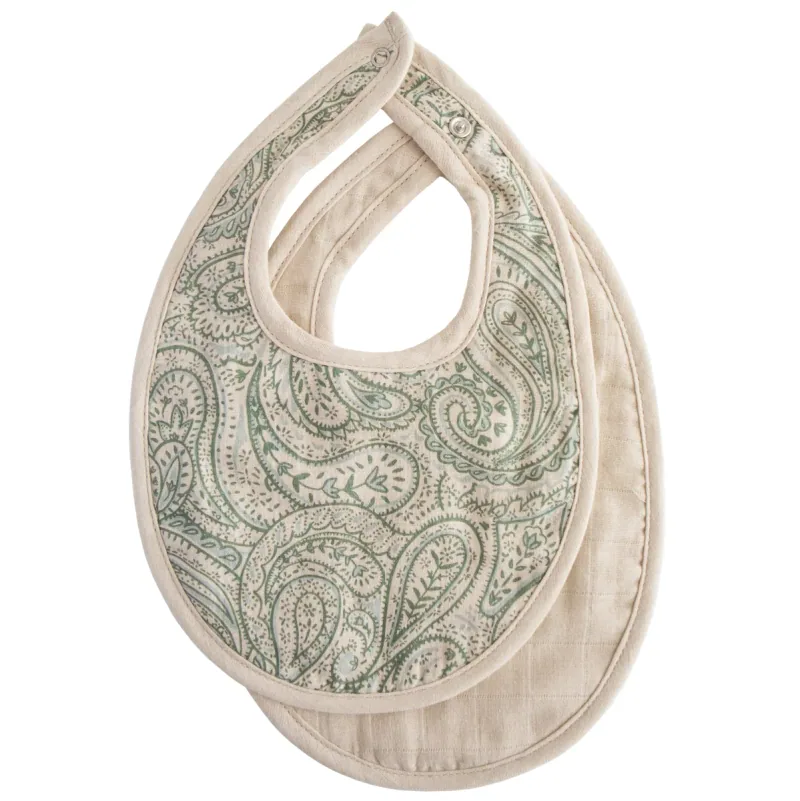
Muslin Bib
This Mushie bib uses layers of muslin and two snap positions, so its main role is catching moisture on the baby’s front. It belongs in a different comparison from a silicone food bib: the fabric absorbs liquid while a molded pocket holds it. The small pack is useful for trying the fit before committing to a large drawer of matching bibs. Always remove it before sleep and check the neckline on the individual baby.
- Organic cotton muslin
- Two snap positions
- Two bibs per set
- Multi-layer fabric
Where it fits
- Adjustable closure
- Soft absorbent construction
What to weigh up
- Protects the baby’s front rather than the parent’s shoulder
- Needs laundering after wet use
04
Catching food during supervised meals
Mushie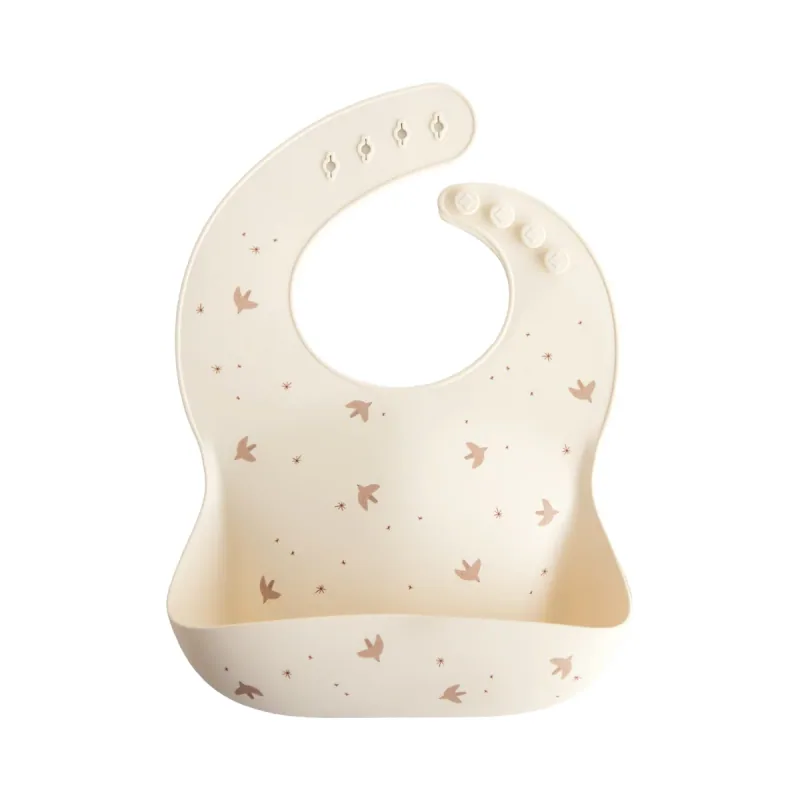
Silicone Baby Bib
Mushie’s silicone bib has a structured front pocket and an adjustable neck fastening. It is a meal-cleanup option once its fit and age guidance suit your child. Unlike a muslin bib, silicone does not soak up liquid; spills remain in the pocket until you empty and clean it. That makes the distinction especially relevant for families comparing food bibs with spit-up cloths. Check how the pocket sits against the high-chair tray before ordering several.
- Silicone construction
- Deep front pocket
- Adjustable neck strap
- Multiple colors and patterns
Where it fits
- Wipe-clean surface
- Pocket for food pieces
What to weigh up
- Not an absorbent spit-up cloth
- Pocket contents need emptying before removal
Compare sets by usable bibs rather than headline quantity
Copper Pearl’s Genevieve Bandana Bib set contains four fabric bibs with cotton fronts and fleece backs. The aden + anais Safari Dreams Snap Bibs are a three-pack of layered muslin bibs. Mushie’s Muslin Bibs come as a two-bib set. The pack counts are concrete, but the best value depends on which shape fits and gets used.
If you need food-pocket bibs, compare those separately. A Mushie Silicone Bib is not a missing fourth piece in a cloth-bib rotation; it serves supervised meals and has a different cleaning process. Splitting the drawer by task prevents “we have ten bibs” from hiding the fact that none are clean absorbent ones for the current feed.
Sort by use before counting
Separate absorbent daytime bibs from wipe-clean meal bibs and anything kept mainly for photos or special outfits. They may all be called bibs, but they do different jobs.
For a milk-feeding baby, think about dribbles and spit-up cleanup. For a baby eating solids, consider the feeding setup and how you clean after meals. A decorative bib may still be useful, but judge it by coverage and care instructions instead of assuming it will handle repeated wet use.
If the shape itself is unclear, start with our first baby bib guide.
Work backward from your laundry routine
Count how many clean bibs you actually use in a day, then multiply by the number of days between finished laundry loads. Add the bibs that need to live in the diaper bag or at another caregiver's home.
For example, three bib changes a day with laundry ready every two days suggests six in active rotation, plus a few purposeful backups. That is a planning example, not a universal recommendation. Your baby's use and your drying time may be very different.
Include the time items spend drying. Washing in the evening does not help the next morning if the care label requires a long air-dry and every bib is still damp.
Review the collection when routines change
Daycare, travel, a new washing schedule, or the start of meals can change what you need. Ask the caregiver how many clean items to provide and how used items will be returned. Label bibs according to their policy with a method compatible with the fabric's care instructions.
Keep only the current sizes in the active drawer, and remove bibs before sleep as advised by the Canadian Paediatric Society. A caregiver should not have to guess which items still fit.
For washing methods by material, use our baby bib laundry guide. Let repeated experience guide the next purchase: replace the actual gap in the routine, rather than buying another set simply because it matches.
Work through a realistic quantity example
Suppose you observe four fresh cloth bibs used across a day and your laundry is washed, dried, and back in the drawer every two days. That suggests eight bibs in the active home cycle before adding purposeful reserves. If two bibs stay in the diaper bag and two stay with another caregiver, count those separately rather than assuming they will be available at home.
The numbers are an example, not a requirement for every baby. A family using fewer bibs or washing daily can need less. A household air-drying bibs in damp weather may need more time between a wash and the next use. Review the estimate after a week of actual use rather than treating the original registry count as fixed.
Make the drawer easy for a tired adult to use
Place the current absorbent bibs together, meal bibs in another spot, and spare sizes outside the active rotation. Put new laundry at the back so the same two bibs do not receive every use. Keep a small basket or clearly identified place for items with a loose snap, rough edge, or other damage that needs attention.
For another caregiver, a simple label such as “clean milk bibs” is more useful than organizing only by color. Show how each closure works and repeat the rule that bibs come off before sleep. Do not assume an adult who knows one bib style will immediately recognize how another model should fit.
Set up daycare and travel supplies as separate mini-rotations
Ask how the caregiver wants clean and used bibs packed and labeled. Keep soiled cloths separate from clean ones during transport, then remove them for washing when you return home. Avoid leaving damp bibs closed in a bag longer than necessary.
For outings, carry the number suggested by recent comparable trips plus a modest backup. A very large travel pack can become an untidy source of old damp bibs if nobody resets it afterward. Restocking the bag immediately after laundry is often more useful than buying an extra multipack that remains in a closet.
Revisit the count when the stage changes
Starting daycare, changing a washing schedule, or beginning appropriate solid foods can shift the balance between absorbent and meal bibs. Buy for the new repeated need after it becomes clear. A coordinated set is pleasant, but it should earn drawer space through fit, coverage, and easy care. Use the bib washing guide before mixing different materials into one laundry load.
A few more details
Your questions, answered
How many baby bibs should I buy?
Estimate daily clean bib changes multiplied by days between completed laundry loads, then add a few specific travel or caregiver backups. Adjust after observing actual use.
Is a large bib multipack always better value?
No. Fit, useful coverage, drying time, and how many of the pieces you will use matter more than the lowest price per bib.
Should milk bibs and meal bibs be counted together?
Plan them separately. Absorbent milk bibs and wipe-clean food bibs serve different tasks and have different cleaning and drying routines.
Should daycare bibs count in the home supply?
Count bibs that remain at daycare separately. They may not be available when the home laundry is still drying.
Sources & product information
Follow the original sources for current product details, instructions, and guidance.